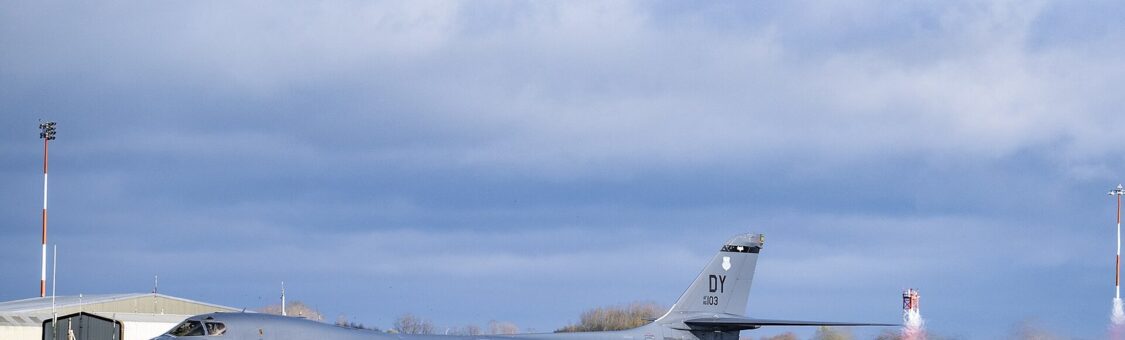
All 12 U.S. Air Force B-1B Lancer bombers deployed to RAF Fairford in the United Kingdom departed the base on Oct. 4, 2026, returning to their home stations in the United States, a U.S. defense official confirmed to The War Zone. The withdrawal came after commanders received new threats about an Iran-backed plot against the installation, The New York Times reported, citing two U.S. officials.
The hasty movement was reportedly sparked by new Iranian threats against the base, although the Pentagon did not confirm that assertion. The aircraft left in several waves, according to the DefenceGeek X account, run by the senior editor of the U.K. Defence Journal. At least three of the planes had landed at their home base in South Dakota by Sunday, The New York Times reported.
The sudden withdrawal came a week after a major incident was declared near Fairford following the arrest of five men on suspicion of driving bomb-laden vans toward it. They were later released on bail after no explosives were found. Counter-Terrorism police are continuing the investigation and said they were considering whether a foreign state had been involved. On Wednesday, British Prime Minister Andy Burnham said the incident might have had an Iranian link.
Tehran directly threatened RAF Fairford in July over its use as a base to launch attacks against Iran. Tasnim News Agency, a quasi-state outlet in Iran with ties to the Islamic Revolutionary Guard Corps, claimed on Telegram on July 23: “Any base that is used to invade Iran’s territory is our legitimate goal.”
U.S. officials declined to tell The New York Times the specific nature of the new information that prompted the Lancer withdrawal, some of which had just arrived in the past week as part of a normal rotation of forces. One U.S. official said the new information was part of the same threat warnings that surfaced three weeks ago, but specific details and a sense of urgency spiked in the past 24 hours, alarming commanders.
The withdrawal was highly unusual: Such moves are rarely made so quickly from an allied air base in a peacetime country thousands of miles from a combat zone, The New York Times reported. The need to move the bombers out of the base was deemed so urgent that some of the planes and their flight crews left while aerial refueling aircraft were still being scrambled to support their flights to the United States.
In response to questions about the movement, the Pentagon stated: “U.S. Air Force bombers routinely operate around the world to support global force readiness and operational requirements. While operational security precluded us from confirming the movement of our assets and forces in real-time, we can acknowledge now that all U.S. bombers that were deployed to RAF Fairford have re-deployed to their home stations in the United States. The Airmen that operate America’s bomber force, including B-1s, B-2s, and B-52s, remain ready to deliver precision global strike capabilities – including through operations that launch and recover from the continental United States – anywhere, anytime.”
The defense official who confirmed the withdrawal said the aircraft movements won’t affect overall readiness. This is the first time in months that RAF Fairford has not hosted U.S. bombers.
Sources: DVIDS News · DVIDS News