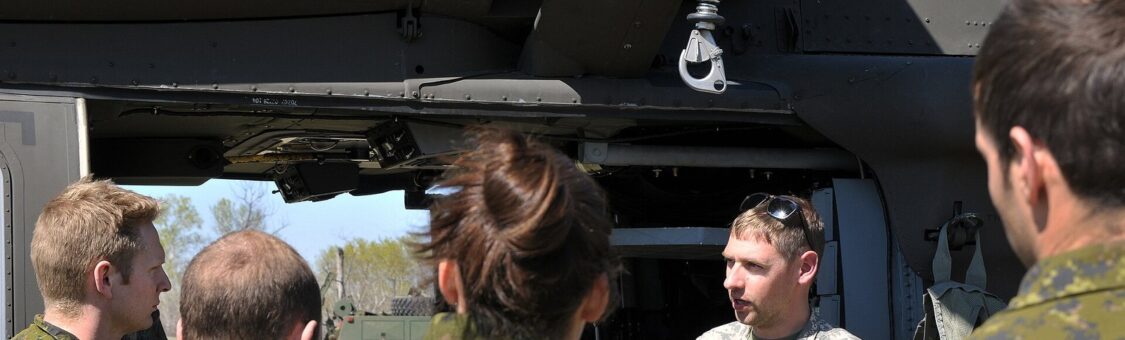
The Canadian government has quietly ordered a pause on a planned purchase of 16 U.S.-made UH-60M Black Hawk helicopters, according to several sources within the government and defence industry. The decision, made just before trade negotiations with the Trump administration began last summer, is linked to trade and diplomatic tensions, the sources said.
The helicopters, intended for use by Canada’s special forces, are manufactured by Sikorsky, a subsidiary of Lockheed Martin. The purchase had been signed off by the U.S. State Department agency that handles foreign military sales and was headed for congressional approval when the halt was ordered, two confidential sources said.
The decision was partially related to the trade talks, which ultimately failed, and was part of a wider effort by federal officials to inventory what the Canadian military planned to purchase from the United States, the sources said. As Canada seeks to reduce its military reliance on the U.S., the government decided the timing was not right to purchase American helicopters without a competitive bidding process.
Since being elected in spring 2025, Prime Minister Mark Carney has made it a priority to boost domestic defence industrial production, establish partnerships with foreign firms operating in Canada and, only as a last resort, purchase directly from abroad.
The pause on the Black Hawk purchase comes as the Carney government continues to review whether it will purchase a full order of 88 F-35 stealth fighters, also manufactured by Lockheed Martin. Canada has committed to buy 16 F-35s and has ordered parts for more than a dozen others.
“The government of Canada continues to evaluate options to meet the needs of the special operations forces,” said Sofiya Sapeha, spokesperson for Stephen Fuhr, the parliamentary secretary responsible for military procurement. “Canada remains in contact with the relevant partners and continues to review all information necessary for decision-making.”
The Black Hawks were intended to replace the special forces’ use of the CH-146 Griffon, which is more than three decades old. The UH-60 has a typical combat radius of about 595 kilometres, extendable to 2,250 kilometres with air-to-air refuelling; the Griffon’s normal combat range is up to 656 kilometres, extendable to 909 kilometres with external fuel tanks.
Retired major-general Denis Thompson, who commanded special operations troops, questioned the political calculus but said he understands how Canadians feel about the Trump administration. “When we buy a piece of equipment, we’re not hanging on to it for the two years that are left in Mr. Trump’s mandate,” he said. “We’re hanging on to them for 20, 30 years. And so what’s important is to make sure that we buy the equipment that Canadian Armed Forces need and that we look to the long-term and not short-term political gain.”
Earlier this year, a Policy Magazine poll indicated 62 per cent of Canadians disagree with purchasing military equipment from the United States, and Abacus Data found 64 per cent support an immediate halt to U.S. military purchases.
Sources: CBC Politics · CBC Politics