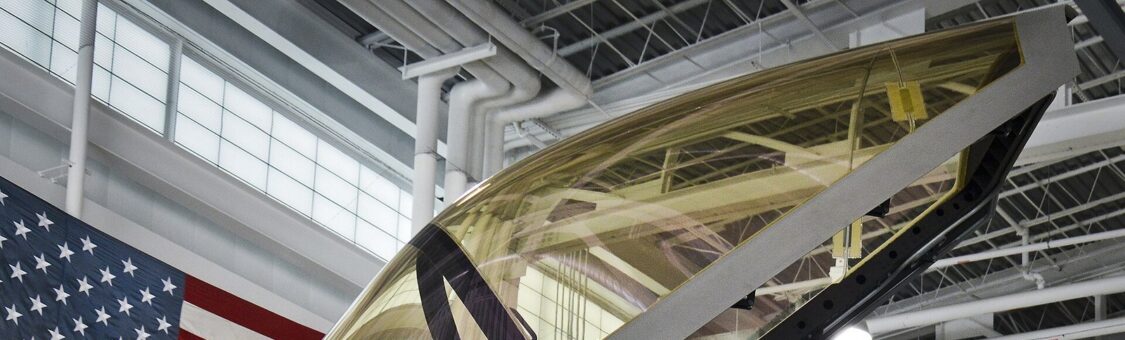
Chinese authorities have reportedly taken possession of an F-35 cockpit canopy and a weapons-bay door that were diverted to Hong Kong while being shipped from Australia to the United States in late May, according to people familiar with the matter cited by Bloomberg News. The components, from a Royal Australian Air Force F-35A, were being sent to the U.S. for inspection and possible repair or disposal, and apparently stopped in South Korea before being routed to Hong Kong, where Chinese authorities have not returned them.
The Pentagon’s F-35 Joint Program Office has acknowledged a “shipment issue” involving F-35 components and said U.S. authorities and industry partners are working to recover them and investigate what happened. Lockheed Martin, UPS, and the Pentagon have not publicly provided a detailed account of how the shipment was diverted or what happened to the parts after they reached Hong Kong.
Lockheed Martin said in response to a request for clarification: “For security reasons, we can’t discuss the status of specific shipments or our shipping procedures.” The company added that it “follows all U.S. regulations established by the Department of War and regulated by the Defense Logistics Agency (DLA) regarding the shipment of aircraft components. Our teams handle every shipment with the utmost diligence and safeguards to ensure the integrity of the F-35 program and the security of our allied partners.”
Australian Defence Minister Richard Marles confirmed Canberra was aware of the incident and was working with the United States and Lockheed Martin. Marles has sought to play down the potential security implications, saying his understanding was that the shipment did not contain sensitive equipment or sensitive parts.
However, the F-35 canopy is a technologically crucial component from a low-observable perspective. Its stretched acrylic transparency is covered by a thin layer of transparent radar-absorbent material designed to reduce radar reflections. According to the U.S. Defense Logistics Agency, degradation of this layer can create a radar-signature vulnerability and affect the aircraft’s full mission capability. The weapons-bay door also involves structures, materials, interfaces, tolerances, and treatments that must work within the aircraft’s low-observable design.
The condition of the parts is unknown, including how much of their coatings or other treatments remain intact, and whether Chinese authorities have examined them. The U.S. Government Accountability Office reported in 2019 approximately 20 incidents of F-35 canopy transparency delamination after fewer than 100 flight hours; modifications were introduced beginning in 2019, but a 2024 GAO report said some canopies were still experiencing external-coating delamination. A 2026 GAO report identified the canopy as one of the components constrained by industrial-base capacity and among the top contributors to F-35 non-mission-capable rates.
China has pursued multiple avenues for acquiring information on the F-35 for many years, with publicly documented cases involving cyber operations, technical information, supply chains, and human expertise. In 2014, U.S. authorities charged Chinese businessman Su Bin with conspiring with two other Chinese hackers to break into the computer systems of U.S. defense contractors.
The incident comes as President Donald Trump and Chinese leader Xi Jinping held a bilateral meeting in Washington on Sept. 24, 2026, during Xi’s state visit from September 23 to 25, with Bloomberg reporting shortly before Xi landed that the Chinese government had taken possession of the F-35 parts. The Pentagon’s F-35 Joint Program Office said U.S. authorities and industry partners are working to recover the components and investigate what happened.
Sources: DVIDS News · The Aviationist