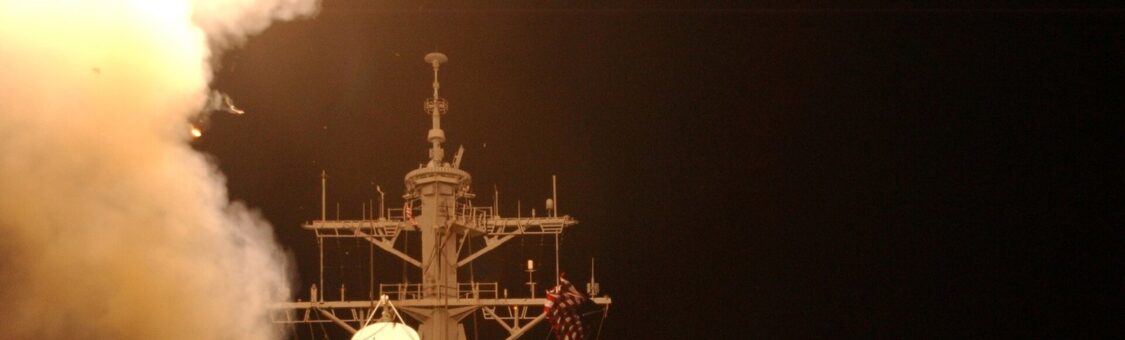
U.S. combat operations against Iran have cost at least $38 billion through Aug. 1 and could cost up to $3 billion a month as the conflict continues, according to an analysis released Tuesday by the Congressional Budget Office.
The estimate covers the price tag of the conflict through Aug. 1 and reflects the costs of replacing expended munitions and equipment lost in battle, increased flying hours and other operations and increased fuel costs, the CBO said. It does not account for damage inflicted by Iranian strikes on U.S. bases across the Middle East, according to the agency, which noted that the Pentagon did not respond to its requests for information.
The majority of the expenses, nearly $22 billion, are for the expenditure of munitions, including $13.1 billion for missile defense interceptors used to counter Iranian missile and drone attacks, according to the agency. The CBO said the U.S. has probably used between one-half to two-thirds of its inventory of certain interceptors since June 2025, when the U.S. joined Israel in bombing Iranian nuclear sites and intercepted retaliatory Iranian attacks.
Rebuilding the Pentagon’s inventory of interceptors would probably take at least five years, even if currently low production rates are increased, the agency stated in a letter to Rep. Brendan Boyle, D-Pa.
The CBO estimated that an additional month of the war at the level of low and sporadic violence seen in May and June would cost about $2 billion. If the conflict’s intensity ramps up, as it did in July, the monthly cost would increase to $3 billion.
Its calculations show that the Pentagon’s second-largest war expense has been increased flying hours, which have cost nearly $11 billion. The CBO also estimated $1.9 billion in equipment losses and $3 billion in additional fuel costs, attributing part of the increase to higher energy prices caused by Iran’s closure of the Strait of Hormuz.
The findings align with estimates the Defense Department’s inspector general delivered to Congress on Monday. That report said the war cost the U.S. at least $33.4 billion as of June 29 and resulted in “strategic inventory shortfalls” of critical munitions. It also cited the loss of dozens of U.S. military aircraft and damage to hundreds of buildings.
The IG report said the $33.4 billion figure includes $7.4 billion in “cumulative obligations” for the operation, $22.3 billion in used munitions, and $3.7 billion in equipment losses. That total does not include the costs of infrastructure damage, which are likely to be significant: “Iranian strikes damaged and destroyed hundreds of buildings and structures at U.S. bases in Kuwait, Bahrain, Qatar, UAE, Saudi Arabia, Iraq, Oman, and Jordan during the conflict,” per the IG report.
Key operational costs include “airlift operations ($929.6 million), the Flying Hour Program ($691.1 million), mission and other ship operations ($647.7 million), base support ($405.0 million), and maneuver units ($385.3 million).” On the personnel front, 417 service members were wounded and seven were killed during the operation, according to the IG.
The IG report appears to be the first official, public notice that DoD officials are worried about stockpile depth: “The Office of the Under Secretary for Acquisition and Sustainment (OUSW[A&S]) said that the munitions expenditure in OEF has resulted in strategic inventory shortfalls and revealed industrial base bottlenecks for munitions resupply.” A&S officials specifically called out “the production of solid rocket motors, the availability of high-grade explosives and propellants, and the recruitment of skilled manufacturing labor” as key issues.
The White House asked Congress in June to approve $87.6 billion in emergency supplemental funding tied, in large part, to the ongoing conflict with Iran, including $21 billion to replenish depleted munitions. That request has made little headway in Congress ahead of the midterm elections. House Republicans narrowly approved a budget resolution in July that would provide the Pentagon with the funds but the Senate has yet to act on the proposal.
Chief Pentagon spokesman Sean Parnell said in a statement Tuesday that “claims of U.S. munition shortages are false.” President Donald Trump and Defense Secretary Pete Hegseth have also denied that the U.S. is running low on key munitions.
The CBO’s report excludes future repair and maintenance costs for equipment used in the conflict. It also does not include costs associated with the 18 service members who have died in the conflict as well as potential increases in veterans’ health care and disability compensation for the more than 800 troops who have been wounded. More than 50,000 U.S. service members are deployed to the Middle East to support the war, which was jointly launched by the U.S. and Israel in February.
Sources: Breaking Defense · Air Force Times