The Netherlands will acquire a Saab GlobalEye airborne early warning and control (AEW&C) aircraft, giving the country its first national airborne surveillance and command capability. Dutch Deputy Prime Minister and Minister of Defense Dilan Yeşilgöz-Zegerius and Swedish Defense Minister Pål Jonson signed a Letter of Intent on Sep. 10, 2026, though a formal contract has yet to be signed.
Under the arrangement, the Royal Netherlands Air Force will join a joint pool with three Swedish Air Force GlobalEyes, allowing both countries to operate the aircraft through shared logistics, maintenance, and possibly mixed-crew missions. The Dutch Ministry of Defense said Dutch personnel access is expected to begin by 2028, with the aircraft delivered by 2031.
Saab said it “stands prepared and awaits the next steps of the procurement process.” Company President and CEO Micael Johansson said the system “will provide enhanced situational awareness and early warning capabilities across multiple domains, while also strengthening NATO’s ability to operate in an increasingly complex security environment.”
Jonson said the GlobalEye “provides an advanced situational picture and the capability to detect and track, among other things, drones, robots, and other threats in the air, at sea, and on land.”
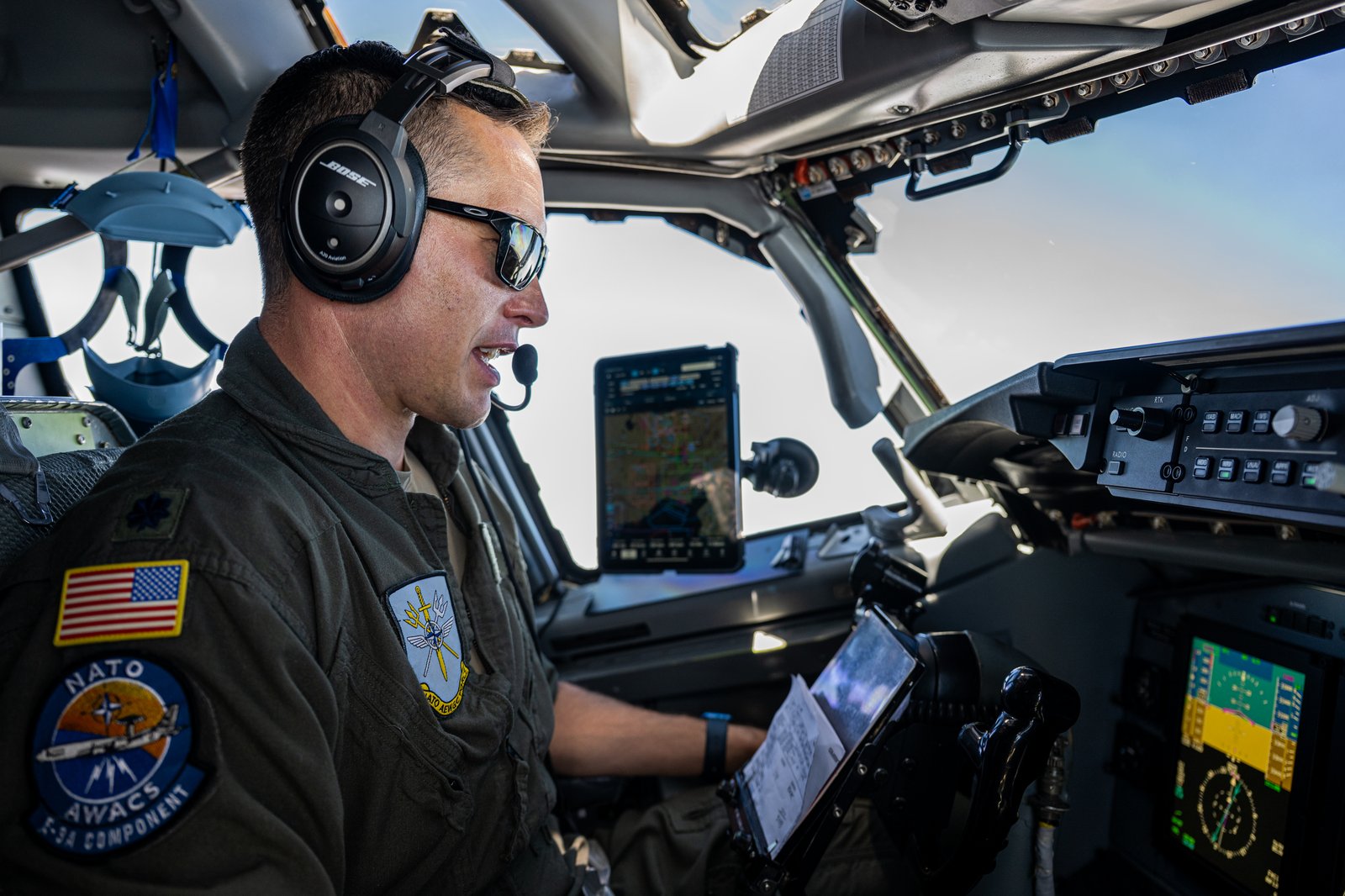
The Dutch Ministry of Defense noted that the Netherlands currently relies on NATO’s ageing E-3 AWACS fleet, which counts 14 aircraft, and that the new platform will not replace those aircraft on a one-to-one basis. The Netherlands is among 11 NATO allies participating in a joint procurement of up to ten GlobalEye aircraft announced in July 2026, alongside Belgium, Canada, Denmark, Germany, Latvia, Lithuania, Luxembourg, Norway, Romania, and Sweden.
The GlobalEye is based on the Bombardier Global 6000/6500 business jet and carries the Erieye ER radar, an active electronically scanned array system with GaN technology. According to Jane’s, the radar enables a detection range of up to 450 km for fighter-sized aircraft, depending on altitude and radar cross section. The platform also includes a Leonardo SeaSpray 7500E maritime surveillance radar and a FLIR Systems Star Safire 380-HD electro-optical/infrared turret.
The Dutch selection follows France’s June 2025 choice of two GlobalEye systems with an option for two more, and Canada’s May 2026 decision to begin negotiations with Saab, beating proposals from Boeing and L3Harris.
Why it matters
The Dutch decision extends GlobalEye’s momentum among NATO members seeking to reduce reliance on the alliance’s overburdened E-3 AWACS fleet. By pooling aircraft with Sweden, the Netherlands gains an organic surveillance and command capability sooner than a standalone purchase would allow, while both countries take on a larger share of European collective defense.
Sources: The Aviationist