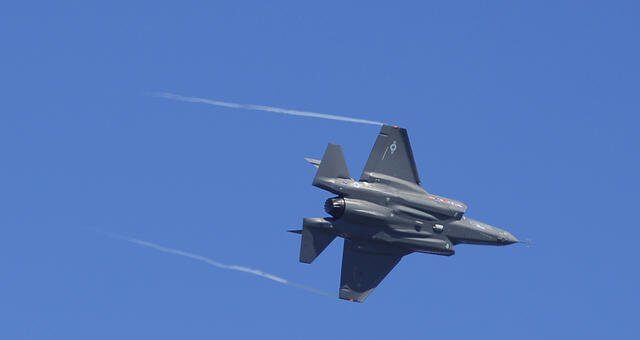
The U.S. State Department on Sept. 17, 2026, approved a potential Foreign Military Sale of up to 48 F-35A Lightning II fighter jets to Saudi Arabia, valued at up to $24.3 billion. The Defense Security Cooperation Agency notified Congress of the potential sale the same day, starting a 30-day review period during which lawmakers can object to the deal.
The package includes 49 Pratt & Whitney F135 engines — one spare beyond the 48 needed to power the aircraft — along with secure communications and navigation equipment, electronic warfare support, training simulators, spare parts, and years of maintenance and logistics support. Lockheed Martin Aeronautics in Fort Worth, Texas, and Pratt & Whitney Military Engines in East Hartford, Connecticut, would be the main contractors, according to the Defence Blog. The State Department’s notice did not mention weapons or delivery timelines.
In a statement, Lockheed Martin said the government-to-government agreement “exemplifies our shared commitment to enduring security, stability, and long-term cooperation,” adding that the aircraft’s capabilities “directly support” Saudi Arabia’s Vision 2030. Pratt & Whitney referred questions to the Pentagon’s F-35 Joint Program Office.
President Donald Trump first pledged to sell F-35s to Saudi Arabia in November 2025, ahead of a Washington visit by Crown Prince Mohammed bin Salman, when the two countries also signed an agreement designating Saudi Arabia a major non-NATO ally. Trump repeated the commitment in March 2026, according to the Defence Blog. The approval would make Saudi Arabia the second country in the Middle East, after Israel, cleared to fly the stealth aircraft.
The sale has drawn scrutiny from some lawmakers following a New York Times report that U.S. intelligence warned the transfer could give Beijing access to the jet’s sensitive technology. It is unclear whether enough legislators oppose the deal to block it, Breaking Defense reported.
The State Department’s notice states the sale “will support the foreign policy and national security objectives of the United States by improving the security of a major non-NATO ally that is a force for political stability and economic progress in the Gulf region,” and that it “will not alter the military balance in the region.”
The terms of the deal are not final, as prices and quantities can fluctuate during negotiations. The congressional notification is not a signed contract; formal negotiations between the U.S. and Saudi governments would follow the review period.
Sources: DVIDS News · Breaking Defense