News

News

Carney, Erdogan announce strategic partnership on trade, defence in Ankara
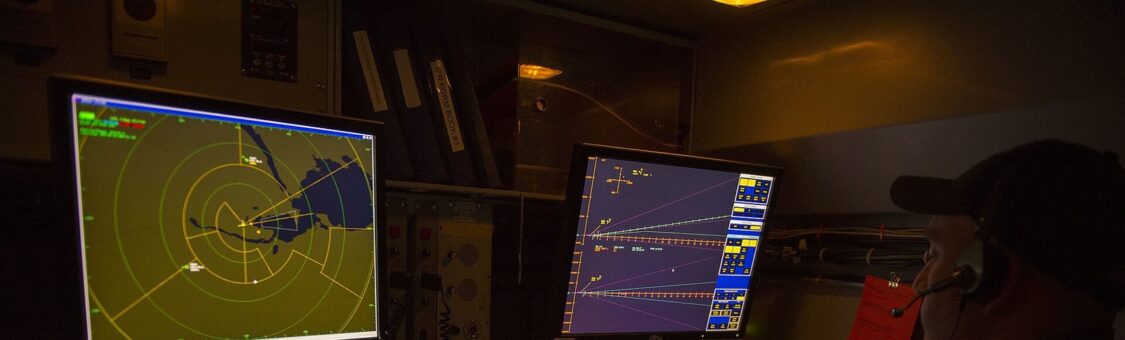
Royal Canadian Air Force Master Cpl. Doug James, an air traffic controller with the 8 Air Communications and Control Squadron, directs aircraft during Vigilant Shield 15 at Royal Canadian Air Force 5 Photo: SrA Justin Wright

Carney, Erdogan announce strategic partnership on trade, defence in Ankara

Prime Minister Mark Carney and Turkish President Recep Tayyip Erdogan announced a strategic partnership on Thursday aimed at expanding trade and defence co-operation, during the first dedicated bilateral visit to Turkey by a Canadian prime minister.

The three-day visit, which began Wednesday, includes meetings with Erdogan in Ankara and business leaders in Istanbul. Canada and Turkey do about $4.3 billion in trade annually. Carney and Erdogan formally announced the launch of free trade negotiations at the NATO summit in Ankara on July 7.

The partnership has four pillars: trade and investment, defence and security, energy, and people-to-people ties. Negotiators will hold the first round of free trade talks in Ankara next month. The agreement also includes a new defence industry co-operation accord to connect Canadian and Turkish companies, and will pave the way for investments in energy and critical minerals. The two countries will finalize an air transport agreement to increase passenger flights.

Carney praised Turkey as an “exceptional” partner.

“No country builds strength alone,” he said in a joint statement at the presidential palace. “The most resilient countries bring together complementary strengths with trusted partners. Our goal isn’t self-sufficiency. It is collective resilience.”

Erdogan said the agreements mark a new era in relations.

“We had diplomatic relations, but we had some kind of disconnect for a very long time now,” he said. “And today we put an end to it. Now comes a new period, a new era for Turkey and Canada.”

Erdogan said he plans to visit Canada with a business delegation but did not say when.

The visit comes a month after Turkish authorities launched a nationwide crackdown on dissent and civil society, including the dismantling of 2SLGBTQ+ and HIV-advocacy organizations. Energy Minister Tim Hodgson, who is accompanying Carney along with Foreign Minister Anita Anand, said, “The prime minister has been very clear. We need to engage with the world as it is, not the way we wish it to be.”

Canada imposed a de facto arms embargo on Turkey in 2021 over allegations that Canadian-made drone parts were redirected to Azerbaijani forces during the Nagorno-Karabakh conflict. The policy has since been eased. Officials said Canada continues to assess each potential export on a case-by-case basis.

On defence, Secretary of State for Defence Procurement Stephen Fuhr visited Turkey in May 2026 and identified ammunition production, drones and counter-drone systems as areas for potential co-operation. Fuhr said future collaboration could involve co-development programmes.

On energy, Turkey plans to add roughly 20 gigawatts of nuclear power by 2050. Ottawa and Ankara are reportedly planning a working group to study the feasibility of a bid by Canada’s Candu nuclear team to build Turkey’s second or third nuclear plant. Officials declined to confirm any specific outcomes.

Immediately after landing in Ankara on Thursday, Carney visited Anitkabir, the mausoleum of Mustafa Kemal Atatürk, and laid a wreath at the monument.

Sources: CBC Politics · CBC Politics

News

Officials to provide update on fatal fire at CFB Wainwright that killed 4 soldiers
336th Engineer Detachment firefighters join Canadians, Romanians in plane crash emergency response exercise Photo: SFC Thomas Calvert

Officials to provide update on fatal fire at CFB Wainwright that killed 4 soldiers

Canadian Armed Forces officials are scheduled to hold a media briefing Wednesday to provide an update on the fire at Canadian Forces Base Wainwright in Alberta that killed four soldiers during a training exercise.

The briefing, announced by the Department of National Defence, comes after a grass fire swept through the base on Saturday, Oct. 17. Four soldiers died and dozens more were injured. Alberta Premier Danielle Smith said Sunday that 39 patients remained in hospital, with at least 19 in critical condition.

Officials confirmed the deaths of Pte. Aidan Goulding, 23, from 3rd Battalion, Princess Patricia’s Canadian Light Infantry (PPCLI), originally of North Vancouver; Pte. Shaun Farrell, from 3rd Battalion PPCLI, of Prince Albert, Sask.; Pte. Hayden Lykkemark, from 3rd Battalion PPCLI, of Langley, B.C.; and Sgt. Morgan Wong, 26, a reservist from the Loyal Edmonton Regiment serving with 3rd Battalion PPCLI.

Goulding joined the military in February of this year, his mother, Sonia Monk, told CBC News. She said officers came to her door in British Columbia around 11 p.m. Saturday to inform her of his death.

“He was always the guy who kept everybody’s spirits up,” Monk said. “He really was the light of my life.”

Wong earned a bachelor of commerce degree from the University of Alberta and served in Latvia from October 2024 to June 2025, his family said. Farrell’s mother, Patricia Farrell, asked for privacy in a social media post.

The cause of the fire and reports that it set off a series of blasts remain under investigation, officials said.

In a statement, Saskatchewan Premier Scott Moe offered condolences to Farrell’s family, and B.C. Premier David Eby recognized Goulding and Lykkemark. The Loyal Edmonton Regiment Association said in a social media post: “We will remember them.”

Canadians stepped up to give blood following the fire, according to Global News.

Sources: Global News Canada · CBC Politics

News

US Orders Some Diplomats Out of Saudi Arabia as Houthi, Iran Tensions Rise
US Navy 041011-N-7798M-055 Chief of Naval Operations (CNO), Adm. Vern Clark, speaks to Sailors aboard the guided missile destroyer USS Preble (DDG 88) during his tour of the Middle East region.jpg Photo: U.S. Navy photo by Cmdr. Denny Moynihan

US Orders Some Diplomats Out of Saudi Arabia as Houthi, Iran Tensions Rise

The United States has ordered some diplomats and their families to leave Saudi Arabia because of the threat from Houthi militants, as the Iran-backed group carried out more strikes from Yemen. The move comes amid escalating tensions across the Middle East, with the U.S. and Israel drawing up plans for renewed strikes on Iran, according to the New York Times.

NBC News reported that the pullout of American personnel went beyond Saudi Arabia, with some military employees set to be removed from bases in Jordan, Kuwait and Qatar. A U.S. Central Command spokesperson said, “We regularly move U.S. service members and assets to optimize mission readiness,” and added, “We do not discuss related movements for operational security reasons.”

The State Department ordered staff reductions at the U.S. embassy in Saudi Arabia, citing Houthi attacks on the kingdom including strikes on civilian airports. Chiefs of mission at several other posts across the region have been told to operate with fewer personnel, in moves sources compared directly with drawdowns at the start of the war in February.

Recent Attacks

A drone attack on Aramco’s Shaybah oil field killed two people from Nepal and the Philippines early Wednesday, the Saudi Energy Ministry said. The projectile was intercepted, the ministry added, but the people were killed by falling debris. Operations at the field, which has the capacity to produce 1 million barrels of crude a day, were unaffected.

Two people were killed and several others were injured in an attack on King Fahd International Airport in the eastern Saudi city of Dammam later in the day, the General Authority of Civil Aviation said.

Riyadh’s King Khalid International Airport has been hit repeatedly this month. The deadliest strike, on Oct. 10, wounded more than 300 people. Saudi civil aviation authorities put the death toll at 12, though CNN has since reported 13 killed, making it the deadliest attack on Saudi Arabia in more than a decade.

UK Deploys Typhoons

Britain will send Royal Air Force Typhoon fighter jets to Saudi Arabia to shoot down Houthi missiles and drones aimed at Saudi cities and critical infrastructure, the UK Defense Ministry said on Oct. 20. The jets will fly defensive counter-air missions and will not carry out strikes inside Yemen, according to a spokesperson for the prime minister’s office.

The government has not said how many Typhoons are going, where they will be based or when patrols will begin. The jets join UK support already in place, including air defense equipment, British personnel, and a Royal Air Force Voyager tanker that has been refueling Saudi fighters since September. The Associated Press reported that Britain is also extending its Voyager refueling mission by 90 days.

“The continuing attacks from the Houthis on our ally Saudi Arabia are absolutely despicable. The targeting of the airport in Riyadh in particular shows the lengths the Houthis are going to escalate the situation in the region,” said UK Defense Secretary Wes Streeting.

Iran Tensions

President Donald Trump said on Oct. 21 that the U.S. is not negotiating with Iran and that “something” will happen “fairly soon.” The remarks mark a turn from Trump’s pledge on Oct. 8 that the United States would not attack Iran before the midterms. Options presented to Trump include strikes on tunnel entrances at nuclear sites and on the strategic islands of Kharg and Qeshm, NBC News reported, while officials quoted by the Times said there is a chance he could order strikes before the end of this month.

Israel has sent dozens of fighter jets and refueling aircraft along a route through Syrian and Iraqi airspace consistent with a strike on Iran, turning them back only as they approached the Iranian border, Axios reporter Barak Ravid reported. On Thursday, Iran’s Islamic Revolutionary Guard Corps struck four “violating” tankers that were transferring oil in the northern Persian Gulf, Press TV reported. The U.K. Maritime Trade Operations said a tanker was struck by a projectile southeast of Al Faw, Iraq, on Tuesday.

Brent crude was up 2.7% on Thursday to more than $111 a barrel, its highest level in five months. Brent oil prices are more than 80% higher this year.

Sources: Defence Blog · DVIDS News

News

Pentagon, Lockheed Martin finalize decade-long F-35 framework agreement covering at least 850 aircraft
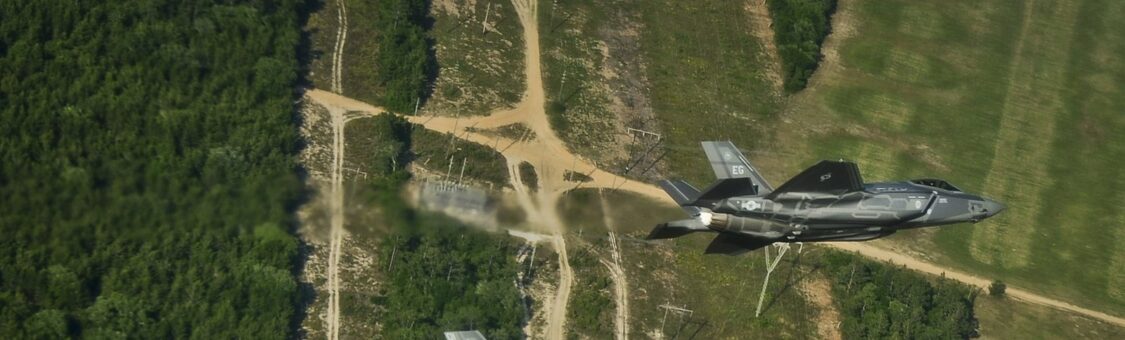
F-35 Lightning II variants in flight near Eglin AFB 2014.JPG Photo: U.S. Air Force photo by Staff Sgt. Katerina Slivinske

Pentagon, Lockheed Martin finalize decade-long F-35 framework agreement covering at least 850 aircraft

The Pentagon and Lockheed Martin announced today a framework agreement covering a decade of F-35 Joint Strike Fighter production and sustainment, a deal that covers at least 850 U.S. aircraft across 10 production lots, includes initial spares, and provides 10 years of sustainment and modification kits, according to press releases from both parties.

As part of the agreement, Lockheed will fund $7 billion worth of unspecified initiatives for the F-35 program. The company also said it will keep the tri-variant stealth jet’s production rate steady at 156 aircraft annually.

The framework does not increase the fighter’s manufacturing rate, and the announcements do not specify the total cost to taxpayers or expected savings from the multi-year format.

Pentagon acquisition chief Michael Duffey said in the Defense Department’s release: “We have fundamentally changed how we stabilize the American defense industrial base to produce at speed and scale. This agreement with Lockheed Martin proves it. By aligning financial incentives with actual performance, we are ensuring our warfighters are equipped with the lethal capabilities they need to fight and win.”

Lockheed CEO Jim Taiclet said the framework deal “strengthens the way we can plan and invest in the F-35 enterprise” and affords “greater certainty” to “make the upfront investments needed to expand capacity, improve efficiency and build a more resilient supply chain.”

Under the terms, Lockheed and the F-35 Joint Program Office “will work to finalize contract terms, pricing and schedules through a formal contract award” if lawmakers grant the requisite authority and appropriations.

The F-35 is operated by the Air Force, Marine Corps and Navy. The fiscal 2027 defense authorization bill from the Senate Armed Services Committee includes language permitting multi-year procurement contracts for the F-35; the House version includes a similar provision with additional guardrails. Under the House bill, the defense secretary must certify that the contract includes “the full complement of initial spare parts and alternate mission equipment for each aircraft to be procured under the contract,” and the Pentagon must demonstrate cost savings of at least 5 percent.

Neither the Senate nor House version explicitly authorizes a multi-year sustainment agreement. A previous attempt at a five-year performance-based logistics sustainment contract failed in 2024 when officials could not satisfy a congressional requirement to demonstrate cost reduction or readiness improvement.

A Lockheed spokesperson said the agreement “will not change the process for production slot allocation” for international customers, and that “F-35 international operators are an integral part of the global F-35 fleet, and this agreement will bring the benefit of economies of scale to their future purchase plans.”

A recent agreement for two lots of F-35 production included nearly 300 aircraft at a price of $24.3 billion. Over 1,300 F-35s have been delivered to date.

Sources: DoD News · Defence Blog

News

Ukraine’s HUR Publishes Detailed Breakdown of New Russian Filin Cruise Missile
9P71 Transporter-Erector-Launcher and 9M714 rocket of 9K714 Tactical ballistic missile complex «Oka» in Military-historical Museum of Artillery, Engineer and Signal Corps in Saint-Petersburg, Russia.j Photo: One half 3544

Ukraine’s HUR Publishes Detailed Breakdown of New Russian Filin Cruise Missile

Ukraine’s military intelligence agency has published a detailed breakdown of Filin, a new Russian ground-launched cruise missile that Moscow began firing at Ukraine in late summer 2026. The Main Intelligence Directorate of Ukraine’s Defense Ministry, known as HUR, released an interactive 3D model of the missile, its main assemblies, and a catalog of its electronic components on the agency’s War & Sanctions portal. The agency did not say how many Filin missiles Russia has launched, which targets they hit, or how investigators obtained the parts they examined.

Filin, Russian for “eagle owl,” is made by AO NPO Molniya, a company within Russia’s state-owned Tactical Missiles Corporation. HUR described the missile as the latest product of a Russian effort to build relatively cheap jet-powered strike weapons that launch from the ground instead of from aircraft or warships.

The missile is 3.5 meters (11.5 feet) long and has a wingspan of 3 meters (9.8 feet), with a maximum launch weight of 210 kg (463 pounds). Its fuselage is made of carbon fiber and fiberglass composites, and some of its parts are produced by 3D printing. Russia claims Filin can reach a top speed of 800 km/h (497 mph) and fly up to 1,200 km (746 miles), although HUR’s specification sheet gives the range as 600 to 1,200 km (373 to 746 miles). The missile can fly at very low altitude or climb as high as 6 km (19,700 feet).

Filin comes in versions with either a 50 kg (110-pound) or a 100 kg (220-pound) warhead, and HUR lists three warhead types: high-explosive fragmentation, penetrating, and thermobaric. The missile is fired from a ground launcher with the help of a solid-fuel booster, which pushes it up to flying speed before its small jet engine takes over for the cruise to the target.

HUR’s investigation also links Filin closely to Russia’s long-range attack drone program. The missile’s onboard equipment is produced by OOO PLAZ, which also makes equipment for the Garpiya, or “Harpy,” drone, a modification of the Geran-2. HUR said electronic units from Filin and Garpiya share a similar layout and similar markings.

For guidance, Filin relies on a Chinese-made inertial navigation system, which tracks the missile’s position using onboard motion sensors without any outside signal. It works alongside a 16-channel Kometa satellite navigation module, a jam-resistant receiver made by Russia’s VNIIR-Progress. HUR said Filin’s electronics resemble those found in other Russian missiles and drones, but with a larger share of Chinese parts. Investigators counted 35 American components and 22 Chinese ones in the missile’s onboard equipment.

The identified suppliers include Texas Instruments, Analog Devices, NXP Semiconductors, and STMicroelectronics, along with Chinese firms such as WinChipHead and Mornsun. Production markings on some parts date from 2021 and 2022, including an Ethernet switch chip made in May 2022, three months after Russia launched its full-scale invasion.

Filin’s engine, by contrast, is Russian: an R500 turbojet built by OOO Reynolds. HUR had previously identified the same engine in Russia’s S-71K Kover air-launched cruise missile and in the S-71M Monokhrom.

Sources: Defence Blog · Stars and Stripes

News

Navy raises AI ship-inspection contract to $300M to cut repair-yard time
US Navy 101202-N-9643K-958 The amphibious assault ship USS Bonhomme Richard (LHD 6) is in dry dock at NASSCO Shipyard.jpg Photo: U.S. Navy photo by Chief Mass Communication Specialist Joe Kane

Navy raises AI ship-inspection contract to $300M to cut repair-yard time

The U.S. Navy has boosted its contract for AI-powered robotic ship inspections to $300 million, according to a Stars and Stripes report published Oct. 21, 2026. The increase is intended to expand automated inspections that keep warships out of repair yards, shifting maintenance operations toward faster, data-driven checks.

The Navy has not released a breakdown of how the $300 million will be allocated across ships or yard periods.

“This is a key part of our strategy to maximize ship availability,” a Navy official told Stars and Stripes, speaking on condition of anonymity. “Automated inspections let us catch problems earlier and schedule repairs more efficiently, keeping ships where they belong – at sea.”

In August, Naval Surface Warfare Center Port Hueneme Division personnel tested a prototype man-overboard detection system on the Self Defense Test Ship while it was docked at Port Hueneme, California, using thermal cameras and AI video analytics.

Sources: Stars and Stripes · Stars and Stripes

News

Air Force Tests Rocket Delivery of Military Cargo in SpaceX Starfall Capsule
Cargo Loading (8336053).jpg Photo: U.S. Air Force AFCENT by Tech. Sgt. Kregg York

Air Force Tests Rocket Delivery of Military Cargo in SpaceX Starfall Capsule

The U.S. Air Force flew military cargo aboard a SpaceX Starfall capsule on Oct. 20, testing whether rockets could deliver supplies to troops anywhere on Earth within hours. The Air Force Research Laboratory (AFRL) launched its own cargo pods on a commercial rideshare mission from Cape Canaveral Space Force Station, packing them with satellite trackers, batteries, survival gear, a water desalinator, and emergency medical equipment.

During the flight, sensors recorded temperature, shock, and vibration the cargo experienced during launch, spaceflight, and reentry. Engineers also checked whether a UNI-PAC III life raft would fit inside the capsule for future tests.

The flight was part of Rocket Cargo, an AFRL project studying whether large commercial rockets can move materiel around the world on tactical timelines.

“Any day you launch a rocket is a good day, but today was more than just another big rocket launch,” said Brig. Gen. Douglas P. Wickert, Department of the Air Force Technology Executive Officer and AFRL commander. “Today’s launch was another demonstration of how AFRL is partnering with industry to burn down risk, collect hard data and deliver war-winning technologies for the operational force.”

Starfall is SpaceX’s uncrewed reentry capsule, a squat disk about 3.1 meters (10 feet) across that weighs roughly 2,100 kg (4,600 pounds). It can return up to 1,000 kg (2,200 pounds) of payload under parachutes, with recovery planned in the Pacific Ocean. SpaceX flew the first Starfall demonstration in June.

AFRL says Rocket Cargo could carry tens of tons per launch to places with no runways or roads, with a goal of reaching almost any point on Earth within about 90 minutes and eventually moving loads comparable to a C-17 transport. In June, the Air Force awarded Colorado-based Geneva Technologies $4.3 million to help design the rocket cargo system. In August, the Air Force expanded Blue Origin’s role with a study contract now worth about $13 million.

“This was a critical achievement to demonstrate the potential of Rocket Cargo delivery for point-to-point rapid global mobility for the Future Force,” said Adam Remaly, director of the AFRL Technology Transition Office.

AFRL plans further tests with commercial rockets and reentry capsules as it gathers data on how cargo survives the trip.

Sources: DVIDS News · DVIDS News

News

U.S. Army Tests XM1180 Artillery Shell That Can Hunt Moving Tanks
41st Field Artillery live-fire exercise (6047983).jpg Photo: U.S. Army 7ATC by Spc. Zachary Stahlberg

U.S. Army Tests XM1180 Artillery Shell That Can Hunt Moving Tanks

The U.S. Army fired three prototype XM1180 155mm hit-to-kill artillery shells at a tank target at Yuma Proving Ground in Arizona on Aug. 18, 2026, to test a new image-based seeker designed to guide the round to moving armored vehicles. The tests were the second phase of a series of guided test vehicle firings conducted by Yuma Test Center personnel, Project Manager Combat Ammunition Systems, the U.S. Army’s DEVCOM Armaments Center at Picatinny Arsenal, and Raytheon, which builds the GPS-guided M982 Excalibur shell that the XM1180 is based on.

The rounds were launched from a 39-caliber cannon in different configurations to evaluate the seeker’s performance on each shot. The XM1180 is part of the Cannon-Delivered Area Effects Munition (C-DAEM) Armor program, which dates to 2018. The Army fired its first guided test vehicle at Yuma in February 2024, when the shell identified a target and handed guidance over to its seeker, and the program reached Technology Readiness Level 6 ahead of schedule.

Lovjoat Singh, a test and evaluation engineer at DEVCOM Armaments Center who planned and ran the firings, explained the two steps of the test: “It will be an open loop test then following a closed loop test. Open-loop test means the seeker is going to be seeking a target but not actually acting upon it. Then closed loop is actually using the seeker to guide to a target.”

The seeker builds an image of the target area and steers the shell into an armored vehicle, including one that has moved since the shell was fired. Casey Scharenbroich, an evaluator with the U.S. Army Operational Evaluation Command, said, “It’s a cool new technology that basically creates (an) image of the target area and it’s able to find the target in that area. It should be able to use the image to guide to target.” He added, “It would be a huge advantage on the battlefield for commanders, allowing them to engage targets that have moved or are on the move with this munition.”

The Army also expects the seeker to reduce collateral damage, because the shell guides onto a specific vehicle instead of saturating an area, a key difference from cluster rounds such as the Cold War-era DPICM. Army officials have since said they want future rounds to share data with one another, so that several shells fired at a column of vehicles do not all strike the same tank.

The seeker is now headed for a second, newer program. Yuma test officer Ashley Lochetto said, “Our intent is to conduct GPS denied testing of the (seeker) along with integrating it into the XM1230 Extended Range Artillery Projectile.” The XM1230 is the Army’s push for a maneuvering 155 mm shell with deployable wings that can strike moving targets beyond 65 km (40 miles) without a rocket motor. General Atomics Electromagnetic Systems joined General Dynamics Ordnance and Tactical Systems and BAE Systems on the program in June. The Army is aiming for low-rate production in fiscal 2029 and initial operational capability in fiscal 2030.

The C-DAEM Armor guided test vehicle series will continue through fiscal 2027. The first XM1230 firings with the new seeker are scheduled at Yuma Test Center within the next few months.

Sources: DVIDS News · DVIDS News

News

Air Force formalizes 2035 fighter requirement of 1,509 jets
Two U.S. Air Force F-35 Lightning IIs assigned to the 31st Test and Evaluation Squadron.jpg Photo: U.S. Air Force photo by Airman 1st Class Thomas Spangler

Air Force formalizes 2035 fighter requirement of 1,509 jets

The U.S. Air Force has told Congress it needs 1,509 combat-coded fighter jets by 2035, according to a force structure report sent to lawmakers on Oct. 16. The figure was outlined by Lt. Gen. David Tabor, the Air Force’s deputy chief of staff for plans and programs, at a Pentagon roundtable with reporters on Oct. 20.

The 1,509 figure represents what regional commanders say they need to carry out their missions at medium risk, a level where forces would likely achieve their goals but could be strained in long operations. The service also calculated a low-risk requirement of 1,723 aircraft, up from a prediction of 1,558 last year, Tabor said. He noted the analysis began before this year’s war with Iran and was not driven by it, and that the figure is likely to change with world events, new requirements, and technology.

Under the projected fleet mix, F-35s would make up about 40 percent of the fleet, up from about 30 percent today. F-22s and their replacement, the F-47, would make up about 20 percent, with the service planning to replace F-22s with roughly the same number of F-47s. F-15s and F-16s would split the remaining 40 percent about evenly. The figures exclude A-10s, which are not in the Air Force’s 2035 plans.

Reaching the 1,509 goal depends on congressional funding and on Lockheed Martin and Boeing building the jets on schedule, Tabor said. The fiscal 2027 request seeks 38 F-35s and 24 F-15EXs, a total of 62 aircraft. The budget counts on $2.34 billion for 14 of the 38 F-35s through a reconciliation bill; if that bill fails, Tabor said the service could pull money from other programs or push the buys to 2028.

Tabor confirmed the Air Force is weighing whether to buy a new-build F-16, tentatively called the F-16G, to replace older aircraft. He said a decision is not urgent and likely will not come in the fiscal 2028 budget. The 1,509 figure does not include Collaborative Combat Aircraft, or CCAs, drone wingmen the service plans to field in a fleet of 500 by 2032. Tabor said the drones have not yet changed the fighter requirement but could reduce it in future reports.

The report also notes modernization setbacks for the F-35 have driven delays and production struggles have postponed F-15EX deliveries. Boeing said in a statement it is working with the U.S. Air Force and Department of War to ramp up F-15EX production, and a Lockheed spokesperson said the company is on pace to deliver 156 F-35s in 2026.

Sources: DVIDS News · Defense News

News

Russian Satellite’s Close Approach to Commercial Spacecraft Highlights Orbital Threats, Space Force Role
CMSSF Visits Vandenberg SFB Photo: Amn Enso Valle

Russian Satellite’s Close Approach to Commercial Spacecraft Highlights Orbital Threats, Space Force Role

A Russian satellite made a dangerously close approach to a commercial spacecraft, an incident that underscores the growing orbital threat environment and the operational relevance of the U.S. Space Force, according to a report published Oct. 22, 2026, by Air & Space Forces Magazine.

The report details how the Russian satellite stalked or shadowed the commercial spacecraft, coming within a proximity that U.S. officials deemed dangerous. The incident highlights the kinds of maneuvers that the Space Force is tasked with monitoring and responding to in Earth orbit.

While the report does not specify the exact distance of the close approach, the date of the incident, or the names of the satellites involved, it frames the event as a concrete example of the orbital threat environment that the Space Force must contend with as part of its mission to protect U.S. and allied interests in space.

The Space Force’s operational relevance is directly tied to such incidents, as the service is responsible for space domain awareness—tracking objects in orbit and identifying potentially threatening behavior, including close approaches by foreign satellites to commercial or government spacecraft.

The report implies that the Space Force’s role in detecting and characterizing such maneuvers is central to its value, as commercial space operations become more common and the risk of interference or collision grows.

The incident serves as a reminder of the challenges posed by Russian satellite activities in low Earth orbit, where commercial spacecraft increasingly operate.

As of the report’s publication, no further details were provided about the specific spacecraft involved or any subsequent actions taken by the Space Force or the commercial operator.

Sources: Air & Space Forces Magazine