News

News

Lockheed Martin awards L3Harris record $250M GMLRS rocket motor contract
HIMARS Rocket Launch (8730793).jpg Photo: U.S. Army photo by Sgt. Jamie Robinson

Lockheed Martin awards L3Harris record $250M GMLRS rocket motor contract

L3Harris Technologies has received a $250 million contract from Lockheed Martin to build solid rocket motors for standard-range Guided Multiple Launch Rocket System (GMLRS) rockets, the largest quantity ordered in the program’s history, the company said Oct. 12.

The motors will be produced at L3Harris’ new 60,000-square-foot (5,600-square-meter) plant in Camden, Arkansas, which the company said will open later this year. The facility will use automation and robotics across each stage of solid rocket motor production. L3Harris did not disclose how many motors the contract covers, the delivery schedule, or which customers will receive the finished rockets.

GMLRS is the guided rocket fired by the U.S. Army’s HIMARS and M270 launchers and by allied armies, including Ukraine’s. Each standard-range rocket can hit targets out to about 70 km (43 miles). Lockheed Martin is the prime contractor and assembles the rockets, also in Camden, while L3Harris supplies the motor, the electronic safe-and-arm device that keeps the warhead from detonating early, and the proximity sensor that detonates it near the target.

“Securing this follow-on award at the highest quantity in program history demonstrates confidence in L3Harris’ missile propulsion expertise and our ability to deliver at scale,” said Scott Alexander, president of Propulsion Systems at L3Harris Missile Solutions. “With our investments to expand capacity ahead of need, we’re well-positioned to meet this surge while maintaining the quality our customers expect.”

L3Harris said it has doubled its GMLRS motor output in recent years through new manufacturing techniques. The company became a major solid rocket motor supplier when it bought Aerojet Rocketdyne in 2023, and the motor has long been one of the limits on how fast GMLRS rockets can be built. Demand has risen sharply since Russia’s full-scale invasion of Ukraine, where HIMARS and GMLRS have been in heavy use, and as more countries buy HIMARS. Australia began building its own GMLRS rockets this year and test-fired the first Australian-made round from a HIMARS in April.

L3Harris named the Camden plant an “Arsenal of Freedom” facility, after the Department of War initiative to expand weapons production.

Sources: Defense News · Army Times

News

Air Force, Northrop Grumman break ground on new B-21 final assembly line
B-21-in-flight.jpg Photo: USAF

Air Force, Northrop Grumman break ground on new B-21 final assembly line

The U.S. Air Force and Northrop Grumman broke ground on Sept. 29, 2026, on a new final assembly line for the B-21 Raider at Air Force Plant 42 in Palmdale, California, adding approximately one million square feet of production space to support a planned 25% increase in annual production capacity. The Air Force announced the groundbreaking a week later, on Oct. 6.

The expansion is part of an effort to accelerate manufacturing and deliver the bomber to operational units more quickly, with the first aircraft scheduled to arrive at Ellsworth Air Force Base, South Dakota, in 2027.

“This groundbreaking represents more than construction; it represents a sustained commitment to delivering the capability our nation needs at the speed the security environment demands,” said Gen. Dale White, director of Critical Major Weapon Systems and Direct Reporting Portfolio Manager to the Deputy Secretary of War. “The B-21 Raider is foundational to the Air Force’s future long-range strike capability, and this investment strengthens the industrial capacity required to field that capability faster.”

The new facility follows a February 2026 agreement between the Air Force and Northrop Grumman to increase annual B-21 production capacity by 25%, supported by $4.5 billion in funding authorized and appropriated under fiscal year 2025 reconciliation legislation. Northrop Grumman CEO Kathy Warden disclosed a $2.5 billion company investment in additional B-21 production capacity during an April 2026 earnings call.

“The B-21 team has established the foundation to accelerate production responsibly,” said Col. Nicholas Jordan, B-21 Systems program director, Rapid Capabilities Office. “This investment in Palmdale will provide the infrastructure, workforce and manufacturing capacity needed to deliver the Raider to the Air Force at an increased rate.”

The program of record currently envisions the procurement of 100 bombers. The Air Force has not formally committed to increasing that number, though U.S. officials have expressed interest in acquiring more than 100 B-21s.

On Sept. 9, the Air Force activated the B-21 Integration Detachment 1 at Ellsworth, dedicated to coordinating the bomber’s integration. Lt. Col. Joshua Dawkins assumed command during a ceremony presided over by Maj. Gen. Ty Neuman, commander of Eighth Air Force. Ellsworth is being prepared as the B-21’s first main operating base, with construction, communications setup, and crew training moving simultaneously.

“This methodology directly incorporates hard-learned lessons from legacy bomber transitions, avoiding past pitfalls by ensuring that logistics, training pipelines, and maintenance infrastructure are robustly established before the first B-21 arrives on the flightline in the coming years,” Neuman said.

Sources: Defense News · Army Times

News

Anduril Unveils Steelfin Interceptor Family as Low-Cost Option to PAC-3
SIAM surface-to-air missile launch-to-hit sequence.png Photo: U.S. Department of the Army

Anduril Unveils Steelfin Interceptor Family as Low-Cost Option to PAC-3

Anduril Industries unveiled its new Steelfin interceptor family on Oct. 12 at the Association of the U.S. Army’s annual meeting in Washington, positioning the modular missiles as a lower-cost alternative to the Patriot’s PAC-3 Missile Segment Enhancement (MSE). The company says it aims to produce Steelfin at roughly one-third the price of a PAC-3 MSE, which costs about $4 million per round, though it has not disclosed a specific unit price.

Steelfin is a two-stage, surface-to-air interceptor family designed to counter cruise missiles, ballistic missiles, hypersonic weapons, and one-way attack drones, according to Anduril. The first stage is a solid rocket booster that can be swapped for different motors; the second stage is a common terminal interceptor sharing airframe, avionics, software, and flight controls across variants. Both hit-to-kill and blast-fragmentation terminal stages will be offered.

“It is an open system, so the ability to fly it with different rocket motors, different seekers, to be able to swap these components out, to be able to reconfigure the system for a range of different threats is a feature that we built into this,” said Christian Brose, Anduril’s president and chief strategy officer, in a preview call with reporters.

Anduril says Steelfin is compatible with existing launchers, including the M903A2 used by Patriot, the U.S. Navy’s Mk 41 Vertical Launch System, the Army’s Typhon launcher, and containerized launchers. It also works with existing fire-control systems such as Aegis and the Army’s Integrated Battle Command System (IBCS).

The company plans to begin flight tests next year. It has completed ballistic testing with representative air vehicles but has not yet flown a Steelfin missile. Steve Milano, Anduril’s senior director of missiles, said he expects full-rate production by the end of 2028 or early 2029, targeting “multiple thousands” of missiles per year on the low end and “closer to hundreds of thousands” per year on the high end, depending on demand from the U.S. and allied customers.

Anduril is competing for the Army’s low-cost interceptor program and was among vendors selected to move forward in the service’s xTech Apex Intercept competition. The company declined to say whether Steelfin was selected for the Army’s separate Future Interceptor program, but Milano said it is a “natural fit” for that effort, which seeks a next-generation PAC-3 MSE replacement with a 7- to 10-inch terminal storage interceptor and a 10- to 13-inch booster.

Most Steelfin subassemblies will be built at Anduril’s Arsenal-1 facility in Ohio, with final integration done with a “handful of partners.” Solid rocket motors will come from Anduril and other companies.

The launch comes as U.S. air defense stocks have been drawn down by combat in the Middle East. This month alone, Raytheon received contracts worth up to $6.3 billion for SM-3 Block IB interceptors and up to $24.4 billion for SM-6 missiles to replenish U.S. Navy inventories, according to Defence Blog.

Sources: Breaking Defense · The War Zone

News

Army expands Infantry Squad Vehicle order from 649 to nearly 12,000
Infantry Squad Vehicle.jpg Photo: Michael J Malik

Army expands Infantry Squad Vehicle order from 649 to nearly 12,000

GM Defense announced Monday that the U.S. Army has expanded its order for the Infantry Squad Vehicle (ISV) from an initial 649 units to nearly 12,000, a roughly 1,750% increase in fleet size. The announcement was made at the annual Association of the United States Army (AUSA) exposition in Washington, D.C.

Company President Steve duMont said GM Defense can meet the Army’s fast-paced needs with “advanced capability, rapid fielding and sustainable scale.”

“By transferring GM’s world-class engineering, supply chain and manufacturing scale directly to the service member, we are transforming customer needs into mission-ready capability faster than ever before,” duMont said.

To illustrate its production speed, GM Defense noted it delivered PAC-3 Missile Segment Enhancement housing components to Lockheed Martin in 22 days, demonstrating how its “advanced casting and precision-fabrication capabilities can immediately scale” for critical parts.

Before developing the ISV, GM worked with the Army to identify “a clear operational gap” and self-funded an ISV-Utility prototype. The company delivered seven prototypes of the “highly versatile five-soldier variant” at no cost to the Army for unit-level assessments. Those variants will be fielded across 39 active-duty and National Guard mobile brigades.

The ISV lacks armor and, in its standard design, has no doors or windows. The ISV and ISV-Heavy are based on the Chevrolet Colorado ZR2 and Chevrolet Silverado HD 3500 ZR2, respectively, and are designed to adapt to battlefield changes rather than specific missions.

Army officials say the ISV will serve as a platform for the newly established Mobile Brigade Combat Teams (MBCTs), which are designed to respond quickly to evolving threats and large-scale combat operations, drawing on lessons learned from Ukraine.

At AUSA, GM Defense also unveiled concepts for an unmanned ground vehicle (UGV) and an expeditionary energy storage system. The UGV uses “Chevrolet Silverado 3500HD dual-rear-wheel skateboard architecture” for “silent logistics and casualty evacuation,” with testing planned for 2027. The EPIQ Hybrid prototype is a 60-kilowatt, 100-kilowatt-hour energy storage system with an onboard generator to reduce thermal and noise signatures.

Sources: Defense News · Army Times

News

Lockheed Martin Unveils PAC-3 Edge, Its Next-Generation Patriot Interceptor
Tenacious Archer 25 Patriot Live Fire Exercise Day Two (9277921).jpg Photo: U.S. Army photo by Capt. Frank Spatt

Lockheed Martin Unveils PAC-3 Edge, Its Next-Generation Patriot Interceptor

Lockheed Martin unveiled the PAC-3 Edge, its next-generation Patriot interceptor, on Oct. 9, 2026, saying the missile will fly further, reach higher altitudes and engage more capable targets than the current PAC-3 MSE. The company says it is one of two firms selected to advance in the U.S. Army’s Future Interceptor program, though it did not name the other competitor and the Army did not respond to requests for comment.

The PAC-3 Edge is designed to counter advanced threats including hypersonic missiles, according to Lockheed. Tim Cahill, president of Lockheed’s missiles and fire control unit, said the missile will have a longer range, higher altitude capability, greater seeker sensitivity and improved maneuverability compared with the PAC-3 MSE.

Lockheed plans to invest hundreds of millions of dollars of its own money in the missile, with $50 million to $100 million already spent, Cahill said. The company is developing a new seeker in-house, with about $800 million planned for that effort and several hundred million dollars invested so far. The seeker was designed by Lockheed’s Strigo Product Center, which the company says it funded with $250 million of its own money.

The missile will use a three-pulse solid rocket motor developed with Northrop Grumman, providing greater range and altitude than the legacy PAC-3 missile. It will also feature upgraded flight controls and a greater number of attitude control motors for improved agility, Lockheed said.

Lockheed intends to begin testing the PAC-3 Edge in 2027, with initial deployment targeted for 2031. The missile will be built on Lockheed’s existing PAC-3 production line in Camden, Arkansas, which the company is expanding under a seven-year framework agreement with the Pentagon to triple interceptor production. The company is also building a new production facility with robotics and automation, and plans to move PAC-3 production there once complete.

Cahill said the cost of the PAC-3 Edge will be about the same as the PAC-3 MSE, and at full production the annual rate would be about 2,000 units, comparable with the PAC-3 MSE. In January, Lockheed signed a framework agreement with the Pentagon to increase annual PAC-3 production capacity to 2,000 units from about 600.

The Army previously canceled its Lower-Tier Future Interceptor program in 2024, but revived the effort as the Future Interceptor program. Lockheed also announced the PAC-3 ACE, a lower-cost version of the MSE, in July.

Lockheed says the PAC-3 Edge will sit between the PAC-3 MSE and the THAAD system in the Army’s layered missile defense, and is meant to counter aircraft, missiles and hypersonic weapons at higher altitudes and longer ranges than current Patriot interceptors.

Sources: Breaking Defense · Defense News

News

Navy Plans Sole-Source Contract to Integrate LRASM on B-52 Bombers
Long Range Anti-Ship Missile (LRASM) launches from an Air Force B-1B Lancer.jpg Photo: DARPA photo

Navy Plans Sole-Source Contract to Integrate LRASM on B-52 Bombers

The U.S. Navy is planning to negotiate a sole-source contract with Lockheed Martin Missiles and Fire Control to integrate the AGM-158C Long-Range Anti-Ship Missile (LRASM) onto the Air Force’s B-52 Stratofortress bomber, according to an Oct. 7, 2026 contract notice from Naval Air Systems Command (NAVAIR).

The planned Cost Plus Fixed Fee contract covers missile software updates, associated testing, test asset repair, and failure review boards. The notice does not specify a timeline for fielding the capability.

The integration would make all three of the Air Force’s strategic bombers—the B-1B Lancer, B-2 Spirit, and B-52—capable of employing the LRASM. The B-1B and B-2 already have the capability; the B-2 demonstrated it in a June 2026 sinking exercise during Valiant Shield 2026 over the Philippine Sea.

The LRASM is derived from the AGM-158 Joint Air-to-Surface Standoff Missile (JASSM) family, sharing the same airframe design but with components customized for striking ships in contested maritime environments. NAVAIR describes the low-observable missile as a near-term Offensive Anti-Surface Warfare air-launch capability.

The B-52 can carry up to 20 JASSMs—12 externally and eight internally in conventional rotary launchers—as seen in March during Operation Epic Fury. The Air Force’s FY 2027 budget request outlines plans to integrate the latest LRASM and JASSM variants onto the B-52, including incorporating operational flight programs into the bomber’s baseline software, validating safe weapon separation from wing-mounted and internal stations, updating armament interfaces, and completing system-safety testing.

Other Air Force platforms set to receive LRASM include the F-15E Strike Eagle, F-15EX Eagle II, and F-16C/D. Naval aircraft such as the F/A-18E/F Super Hornet and P-8A Poseidon have also been integrated with the missile.

The LRASM can strike maritime targets at ranges exceeding 370 kilometers, according to Naval News. The missile was fired at least four times this summer at exercises around Hawaii and the Western Pacific, showcasing capability from bombers, maritime patrol aircraft, and naval fighters.

Plans to integrate the B-52 with LRASM have existed since 2019, though the effort stalled for several years. The B-52 is also set to receive the AGM-181 Long-Range Stand-Off missile, the Air Force’s next-generation stealth nuclear cruise missile, and is poised for the B-52J upgrade expected to keep the bomber operational until at least 2050.

Sources: Air & Space Forces Magazine · Defense News

News

Army report cites ‘systematic failures’ in deadly DC helicopter crash
Views of UH-60 Black Hawk with SHAPE Helicopter Flight Detachment 150205-A-RX599-018.jpg Photo: Pascal Demeuldre

Army report cites ‘systematic failures’ in deadly DC helicopter crash

The Army has identified several “systematic failures” — including broken radio communications, altimeter errors and bright local lighting — that contributed to the Jan. 29, 2025 mid-air collision between an Army UH-60L Black Hawk helicopter and a commercial jet over the Potomac River, the service said.

The crash killed three soldiers aboard the helicopter and 64 people on an American Airlines flight arriving at Ronald Reagan Washington National Airport from Wichita, Kansas. The Army released its investigation report on Oct. 8; the report was completed in May.

The helicopter, flying under the call sign “Priority Air Transport 25” or “PAT 25,” was on a training flight and assigned to the 12th Aviation Battalion. The Army found the crew was qualified for the flight.

The “most salient contributing factor,” according to the report, was two broken radio transmissions. As a result, the PAT 25 crew did not receive communications from the air traffic controller at Ronald Reagan Washington National Airport, including information about incoming civilian air traffic. Those transmissions “could have enabled them to positively identify” the civilian plane and “maintain visual separation,” the Army noted.

The report also cited bad weather and conditions, as well as instrument errors, as contributing factors.

Other Army news

In separate developments, the Army announced new training and equipment initiatives this month:

  • Air defenders from the 52nd Air Defense Artillery Brigade and aviators from the 12th Combat Aviation Brigade conducted a bilateral exercise, Operation Skyfall II, on Oct. 6, 2026, at the Grafenwoehr Training Area, Germany, to practice coordinating ground-based air defense and aviation assets in contested environments.
  • Helicopter pilots with the 101st Combat Aviation Brigade completed the Army’s first-ever test flights of the Advanced Inflight Relief Universal System (AIRUS) at Fort Campbell, Kentucky, from Oct. 5 to 7. The system, developed by aerospace medical company AIRION, is designed to let pilots relieve themselves in flight so they can stay hydrated during prolonged missions. Crews from 1-101 Attack Battalion “No Mercy,” 6-101 Assault Helicopter Battalion “Eagle Assault” and 7-101 Heavy Lift Battalion “Eagle Lift” participated in the evaluation.

The Army’s investigation into the crash was first reported by The Washington Post, and a copy of the report was subsequently published online by Politico.

Sources: DVIDS News · DVIDS News

News

Airbus and Kratos Fly Valkyrie Drone in Europe for First Time
Task Force 99 conducts unmanned aerial vehicle flight testing in the U S Central Command area of responsibility (8942142).jpg Photo: U.S. Air Force photo by Staff Sgt. Ricky Arnold

Airbus and Kratos Fly Valkyrie Drone in Europe for First Time

Airbus and Kratos have flown the U740 Valkyrie uncrewed combat aircraft in Europe for the first time, a milestone in their effort to offer Germany a drone wingman for its Eurofighter fleet by 2029. The flight took place on Sept. 29, 2026, at an unnamed test site in northern Europe, and was announced on Oct. 12.

The Valkyrie took off without a runway using a rocket booster, flew at several altitudes and speeds up to Mach 0.8, and had its mission changed in flight. Airbus said all test objectives were met.

The U740 Valkyrie is based on Kratos’ XQ-58, which has been flying in the United States since 2019. The European version is 9.1 meters (30 feet) long with an 8.2-meter (27-foot) wingspan and weighs about 3 metric tons (6,600 pounds) at takeoff. Airbus says it has a range of more than 5,000 km (3,100 miles), a ceiling of 45,000 feet (13,700 meters), an internal weapons bay and pylons under the wings. It can be launched from a rail without a runway or take off and land conventionally.

The first flight did not yet carry Airbus’ own mission system, called MARS (Multi-platform Autonomous Reconfigurable and Secure). Airbus plans to install it for later, more complex tests. MARS is the software and hardware that lets the aircraft fly missions on its own and coordinate groups of drones, with a human kept “on the loop” to approve critical decisions. Airbus describes it as a European “brain” that gives Germany and other buyers full control of the software, data and mission hardware rather than depending on the U.S. maker.

“In an increasingly complex and contested threat environment, air forces require affordable combat mass,” said Mike Schoellhorn, CEO of Airbus Defence and Space. “By pairing Kratos’ proven airframe as a ‘program of record’ with Airbus’ sovereign European mission system, we are able to offer a robust, sovereign, affordable, and combat-ready CCA system by the end of the decade.”

“First flights typically include plenty of learning opportunities, but with the maturity of the Valkyrie system and the well-integrated Airbus and Kratos team, this flight was an amazing success,” said Eric DeMarco, president and CEO of Kratos.

Airbus and Kratos announced their partnership in July 2025, aiming to give the German Air Force an operational collaborative combat aircraft (CCA) by 2029. Earlier this year, Airbus said it was preparing the first two Valkyries for flight testing in Germany. Schoellhorn told Reuters the company expects to test the drone teamed with Eurofighters in 2027. In the United States, the U.S. Marine Corps has picked the Valkyrie as the basis for its first operational collaborative combat aircraft.

Sources: DVIDS News · Defence Blog

News

US Army takes delivery of first Korean-built Mobile Tactical Cannon
United States Army Brutus 155mm wheeled self-propelled howitzer.jpg Photo: Judith Oman

US Army takes delivery of first Korean-built Mobile Tactical Cannon

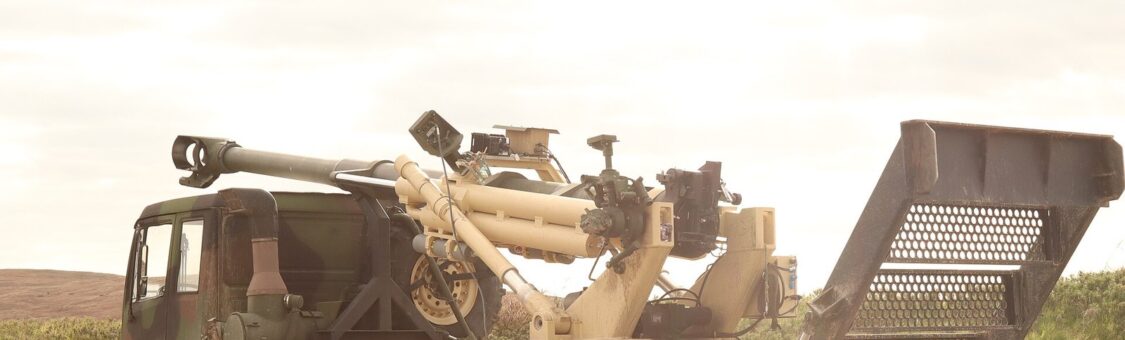
The U.S. Army has taken delivery of its first Korean-made Mobile Tactical Cannon, a wheeled 155mm self-propelled howitzer built by Hanwha Defense USA, service officials said Oct. 8. The system is being tested as a replacement for the legacy M777 155mm towed howitzer, which has been in service since 2005.

Brig. Gen. Robert J. “RJ” Mikesh Jr., the Army’s portfolio management executive for offensive fires, told reporters ahead of the Association of the U.S. Army’s annual meeting that the cannon was on display at an “Army Modernization Day” held on Capitol Hill earlier this month.

“We’re excited to have that and get ready to test it,” Mikesh said. “And get that soldier feedback, that we think is so important.”

The Army announced in August it had entered a four-year prototyping contract with Hanwha under an Other Transaction Authority agreement. The contract is worth up to nearly $263 million if all options are exercised. It covers procurement of up to 18 systems for “rapid prototyping, testing, and Soldier experimentation,” with accelerated delivery of the first six prototypes and options for up to a dozen more.

The Mobile Tactical Cannon is based on Hanwha’s K9 mobile howitzer, an eight-wheeled version of the tracked K9 that has served with the South Korean military since 1999. K9 variants now operate in about 10 other countries, and Hanwha says more than 2,500 have been fielded worldwide. The company is building an integration and test site in Opelika, Alabama, to develop and roll out the cannons in the United States.

“What enabled that was this close partnership under the PAE construct and trying new and novel ways of contracting,” Mikesh said. “In this case, we were not going after a clean-sheet design; we were looking for mature and available technologies. We opened our aperture for companies around the world, knowing that they’d have to onshore production within two years. That howitzer is now on contract.”

The M777 has an effective range of under 24 kilometers (about 15 miles) with standard rounds and up to 40 kilometers (about 25 miles) with the extended-range Excalibur round. The K9, a 52-caliber system, has a range of more than 60 kilometers (about 37 miles).

The Army plans to field the new howitzer initially to Stryker Brigade Combat Teams, followed by Mobile and Infantry Brigade Combat Teams. The prototypes will also support the Army’s 155mm Artillery Propulsion Modernization project, which aims to improve range and performance through novel propulsion technologies, with a goal of destroying or neutralizing artillery targets out to 70 kilometers, according to budget documents for fiscal 2027.

In late August, the Army published a separate solicitation for a tracked variant of the Mobile Tactical Cannon. Hanwha officials have said they are seeking to fill that requirement as well.

Army leaders have said they want to field a ready version of the Mobile Tactical Cannon by 2031.

Sources: DVIDS News · Defense News

News

Australia receives second HIMARS batch two years early
Australian Army and U S Army conduct joint HIMARS live-fire demonstration (7942492).jpg Photo: U.S. Air Force photo by Airman 1st Class Tylir Meyer

Australia receives second HIMARS batch two years early

The Australian Army has received a second batch of HIMARS rocket launchers from the United States, two years earlier than planned and about a year after the first batch arrived, Australia’s Department of Defence said.

The new launchers are going to the long-range fires regiment of the Army’s 10th Fires Brigade, based in Adelaide. Defence did not say how many launchers were in the second batch or when the next delivery is due. Defence Industry Minister Pat Conroy said the program is now on track to be fully operational four years ahead of schedule.

HIMARS, short for High Mobility Artillery Rocket System, is a Lockheed Martin-built launcher mounted on a six-wheeled truck. It fires a pod of six GMLRS guided rockets with a range of about 70 km (43 miles), or a Precision Strike Missile, known as PrSM, which Australia says can hit targets up to 500 km (310 miles) away. Defence expects future versions of PrSM to reach beyond 1,000 km (620 miles).

Australia plans to field up to 90 launchers, bought through the U.S. Foreign Military Sales program, across two long-range fires regiments within the 10th Fires Brigade. The first two HIMARS reached Australia in March 2025, and Australian troops fired a PrSM for the first time during Exercise Talisman Sabre in July 2025, two years earlier than originally planned.

In April, the government picked HIMARS and PrSM over a rival bid for a second long-range fires regiment under its LAND 8113 Phase 2 project, committing A$2.3 billion (about $1.6 billion) over the next decade. The new regiment will be based at the Edinburgh Defence Precinct in South Australia. The government says it is spending up to A$37 billion over the decade on targeting and long-range strike capabilities overall.

Australia is also building its own ammunition for the launchers. A GMLRS factory opened at Port Wakefield, South Australia, in December 2025, and in April the Army test-fired the first Australian-made GMLRS rocket from a HIMARS at the Woomera Test Range. Australia is the only country outside the United States producing GMLRS. Canberra and Washington set up a cooperative PrSM program last year, and the government says it plans to expand local production to include PrSM.

Sources: DVIDS News · Stars and Stripes