News

News

Canada pauses Black Hawk helicopter purchase amid US trade tensions
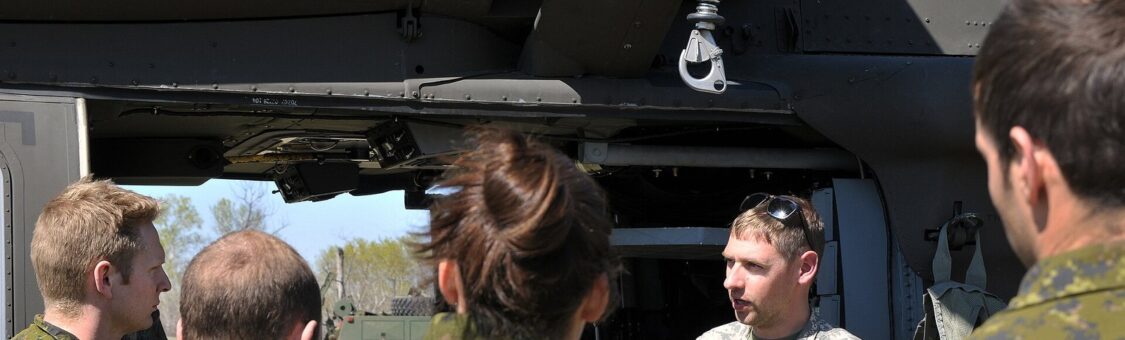
Oregon Army National Guard medevac unit trains with Canadian armed forces during Maple Resolve 2015 150511-Z-AH721-170.jpg Photo: Sgt. Erin Quirke

Canada pauses Black Hawk helicopter purchase amid US trade tensions

The Canadian government has quietly ordered a pause on a planned purchase of 16 U.S.-made UH-60M Black Hawk helicopters, according to several sources within the government and defence industry. The decision, made just before trade negotiations with the Trump administration began last summer, is linked to trade and diplomatic tensions, the sources said.

The helicopters, intended for use by Canada’s special forces, are manufactured by Sikorsky, a subsidiary of Lockheed Martin. The purchase had been signed off by the U.S. State Department agency that handles foreign military sales and was headed for congressional approval when the halt was ordered, two confidential sources said.

The decision was partially related to the trade talks, which ultimately failed, and was part of a wider effort by federal officials to inventory what the Canadian military planned to purchase from the United States, the sources said. As Canada seeks to reduce its military reliance on the U.S., the government decided the timing was not right to purchase American helicopters without a competitive bidding process.

Since being elected in spring 2025, Prime Minister Mark Carney has made it a priority to boost domestic defence industrial production, establish partnerships with foreign firms operating in Canada and, only as a last resort, purchase directly from abroad.

The pause on the Black Hawk purchase comes as the Carney government continues to review whether it will purchase a full order of 88 F-35 stealth fighters, also manufactured by Lockheed Martin. Canada has committed to buy 16 F-35s and has ordered parts for more than a dozen others.

“The government of Canada continues to evaluate options to meet the needs of the special operations forces,” said Sofiya Sapeha, spokesperson for Stephen Fuhr, the parliamentary secretary responsible for military procurement. “Canada remains in contact with the relevant partners and continues to review all information necessary for decision-making.”

The Black Hawks were intended to replace the special forces’ use of the CH-146 Griffon, which is more than three decades old. The UH-60 has a typical combat radius of about 595 kilometres, extendable to 2,250 kilometres with air-to-air refuelling; the Griffon’s normal combat range is up to 656 kilometres, extendable to 909 kilometres with external fuel tanks.

Retired major-general Denis Thompson, who commanded special operations troops, questioned the political calculus but said he understands how Canadians feel about the Trump administration. “When we buy a piece of equipment, we’re not hanging on to it for the two years that are left in Mr. Trump’s mandate,” he said. “We’re hanging on to them for 20, 30 years. And so what’s important is to make sure that we buy the equipment that Canadian Armed Forces need and that we look to the long-term and not short-term political gain.”

Earlier this year, a Policy Magazine poll indicated 62 per cent of Canadians disagree with purchasing military equipment from the United States, and Abacus Data found 64 per cent support an immediate halt to U.S. military purchases.

Sources: CBC Politics · CBC Politics

News

Air Force awards Raytheon $8B contract for nuclear command terminals
Air Force Nuclear Weapons Center.png Photo: United States Air Force ( User:Nameless23 converted JPEG to PNG, added transparency)

Air Force awards Raytheon $8B contract for nuclear command terminals

The U.S. Air Force has awarded Raytheon a contract worth up to $8 billion to modernize and restart production of the satellite communications terminals that link the president and military commanders to U.S. nuclear forces, the Department of War announced Oct. 13.

The indefinite-delivery, indefinite-quantity contract covers development work to modernize the Air Force Nuclear Weapons Center’s strategic communications terminals, services to restart their production, and technical studies. Raytheon received the contract without competition and will perform the work in Marlborough, Massachusetts, and Largo, Florida, through Oct. 12, 2036.

The Air Force obligated $800,000 in fiscal 2026 research and development funds at award, with additional orders to be placed over the next decade as needed. The announcement did not specify which terminals will be built or how many.

The terminals are part of the U.S. nuclear command, control and communications network, known as NC3, which allows national leaders to pass orders to bombers, missile crews and command posts under any conditions, including during a nuclear conflict. The Air Force Nuclear Weapons Center’s Strategic Communications Division at Hanscom Air Force Base, Massachusetts, which awarded the contract, buys and sustains that equipment.

Raytheon’s primary work for the division is the Family of Advanced Beyond Line-of-Sight Terminals, or FAB-T, which connects ground command posts and aircraft to the military’s most protected communications satellites, the Advanced Extremely High Frequency constellation and the older Milstar. FAB-T is designed to operate through jamming and nuclear effects, and it carries presidential voice conferences, warnings of incoming attacks and emergency action messages, the coded orders used to launch nuclear weapons. Raytheon took over the program from Boeing in 2014, and the original plan called for 61 ground and 23 airborne terminals.

The company has steadily expanded that work. In 2023, the Air Force awarded Raytheon $625 million for Force Element Terminals, the FAB-T version fitted to B-52 bombers and other aircraft, and in March the service raised the ceiling on a separate Raytheon contract for Advanced Extremely High Frequency terminals by $2 billion, to nearly $3 billion. The new $8 billion ceiling is the largest award yet for the company’s strategic communications terminals, and the reference to restarting production suggests the Air Force expects to buy more terminals after earlier production runs ended.

The Air Force is modernizing most parts of the nuclear triad at the same time, including the B-21 Raider bomber, the Sentinel intercontinental ballistic missile and the Long Range Standoff cruise missile, all of which will need communications links that can survive an attack.

Sources: DVIDS News · Defense News

News

F-35C Lands on Ford-Class Carrier for First Time
PCU John F. Kennedy First F-35C Landing Photo: SN Kaitlyn Bailey

F-35C Lands on Ford-Class Carrier for First Time

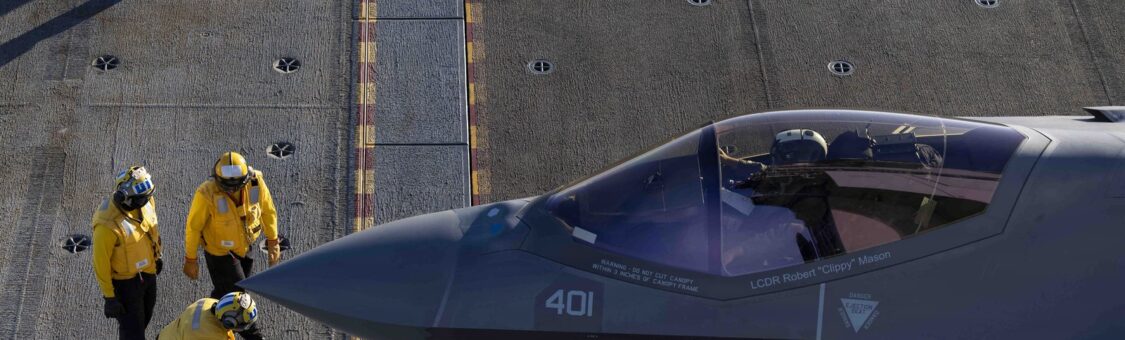
An F-35C Lightning II made an arrested landing on the pre-commissioning carrier John F. Kennedy (CVN 79) on Oct. 13, 2026, marking the first time an F-35C has landed on a Ford-class aircraft carrier, the U.S. Navy said.

The landing occurred during Aircraft Compatibility Testing (ACT), which assesses the ship’s launch and recovery equipment with Navy aircraft. The Kennedy uses the Electromagnetic Aircraft Launch System (EMALS) catapults and the Advanced Arresting Gear (AAG).

The F-35s used in the test were from the Patuxent River F-35 Integrated Test Force, attached to the “Salty Dogs” of Air Test and Evaluation Squadron (VX) 23. Two F-35s were visible in released images, with the second aircraft carrying inert GBU-38 Joint Direct Attack Munitions as external stores.

The Kennedy recently achieved preliminary acceptance by the Navy. The carrier is scheduled for delivery to the Navy in March 2027 and is due to be homeported at Naval Base Kitsap-Bremerton, Washington, which would make it the first Ford-class carrier based on the U.S. West Coast.

The lead ship of the class, USS Gerald R. Ford (CVN 78), completed its own ACT in January 2020 after 16 days at sea and the launch and recovery of 211 aircraft. The F-35C was the only aircraft type not included in the Ford’s ACT. The Navy has not released details about the Kennedy’s ACT campaign.

The Kennedy was laid down in 2015 and first sailed under its own power from the HII facility in Newport News, Virginia, on Jan. 28, 2026. The ship incorporates design changes compared to the Ford, including the AN/SPY-6(V)3 radar, and was built with modifications required to operate F-35C fighters that are missing on the Ford.

According to the Navy, the Kennedy is 1,092 feet in length and 100,000 tons, and incorporates more than 23 new technologies. The service says these innovations will support a 33% higher sortie generation rate compared to Nimitz-class carriers. The Navy also states the Ford class offers a reduction of approximately $4 billion per ship in life cycle operations and support costs over its 50-year service life, compared to the Nimitz class. The Navy said total ownership cost for a Nimitz-class ship is $32.1 billion in FY 04 constant year dollars, while a Ford-class carrier is expected to cost $26.8 billion.

Sources: Defence Blog · DVIDS News

News

Army’s Operation Jailbreak hackathon pushes autonomous systems toward interoperability
Flickr - The U.S. Army - Robotics class.jpg Photo: The U.S. Army

Army’s Operation Jailbreak hackathon pushes autonomous systems toward interoperability

The Army’s Operation Jailbreak hackathon, which ran from May through late August, staged two major events that brought contractors, operational units and Army technical experts together to accelerate unmanned tactical networks, the Army said.

The first three-week event began in May, bringing 600 people and 50 defense companies to Fort Carson, Colorado, where contractors were asked to break into each other’s networks and make their autonomous machines communicate, according to Army officials.

“The completed effort dismantled longstanding system silos, proving that autonomous platforms, sensors, weapons, and command-and-control (C2) technologies can exchange real-time data seamlessly across disparate vendors,” the Army said after the final initiative concluded.

Within 30 days of the first event at Fort Carson, the Army began fielding system integrations with service members in the U.S. Central Command area of responsibility, according to the service.

Former Army Secretary Dan Driscoll said the idea for the initiative came after he traveled with then-U.S. Army Europe and Africa Commander Gen. Christopher Donahue to allied training sites in Germany to observe how Ukrainians integrated drones, sensors and shooting platforms onto a single network. Driscoll resigned on Aug. 31 after allegedly butting heads with Defense Secretary Pete Hegseth. Donahue relinquished command of U.S. Army Europe and Africa in July and retired in August.

The hackathon comes as the Army stands up its new Futures and Autonomous Systems Command (FASCOM), established Oct. 1 by Acting Secretary of the Army Adam Telle. The command will be led by a three-star general, though the service has not disclosed who that leader will be. Acting Army Chief of Staff Gen. Christopher LaNeve redesignated Futures and Concepts Command as FASCOM, which will integrate and accelerate the work of its subordinate commands, including Combat Capabilities Development Command, Medical Research and Development Command and the Joint Modernization Command.

LaNeve tasked FASCOM with developing corps-level autonomous capabilities, specifically mentioning autonomous fires and watercraft units, as well as armored reconnaissance, breaching, manned-unmanned rotary aircraft and aerial surveillance formations. The Army also designated Fort Rucker, Alabama, as its “UAS Autonomy Center of Excellence.”

“This goes beyond drones,” LaNeve said. “FASCOM will pioneer operational concepts that harness autonomous capabilities across all warfighting functions.”

Some of the Army’s new Robotics Technician Integrators, the first batch of which graduated earlier this month, will be sent to FASCOM-supported experimental units to help proliferate autonomous systems across the force, service officials said.

Sources: DefenseScoop · US Army

News

Air Force Consolidates 50 Battle Network Programs into $4.5B ‘Megatron’ Contract Vehicle
601st Air and Space Operations Center.jpg Photo: U.S. Air Force photo

Air Force Consolidates 50 Battle Network Programs into $4.5B ‘Megatron’ Contract Vehicle

The Air Force is consolidating more than 50 of its battle network programs into a single contract vehicle worth up to $4.5 billion, according to Air & Space Forces Magazine. The move was reported Oct. 14, 2026.

The contract vehicle, nicknamed ‘Megatron,’ will replace multiple separate programs with one unified acquisition mechanism.

Details of which specific programs are included or the timeline for the contract award were not disclosed in the report.

The announcement comes as the Army separately advances its own next-generation command-and-control system. On Sept. 30, the Army awarded Anduril Industries a contract worth up to $1.8 billion over five years to help transition its Next Generation Command and Control (NGC2) software from experimentation to fielding. The initial award is $162.8 million to continue work on NGC2’s common data baseline, which will be implemented across I Corps in the Indo-Pacific.

Anduril, along with Palantir, Raft and Striveworks, have helped build the baseline. The system is intended to allow technologies, weapons, sensors and applications to operate on the same network, increasing decision-making speed on the battlefield.

During a July 2026 exercise at Fort Irwin, California, Project Convergence-Capstone 6, the Army tested NGC2 with 10,000 participants from U.S. and allied forces using 90 technologies. In May, Anduril deployed the system at Fort Carson and Pinon Canyon using over 160 tactical edge computers, over 2,500 devices and 40 applications.

Former Army Secretary Dan Driscoll said, ‘We know the biggest risk to our national security and our national defense is not moving too fast. It’s not moving fast enough. The side that can sense a target, process the data, and deliver a kinetic effect the fastest, wins.’

The NGC2 is set to replace the Army’s first-generation command-and-control system, which helps control fire, logistics and airspace. The Army has said it wants to implement NGC2 as soon as possible.

Sources: DVIDS News · Defense News

News

Lockheed, Avio sign agreement for US solid rocket motor production
41st Field Artillery Brigade conducts maintenance on M270A2 Multiple Launch Rocket System (8802330).jpg Photo: U.S. Army photo by Spc. Hunter Carpenter

Lockheed, Avio sign agreement for US solid rocket motor production

Lockheed Martin and the US arm of Italian rocket maker Avio have signed a strategic cooperation agreement under which Avio will build and qualify solid rocket motors for Lockheed’s Extended Range GMLRS and the Precision Strike Missile (PrSM), the companies announced Oct. 13.

The agreement gives Lockheed a second motor source for PrSM and an additional source for GMLRS once the motors are fully qualified, Avio USA CEO Jim Syring told Breaking Defense. “They’re essentially reserving capacity,” he said. “It’s a win for us and it’s a win for Lockheed.”

Tim Cahill, Lockheed’s president of missiles and fire control, said in a news release that the agreement “enables us to speed up production of essential capabilities, ensuring our customers maintain their competitive edge against emerging threats.”

Solid rocket motors have historically been a bottleneck for the munitions industry, with L3Harris and Northrop Grumman the only two domestic providers after decades of consolidation. New entrants such as Anduril, Ursa Major and X-Bow are developing motors, but qualification can take years.

Avio is a longtime solid rocket motor producer in Europe, but its US subsidiary is new. It broke ground in September on its first American plant, a 900,000-square-foot facility in Hurt, Virginia, scheduled to start building motors in 2029. Syring said Avio USA will make components like cases and nozzles in-house, avoiding reliance on a stressed supply chain, and will send new hires to Italy for three to four months of training.

Avio has begun ordering raw materials like steel and plans to purchase long-lead equipment such as industrial mixers, ovens and x-ray machines by the end of the year. The company is also doing engineering work on the Mk104 solid rocket motor for Raytheon’s Standard Missile family, with a critical design review slated for spring 2027.

Separately, L3Harris announced Oct. 12 a $250 million follow-on contract from Lockheed Martin for standard-range GMLRS rocket motors, the largest quantity ordered in the program’s history. The motors will be built at L3Harris’ new 60,000-square-foot plant in Camden, Arkansas, opening later this year. L3Harris did not disclose the number of motors, delivery schedule, or customers.

Sources: Defence Blog · Defense News

News

Anduril wins up to $1.8B Army contract to expand NGC2 battlefield network
ARRC at JMSC’s Avenger Triad Photo: SGT Collin Mackall

Anduril wins up to $1.8B Army contract to expand NGC2 battlefield network

The U.S. Army awarded Anduril Industries a contract on Sept. 30 worth up to $1.8 billion over five years to help transition its Next Generation Command and Control (NGC2) battlefield software from experimentation to fielding, the company and service announced.

The initial award is $162.8 million for Anduril to continue work on NGC2’s common data baseline—the software foundation that allows different systems to share data—as the Army begins implementing it across I Corps, which commands forces in the Indo-Pacific. The contract includes options that could increase its total value to $1.8 billion.

Anduril previously helped develop the NGC2 prototype for the 4th Infantry Division using its AI-powered operating system Lattice. The company worked alongside Palantir, Raft, and Striveworks to build the baseline.

“A common data layer allows the Army to integrate new systems without rebuilding the underlying architecture for every sensor, application, or weapon, so new capabilities can be fielded on the same foundation as those already in use,” Anduril said in a statement.

NGC2 is designed to let technologies, weapons, sensors, devices, and applications from across the force operate on the same network, increasing decision-making speed on the battlefield. Expanding it to I Corps means systems separated by thousands of miles and facing interrupted or degraded connectivity will need to connect to the same network, testing how information flows across diverse environments.

During a July 2026 ten-day exercise at Fort Irwin, California, called Project Convergence-Capstone 6, the Army tested NGC2 software with 10,000 participants from U.S. and allied forces and industry partners using 90 technologies. Afterward, the Army awarded Anduril the contract to develop the NGC2 prototype for the 4th Infantry Division.

In May, Anduril deployed NGC2 at Fort Carson and Pinon Canyon, using over 160 tactical edge computers, over 2,500 devices, and 40 applications while navigating simulated cyber and electromagnetic attacks. Two months later, after a joint force exercise at Fort Irwin, the service said the system was ready to scale.

NGC2 is set to replace the Army’s first-generation command-and-control system, which helps control fire, logistics, and airspace on the battlefield.

“We know the biggest risk to our national security and our national defense is not moving too fast. It’s not moving fast enough,” said former Army Secretary Dan Driscoll. “The side that can sense a target, process the data, and deliver a kinetic effect the fastest, wins. That is the decisive advantage this capability provides.”

Sources: DVIDS News · DVIDS News

News

Army Stands Up New Indo-Pacific Task Force for Integrated Missile Salvos
Bayonet Quest 2026 Photo: SGT Pomare Teo

Army Stands Up New Indo-Pacific Task Force for Integrated Missile Salvos

The U.S. Army has established a new task force focused on the Indo-Pacific, signaling a concrete operational shift toward integrated missile salvos and breaking enemy anti-access networks, according to an Army announcement.

The task force, announced by Acting Army Secretary Telle, is designed to improve the service’s ability to conduct multi-domain operations in the region. The announcement did not specify the task force’s size, location, or command structure, but it is part of the Army’s broader pivot to great-power competition.

In a related development, the Army Corps of Engineers is advancing a $34.8 million project to install a new hydropower generator unit at Libby Dam in Montana, awarded May 29, 2024. The project, targeting completion in April 2027, will add a sixth generator to the dam, which has been operating since 1975. In Fiscal Year 2025, Libby Dam generated over 2.7 billion kilowatt-hours of electricity, enough to power roughly 263,000 average U.S. homes for a year.

The new unit will allow engineers to perform maintenance on existing generators without sacrificing the five-unit capacity needed for flood risk management and ecological flows. The project also includes upgrades to the dam’s selective withdrawal system, which manages downstream river temperatures for aquatic species, including threatened bull trout and the endangered Kootenai River white sturgeon.

According to Seattle District Commander Col. Eli Adams, the Unit 6 installation project signals a milestone in the Army Corps’ efforts to enhance efficiency, reliability, and performance of the dam’s hydropower infrastructure. The project is part of the Army Civil Works’ “Build Infrastructure, Not Paperwork” initiative, which aims to modernize civil works projects efficiently.

The task force announcement and the Libby Dam project both reflect the Army’s focus on operational readiness and infrastructure modernization, though they address different aspects of the service’s mission. The task force’s establishment is a direct response to the need for integrated missile capabilities in the Indo-Pacific, a region where the Army is increasingly focused on deterring aggression and maintaining freedom of navigation.

Sources: US Army · DVIDS News

News

Anduril unveils Steelfin, a low-cost surface-to-air interceptor family, at AUSA 2026
Strong Teams: 31st ADA Brigade Air Defenders Conduct Patriot Reload Drills Photo: CPT Madison Fuentes

Anduril unveils Steelfin, a low-cost surface-to-air interceptor family, at AUSA 2026

Anduril Industries unveiled Steelfin, a family of surface-to-air interceptor missiles, on Oct. 12 at the Association of the U.S. Army’s annual meeting in Washington. The company says Steelfin is designed to shoot down cruise, ballistic and hypersonic missiles at a fraction of the cost of current interceptors, with flight tests slated to begin next year. Anduril did not give a unit price, name a customer, or say which U.S. service is backing the program, but said it plans to build several thousand Steelfin missiles a year in the short term.

Steelfin uses a two-stage architecture. The first stage is a solid rocket booster that can be swapped for different motors depending on range, speed, and packing requirements. The second stage is a common “terminal interceptor” that carries the airframe, electronics, software, and flight controls shared across the family, with open interfaces for different seekers and mission systems. Anduril says this allows it to build versions for every layer of air and missile defense, from short-range point defense to upper-tier ballistic missile defense, while aiming for a fraction of the cost of current interceptors in each class. The company did not specify benchmark costs, but a single Patriot PAC-3 MSE interceptor costs about $4 million, and the Missile Defense Agency is pursuing a separate low-cost interceptor effort with a target price below $750,000 per round.

Because variants share parts, Anduril says they can run down the same production line with the same tooling and workers, letting it shift output to whichever version is in demand. The company also says the common interfaces let it buy commercial components and use multiple suppliers.

Steelfin is designed to fire from launchers the U.S. military already fields, including the M903A2 launcher used by the Patriot air defense system, the U.S. Navy’s Mk 41 Vertical Launch System, the U.S. Army’s Typhon mid-range missile launcher, and newer containerized launchers. Anduril says it will work with existing fire control systems such as the U.S. Navy’s Aegis and the U.S. Army’s Integrated Battle Command System (IBCS), rather than requiring a new command network.

The company has completed ballistic testing with representative air vehicles but has not yet flown a Steelfin missile. Anduril says it has been developing Steelfin for years while investing alongside multiple customers. The launch comes as U.S. air defense stocks have been drawn down by combat in the Middle East. This month alone, Raytheon received contracts worth up to $6.3 billion for SM-3 Block IB interceptors and up to $24.4 billion for SM-6 missiles to replenish U.S. Navy inventories. Anduril already makes smaller counter-drone interceptors such as Roadrunner and Anvil, but Steelfin is its first family aimed at cruise and ballistic missiles.

In a related development at AUSA 2026, Northrop Grumman revealed it had invested $100 million in its Raid Hunter gun-based air defense capability, which the company claims could reduce the cost of individual engagements by 95.5% compared with interceptor missiles.

Sources: Defence Blog · Shephard Media

News

Canadian military faces new internal cuts despite billions in added defence spending
Canadian Field Training DVIDS119658.jpg Photo: Sgt. Matthew Thompson

Canadian military faces new internal cuts despite billions in added defence spending

The Canadian Armed Forces are facing another round of internal budget cuts, even as the federal government pours billions of dollars into defence, CBC News has learned. The Treasury Board Secretariat is examining defence operational spending with an eye to reducing expenses by 10 per cent, according to two confidential sources.

The cuts stem from a 2023 Trudeau-era budget directive, enacted in the 2024 federal budget, that mandated an $810-million reduction in the first year and $908-million cuts each following year. A federal official said that schedule remains unchanged and the directive has not been rescinded.

About three weeks ago, the vice-chief of the defence staff told military leadership that internal savings must be found and that aggressive growth plans will have to be tempered, according to a third source with knowledge of the presentation.

Prime Minister Mark Carney’s government, which took office in 2025, imposed a sweeping expenditure review across federal departments but largely exempted the Department of National Defence (DND). However, DND has been told to reduce its use of outside consultants, like the rest of the government.

Defence spending is set to rise from the current $75 billion annually to $95.6 billion by 2030, according to the Parliamentary Budget Office. But much of that new money is already committed to promises and a military pay raise, said Dave Perry, president of the Canadian Global Affairs Institute.

“I think it’s created this impression that there’s gazillions of dollars that could be allocated to any number of new initiatives in the near-term window,” Perry said. “And I think that’s not really the case.”

The latest federal budget puts the military’s overall operational readiness at 61.3 per cent. Military readiness has suffered in the past from a lack of operations and maintenance funding.

John Fragos, press secretary to Finance Minister François-Philippe Champagne, said the government intends to protect DND as much as possible.

“We have however asked DND, as with every other department, to reorient its spending such that it prioritizes capital expenditures — mechanisms that grow and modernize the Canadian Armed Forces, improve its readiness in an increasingly dangerous world and render it more competitive — and spends less on operating expenditures,” Fragos said in a written statement.

Sources said legacy equipment costs and planned IT projects are among areas that could generate internal savings if stopped.

Sources: CBC Politics