News

News

F-117A ‘The Overachiever’ Flown to Smithsonian Aboard C-5M in Rare Final Mission
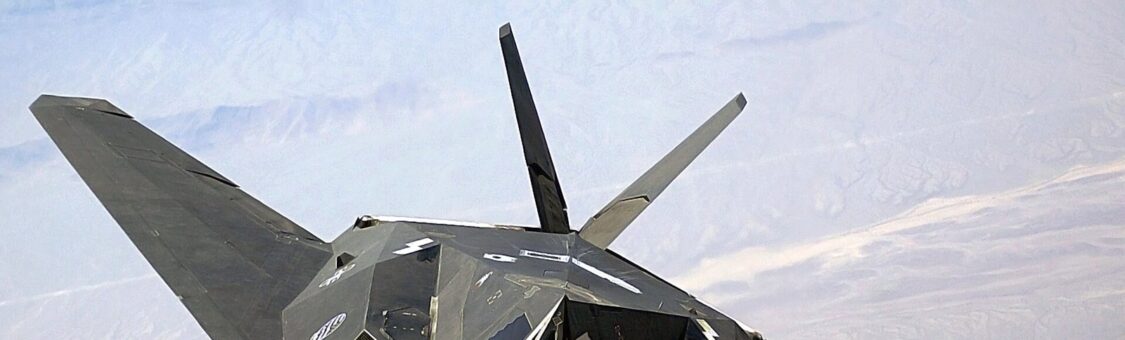
F-117 Nighthawk Front.jpg Photo: Staff Sgt. Aaron Allmon II

F-117A ‘The Overachiever’ Flown to Smithsonian Aboard C-5M in Rare Final Mission

On Oct. 6, 2026, a C-5M Super Galaxy from the Air Force Reserve’s 512th Airlift Wing delivered a decommissioned F-117A Nighthawk stealth fighter to the Smithsonian Institution’s National Air and Space Museum’s Steven F. Udvar-Hazy Center in Chantilly, Virginia. The aircraft, nicknamed “The Overachiever,” was loaded at Palmdale, California, and flown to Dulles International Airport, where a dedicated taxiway connects the airfield to the museum.

The two-day mission involved moving a 29,500-pound load that required precise weight distribution and millimeter-level clearances inside the C-5M’s cargo compartment. The Nighthawk was partially disassembled for transport, with its wings detached from the fuselage. Loadmasters from the 709th Airlift Squadron secured the wings within about two hours of the C-5M landing at Palmdale on Oct. 5, 2026.

The loading of the fuselage was delayed overnight due to a coordination issue over the required number of tie-down points. A Lockheed Martin Skunk Works mechanical team worked through the night to fabricate and install the additional points, according to the Air Force.

“It was a little difficult to load in, but we got the job done,” said Senior Airman Lucas Richard, a 709th Airlift Squadron loadmaster. “This is probably one of the coolest pieces of cargo that I’ve ever seen.”

The aircraft, serial number 85-0818, earned its nickname as the only F-117A to fly combat missions in all four major conflicts in which Nighthawks operated: Operation Just Cause (Panama, 1989), Operation Desert Storm (Iraq, 1991), Operation Allied Force (Yugoslavia, 1999), and Operation Iraqi Freedom (Iraq, 2003). During Desert Storm, the F-117 fleet flew 1,271 sorties, achieved an 80% mission success rate, and suffered no battle damage. The jet retired in 2007.

Jeff Corbets, program manager at Lockheed Martin Skunk Works, led the restoration and said demilitarization was the most difficult part of preparing the aircraft for museum display. As of January 2021, the Air Force retained approximately 48 F-117As in its inventory and has disposed of about four aircraft per year since grounding the fleet in April 2008.

According to the Air & Space Forces Association, the aircraft is now in the Mary Baker Engen Restoration Hangar at the Udvar-Hazy Center, where its wings are being reinstalled before it goes on public display.

Sources: The War Zone · DVIDS News

News

Army report cites systemic failures in 2025 DC midair collision that killed 67
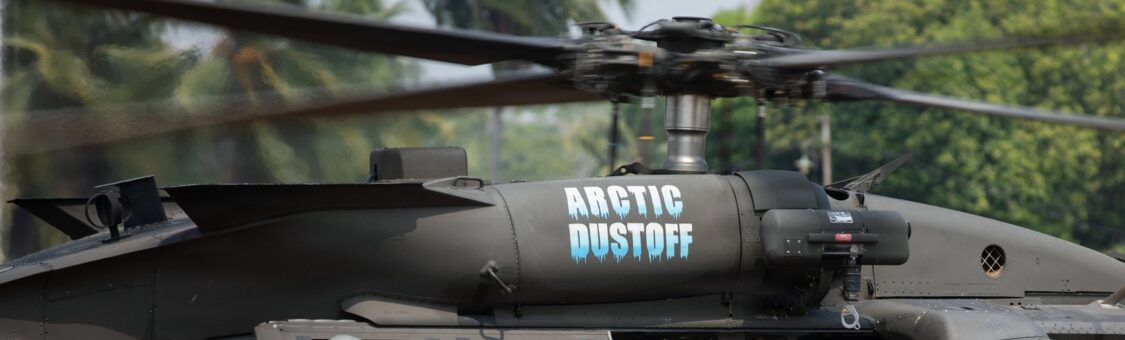
Views of UH-60 Black Hawk with SHAPE Helicopter Flight Detachment 150205-A-RX599-021.jpg Photo: Pascal Demeuldre

Army report cites systemic failures in 2025 DC midair collision that killed 67

The U.S. Army has identified systemic failures behind the January 2025 midair collision between an American Airlines regional jet and an Army Black Hawk helicopter near Ronald Reagan Washington National Airport, according to a previously undisclosed investigative report completed in May and seen by Reuters. The collision killed 67 people.

The report, released publicly on Oct. 8, 2026, said the key factor was two broken radio transmissions that left the helicopter crew without critical details from air traffic control. It also found technical issues with the Black Hawk, a pattern of helicopter crews failing to fly semiannual minimum hours, and a lack of Traffic Alert and Collision Avoidance systems on many helicopters in the Army battalion — including the one involved in the crash.

The report faulted FAA air traffic control for using non-standard terminology for directing air traffic and providing incomplete traffic advisories. It also said Army coordination with the Federal Aviation Administration on helicopter incidents in the Washington area before the collision was lacking, and that a working group did not discuss airspace violations, near-miss reports, or pilot deviations.

The report noted the helicopter was not providing key safety location data, known as ADS-B Out, due to improper maintenance. After the incident, the Army issued an urgent safety message to inspect all Army aircraft transponders, and all 3,600 Army helicopters were inspected by July 2025. The report also said the Army had not addressed issues that led to the helicopter providing inaccurate altitude data, and it proposed recommendations to address that issue. It also called for more advanced night vision equipment for pilots.

The report recommended improved training for military pilots around Washington and Baltimore commercial airports and reviews of Army helicopter operations near major cities in the United States, South Korea, Japan and Germany.

National Transportation Safety Board Chair Jennifer Homendy said in an Oct. 1 letter to the Army that it had made significant progress in addressing its recommendations from the collision, but added that more work was needed as the Army’s aviation safety system failed to consistently detect, interpret,and act on signals of latent hazards, resulting in degraded safety assurance, organizational learning,and safety culture.

The Army said in a statement on Thursday that it has implemented stronger training and surveillance checks, completed new helicopter safety inspections,and testing on altitude awareness, and is pursuing an FAA data-sharing agreement to help identify potential midair collision risks.

The family of First Officer Sam Lilley, who was killed in the collision, said the Army report shows the system failed everyone that night, acknowledging failures involving known altimeter issues, near-miss reporting, training, risk mitigation,and safety culture.

Sources: Military.com · DVIDS News

News

B-52 to Carry Long-Range Anti-Ship Missile, Expanding Maritime Strike Capability
B-52 strategic bombers overfly USCENTCOM AOR during bomber task force mission (8882747).jpg Photo: U.S. Air Force photo by Staff Sgt. Jackson Manske

B-52 to Carry Long-Range Anti-Ship Missile, Expanding Maritime Strike Capability

The U.S. Air Force will integrate the Long-Range Anti-Ship Missile (LRASM) onto the B-52 bomber, adding a stealthy stand-off capability to strike moving maritime targets, according to an Oct. 8 report from Air & Space Forces Magazine.

The integration, reported Oct. 8, 2026, will give the B-52 a new anti-ship weapon that can engage moving targets at long range.

No dollar figures or quantities were disclosed in the report. The Air Force has not specified a timeline for when the integration will be completed or when the missile will be operational on the B-52.

In a related development, the Navy announced Oct. 8 that the Arleigh Burke-class guided-missile destroyer USS Arleigh Burke (DDG 51) entered a dry dock at Navantia Shipyard in Cadiz, Spain, marking the first dry docking of a U.S. Navy warship in the U.S. 6th Fleet area of operations since the arrival of Forward Deployed Naval Forces-Europe destroyers. The dry docking expands forward-deployed maintenance capability and readiness generation, according to U.S. Naval Forces Europe-Africa/U.S. Sixth Fleet.

On May 12, the U.S. Marine Corps Light/Attack Helicopter Program Office (PMA-276) and Air Test and Evaluation Squadron 21 (HX-21) conducted a live-fire delivery of the Advanced Precision Kill Weapon System (APKWS) from an AH-1Z Viper attack helicopter at the Upper Zion impact area. The event validated weapons integration parameters, range safety protocols, and ground ordnance handling procedures, and provided an operational learning environment for 26 observers from across the Naval Aviation Enterprise.

Col. Jason Duke, PMA-276 program manager, said the H-1 team demonstrated precise, scalable effects that commanders can employ with confidence. Michael Hunt, HX-21 ordnance officer, said the Weapons Delivery Zone construct and range deconfliction translate into repeatable procedures, improving readiness and expanding warfighting options for Marines operating from expeditionary sites.

Sources: US Army · DVIDS News

News

Pentagon awards Raytheon up to $6.3 billion multi-year contract for SM-3 IB interceptors
US Navy 031211-N-0000X-001 A Standard Missile-3 (SM-3) is launched from the Aegis cruiser USS Lake Erie (CG 70) as part of the Missile Defense Agency's latest Ballistic Missile Defense System (BMDS).j Photo: U.S. Navy photo

Pentagon awards Raytheon up to $6.3 billion multi-year contract for SM-3 IB interceptors

The Pentagon announced on October 8 that it has awarded Raytheon a multi-year contract worth up to $6.3 billion for the production and sustainment of Standard Missile-3 Block IB (SM-3 IB) interceptors. The base value of the five-year contract is $4.4 billion, with options for an additional nearly $2 billion over two more years. The Missile Defense Agency was the contracting agency for the deal.

The announcement did not specify how many missiles are under order. Production under the contract will be primarily completed at Raytheon facilities in Tucson, Arizona, and Huntsville, Alabama.

Under Secretary of Defense for Acquisition and Sustainment Michael Duffey said in a DoD release that the contract “provides production certainty to our defense industrial base, breaks sub-tier manufacturing bottlenecks, and ensures that our fleets and combatant commands have the interceptors required to dominate the battle space — air, sea or land.”

Raytheon President Phil Jasper said in a company release that “SM-3 Block IB has proven its relevance in combat and this contract helps ensure we can replenish inventories and keep pace with the evolving threats the U.S. Navy, MDA and their partners face around the world.”

The SM-3 IB is a ship- and land-based missile defense interceptor designed to defeat short- to intermediate-range ballistic missiles during the midcourse phase of flight. It was first used in combat in 2024, according to Raytheon. The Pentagon has listed the SM-3 IB as one of the critical munitions it is looking to scale as quickly as possible.

The contract follows a framework agreement between the DoD and Raytheon in February designed to pave the way for the multi-year deal. It is part of a series of recent agreements between the government and the RTX subsidiary, including a $24.4 billion deal to accelerate production of the Standard Missile-6, a $22.9 billion contract to ramp up Tomahawk cruise missile production to 1,000 rounds a year, and a deal worth up to nearly $20.7 billion for production of the Advanced Medium-Range Air-to-Air Missile (AMRAAM).

Sources: Defence Blog · DVIDS News

News

Record-breaking Halifax defence convention draws protests over arms trade
Australia, Canada, and U.S. conduct multilateral operations in South China Sea Photo: SN Maliq Martin

Record-breaking Halifax defence convention draws protests over arms trade

International defence companies gathered in Halifax this week for one of Canada’s largest security conventions.

The event, DEFSEC Atlantic, is held annually in Halifax, Nova Scotia, and serves as a meeting point for defence industry representatives, military officials, and government buyers.

Among the announcements at the convention, AtkinsRéalis and DRAKKAR signed a non-binding Memorandum of Understanding (MoU) on October 7, 2026, to explore strategic collaboration in support of Canadian defence programs. The MoU was signed at the Québec Pavilion in the presence of Investissement Québec.

Both companies are Montreal-headquartered. AtkinsRéalis is an engineering services and nuclear company with global operations, while DRAKKAR is a Canadian aerospace and industrial services firm. The collaboration will explore opportunities across air, land, and maritime domains, including acquisition, modernization, mobilization, in-service support, and long-term sustainment of complex defence platforms.

“AtkinsRéalis and DRAKKAR bring together complementary Canadian capabilities to support defence programs from acquisition and modernization through long-term sustainment,” said Stéphanie Vaillancourt, president, Canada, AtkinsRéalis. “By combining our engineering, systems integration, program management, operations and maintenance, and asset management expertise with DRAKKAR’s capabilities in aerospace maintenance, logistics and manufacturing services, we can help strengthen Canada’s defence capacity, supply-chain resilience and long-term operational readiness.”

Benoit Hudon, president and CEO of the DRAKKAR Group, said: “Building strong partnerships with established Canadian companies that already have the capabilities, infrastructure and workforce in place is essential to strengthening Canada’s defence industrial capacity. By combining complementary expertise such as AtkinsRéalis’ and DRAKKAR Group’s existing Canadian footprints, we can accelerate defence readiness, deliver greater value to government and contribute meaningfully to Canada’s sovereignty objectives.”

AtkinsRéalis has been a top-five supplier of Defence Construction Canada over the last five years and previously provided operations and maintenance services for the Royal Canadian Navy’s minor warships and auxiliary vessels. DRAKKAR operates aircraft maintenance facilities in Mirabel, Quebec, and provides third-party logistics and manufacturing services across North America.

Sources: Global News Canada · Canadian Army Today

News

McGuinty, Smith tout $8B in Alberta defence spending
SGS26 Medevac Exercise Photo: SPC Ashley Dominguez Ibarra

McGuinty, Smith tout $8B in Alberta defence spending

Defence Minister David McGuinty and Alberta Premier Danielle Smith visited Canadian Forces Base (CFB) Edmonton on October 7, 2026, to highlight approximately $8 billion in ongoing defence investments across Alberta.

The investments include:

  • nearly $4 billion for future fighter capabilities at CFB Cold Lake;
  • $750 million for a new Chemical and Biological Laboratory and Blast Assessment Centre at CFB Suffield;
  • $550 million to establish the western operating base for the Royal Canadian Air Force’s CC-330 Husky fleet; and
  • over $580 million over the next three years for maintenance and repair work across Canadian Armed Forces (CAF) bases in Alberta.

According to the Department of National Defence, the investments are estimated to support approximately 29,000 to 38,000 jobs in Alberta over the next five to 10 years. The department also said defence investments contributed approximately $1.3 billion to Alberta’s economy in 2024-25, and that approximately 10,300 CAF members live and work in the province.

During the visit, McGuinty announced the re-opening of the Defence Drone Initiative Marketplace (DDIM) Request for Supply Arrangement, allowing more Canadian companies to pre-qualify to supply autonomous systems capabilities and related services to the department. To date, 30 Alberta-based companies have qualified as trusted suppliers under the DDIM.

McGuinty also announced over $8 million for seven projects administered through Prairies Economic Development Canada (PrairiesCan) under the Regional Defence Investment Initiative (RDII), the Regional Tariff Response Initiative, and the Regional Innovation Ecosystems program. The RDII is a $379.2 million, three-year national initiative aligned with the Defence Industrial Strategy.

Earlier in 2026, a University of Calgary-led consortium received $20.3 million over two years to establish and operate the Quantum Defence Innovation Secure Hub in Calgary.

McGuinty said Alberta’s military bases and infrastructure are essential to Canada’s defence, serving as training and logistics hubs that support CAF operations at home and abroad while generating jobs and supporting regional economic growth. He added that as Canada continues to “rebuild, rearm and reinvest” in the military, Alberta’s role will continue to grow.

In a separate statement, McGuinty said Confederation is a national bargain renewed through generations by what Canadians do for one another, particularly in wartime.

Sources: Canada DND Newsroom · Global News Canada

News

USS Abraham Lincoln Strike Group Awarded Presidential Unit Citation for Iran Deployment
Ronald Reagan Conducts Flight Operations Photo: PO1 Hannah Kantner

USS Abraham Lincoln Strike Group Awarded Presidential Unit Citation for Iran Deployment

Secretary of Defense Pete Hegseth announced Wednesday that the USS Abraham Lincoln carrier strike group has been awarded the Presidential Unit Citation, the military’s highest unit-level valor award, a day before the ship’s planned return to San Diego.

The award covers the roughly 5,000 sailors aboard the Lincoln and several hundred more on accompanying ships. The strike group will have spent 321 days away from home, including 40 days in combat, upon arrival Thursday.

Hegseth, who visited the carrier to make the announcement, cited the strike group’s combat record during the deployment: 64 Iranian vessels sunk, 450 Tomahawk land attack cruise missiles launched, and 77 one-way aerial attack drones shot down, according to the award citation. He also noted the crew opened Operation Epic Fury with 60 consecutive hours of strike missions.

“They had a modern Navy before this conflict started, and then they had to deal with the USS Abraham Lincoln and what you’re capable of doing,” Hegseth said.

The Presidential Unit Citation is awarded nearly always for intense combat or extraordinarily dangerous missions. The Lincoln is the second strike group to receive the award during the war with Iran; the USS Gerald R. Ford strike group received it in May, and the USNS Kanawha refueler received it in June.

Historical recipients include Army units that invaded France on D-Day, Marine units in Pacific island-hopping campaigns in World War II, special operations units that killed Osama Bin Laden in 2011, and Coast Guard units for Hurricane Katrina response.

The strike group’s return to San Diego is scheduled for Thursday, ending the 321-day deployment.

Sources: Task & Purpose · Military.com

News

Air Force, Northrop Break Ground on Expanded B-21 Assembly Line
250911-F-AF000-9040.jpg Photo: Unknown author Unknown author

Air Force, Northrop Break Ground on Expanded B-21 Assembly Line

The U.S. Air Force and Northrop Grumman broke ground on a new final assembly line for the B-21 Raider stealth bomber, adding more than 93,000 square meters (1 million square feet) of facilities at Air Force Plant 42 in Palmdale, California. The construction supports a February agreement to raise annual B-21 production capacity by 25 percent, funded partly by $4.5 billion in fiscal 2025 reconciliation money. Neither the service nor the company disclosed the cost of the new facilities, a completion date, or how many bombers the expanded line will produce each year.

“It’s more than construction… we’re moving fast to build B-21s!” the Office of the Secretary of the Air Force posted on X. Northrop Grumman wrote that “The B-21 isn’t the only thing taking off,” adding that more than 1 million square feet at Plant 42 is now dedicated to building the bomber.

Northrop builds the Raider at the same Palmdale complex where it assembled the B-2 Spirit in the 1980s and 1990s, and the first B-21 was unveiled there in December 2022. The first B-21 flew on November 10, 2023, from Palmdale to Edwards Air Force Base, California, and a second test aircraft joined flight testing at Edwards on September 11, 2025. Low-rate initial production was approved in late 2023 and made public in January 2024.

The production rate is classified, and low-rate initial production has been understood to cover 21 aircraft across five lots. The U.S. Air Force has set a requirement of at least 100 Raiders, with a unit cost reported at around $700 million. In 2025, Northrop took a $477 million charge on the program connected to a production process change for a higher rate.

Northrop CEO Kathy Warden said in April that the company will add $2.5 billion of its own money, including about $200 million in 2026. Northrop says it has already invested more than $5 billion in digital engineering and manufacturing infrastructure for the program.

Northrop has also expanded B-21 work outside California, opening a new manufacturing building called East Gate 3 in Layton, Utah, on September 9. The program draws on more than 400 suppliers in at least 40 states, with final assembly remaining at Plant 42. In 2025, an Air Force spokesperson told Air & Space Forces Magazine that the planned production increase would be carried out within Northrop’s Palmdale campus and at some major supplier sites.

The B-21 is designed to penetrate modern air defenses and strike heavily defended targets with conventional or nuclear weapons. It is set to replace the B-1B Lancer and the B-2, and its design allows for both crewed and uncrewed missions.

Ellsworth Air Force Base in South Dakota will be the bomber’s first operational base and training site, and Northrop and the U.S. Air Force say the first aircraft is on track to arrive there in 2027. Air Force Global Strike Command will decide when the B-21 reaches initial operational capability.

Sources: Defence Blog · Defence Blog

News

Trump announces $2.9B Navy contract for Anduril’s Sparrows Point submarine shipyard
US Navy 030803-N-0000X-003 The U.S. Navy's newest and most advanced nuclear-powered attack submarine and the lead ship of its class, PCU Virginia (SSN 774) is moved outdoors for the first time.jpg Photo: U.S. Navy photo by General Dynamics Electric Boat

Trump announces $2.9B Navy contract for Anduril’s Sparrows Point submarine shipyard

President Donald Trump on Tuesday announced a $2.9 billion U.S. Navy contract for Anduril Industries’ planned submarine manufacturing shipyard at Sparrows Point, Maryland, adding federal backing to a $3.7 billion private investment by the company. The announcement was made at the Tradepoint Atlantic site in Baltimore County on Oct. 6, 2026.

Trump also pledged $21 billion in future purchases once the facility is operating, according to the Baltimore Sun. The Navy contract is tied to demonstrated production outcomes, meaning Anduril, not the taxpayer, takes on most of the execution risk, per an Anduril press release. Combined, the Navy contract and private investment total $6.6 billion for the submarine industrial base.

The facility, named Arsenal-2, will be built on a 187-acre site and span more than 2 million square feet, roughly the size of 40 football fields. It will manufacture critical components and large-scale assemblies for Virginia-class submarines, delivering them to General Dynamics Electric Boat and Huntington Ingalls Industries’ Newport News Shipbuilding for final assembly. The work will begin with components such as torpedo tubes and progress to modules and eventually super modules, according to Anduril President and Chief Strategy Officer Christian Brose.

The project is expected to create 3,100 direct jobs and support more than 11,000 indirect jobs, with an estimated $2 billion in annual economic output and $312 million in annual wages, the company said. Maryland and Baltimore County are considering additional public support that could reach roughly $481 million, with new appropriations requiring legislative approval, the Baltimore Sun reported.

Permitting and site preparation will begin immediately, with construction starting once approvals are in place. Initial operations are expected to come online in 2030, with production scaling progressively thereafter, per Anduril. The company is also building a 160,000-square-foot facility in Orange County, California, to manufacture critical Virginia-class components and validate production methods ahead of Arsenal-2’s opening.

Vice Adm. Robert Gaucher, the Navy’s director of submarine programs, said the planned facility could add up to 9 million production hours per year to the submarine supply chain, a 15% surge in total capacity. Acting Navy Secretary Hung Cao said the Navy’s mandate is to build a “golden fleet” — a maritime force “designed to dominate the seas, protect overwhelming power, and guarantee maritime supremacy for the next century.”

Anduril CEO Brian Schimpf said conversations with the Navy began more than two years ago, and the company initially concluded it could not help build submarines. “America already knows how to build the best submarines in the world,” Schimpf said. “The challenge now is to build the industrial depth required to produce more of them and sustain that advantage for decades.”

Sources: Naval News · DoD News

News

CRS report: 81 US aircraft lost or damaged in Iran war, nearly double May count
104th Fighter Wing conducts joint crashed, damaged, disabled, aircraft recovery training Photo: Jerry Hewitt

CRS report: 81 US aircraft lost or damaged in Iran war, nearly double May count

WASHINGTON — The Congressional Research Service now counts 81 U.S. military aircraft as lost or damaged since the United States launched Operation Epic Fury against Iran on Feb. 28, nearly double the 42 aircraft it counted in May.

The Oct. 5 revision adds jets damaged in a September Iranian strike on a base in Jordan, helicopter losses drawn from a Pentagon inspector general report, and a sharply higher count of lost Reaper drones. The service cautioned that the total is not a count of destroyed aircraft, noting, “Some damaged aircraft may have been returned to active service.”

The list includes 49 drones, 13 fighter aircraft, seven refueling aircraft, seven helicopters, two ground attack aircraft, two special operations aircraft, and a reconnaissance aircraft. Among the drones are 45 MQ-9 Reapers, three MQ-1s, and an MQ-4C Triton.

The deadliest loss on the list remains the March 12 crash of a KC-135 Stratotanker in western Iraq, which killed all six crew members. Central Command said the loss was not the result of hostile or friendly fire. Another KC-135 made an emergency landing at Ben Gurion Airport in Israel.

A Navy squadron commander was lost when an MH-60S Sea Hawk from the aircraft carrier George H.W. Bush made an emergency landing in the Arabian Sea on July 1. The Navy said there was no indication of hostile action. Three of the four crew members were recovered; the Navy identified the fourth as Cmdr. Gabriel Edwards, commanding officer of Helicopter Sea Combat Squadron 5, and suspended its search for him July 5 after more than 102 hours. Acting Navy Secretary Hung Cao directed that Edwards be posthumously promoted to captain.

Several aircraft on the list trace to the April mission to recover the two-person crew of an F-15E Strike Eagle shot down over Iran. Both crew members were rescued in separate search-and-rescue operations. That jet is one of 12 Strike Eagles on the list. An A-10 Thunderbolt II supporting the rescue mission crashed after taking enemy fire, Joint Chiefs Chairman Air Force Gen. Dan Caine said; the pilot ejected over friendly territory. An HH-60W Jolly Green II combat rescue helicopter was damaged by small-arms fire, Caine said.

Two MC-130J Commando II transports that had flown commandos into Iran suffered a mechanical failure and could not take off, Reuters reported. U.S. troops destroyed the two transports and four helicopters rather than leave sensitive equipment behind. The inspector general later said U.S. forces destroyed four AH-6 Little Bird helicopters during rescue operations.

Iranian strikes on two air bases account for 15 of the aircraft on the list, all damaged on the ground. An Iranian missile strike on Prince Sultan Air Base, Saudi Arabia, damaged five KC-135s in mid-March; a March 27 strike damaged an E-3 Sentry in what the CRS report described as “a direct hit.” At Muwaffaq Salti Air Base in Jordan, a ballistic missile attack Sept. 8-9 caused one A-10 to lose a wing and lightly damaged eight F-15Es, which were returned to service, a U.S. official told Reuters. The official said U.S. forces fired roughly 30 Patriot interceptors to defend the base.

The seven KC-135s on the list come from a fleet that was already stretched thin. As of March, the Air Force had 373 KC-135s and 103 KC-46As, the Government Accountability Office said in a June report. GAO found the fleet fell short of the Air Force’s own readiness goals every year from fiscal 2019 through 2025. The Air Force operated only 16 E-3s before the war began, and six had deployed to Prince Sultan.

The CRS report suggests Congress could fund replacement and repairs, seek supply chain assessments, scale back foreign military sales, or consider how the losses reflect changes in the threat environment. A Congressional Budget Office report estimated equipment losses between $1.9 billion and $3.3 billion, depending on replacements, while the inspector general reported equipment losses at $3.7 billion.

Sources: Army Times · Navy Times