News

News

2 Canadian Armed Forces members arrested in Toronto organized crime, kidnapping probe
Canadian and American Forces Build Bonds Photo: SPC David Connors

2 Canadian Armed Forces members arrested in Toronto organized crime, kidnapping probe

Two members of the Canadian Armed Forces were arrested by Toronto police on Aug. 11 on charges related to organized crime, kidnapping and firearms theft, the Department of National Defence said.

Sachintha Fernando, 22, and James Moreau, 29, both bombardiers with the 7 Toronto Regiment, face a combined 49 charges, Toronto police spokesperson Nadine Ramadan said in an email Tuesday. Both are charged with kidnapping for ransom, forcible confinement, unauthorized possession of a firearm in a motor vehicle, use of a firearm during the commission of an indictable offence, and mischief interfering with property.

Fernando faces additional firearms-related counts, including unauthorized possession of a prohibited device, possession of property obtained by crime, and careless storage of ammunition, Ramadan said.

DND said the two have been removed from duties and their access to military facilities and bases has been restricted. They remain members of the armed forces pending the result of an administrative review.

Fernando enrolled as a reservist in January 2020 and has not been deployed. Moreau enrolled as a reservist in March 2018 and was deployed in 2020 on Operation Laser, the military’s COVID-19 pandemic response.

Toronto police said the investigation remains ongoing and more details will be released at a later date.

Christian Leuprecht, a professor at the Royal Military College and Queen’s University, told CBC Radio’s Metro Morning that reserve members are not regular force members or officers. They receive basic military qualification and trades training, but do not hold positions of responsibility and sensitivity comparable to regular force members, he said.

Leuprecht said the armed forces must ensure members receive appropriate supervision and conduct themselves in line with the country’s rules and laws. “It’s always concerning when members in uniform don’t live up to the expectations that the public has of them,” he said. He noted the military is trying to grow quickly and meet targets, but called the incidents “outliers.”

Sources: Global News Canada · CBC Politics
News

First F-16 Block 72 for Morocco Completes Maiden Flight
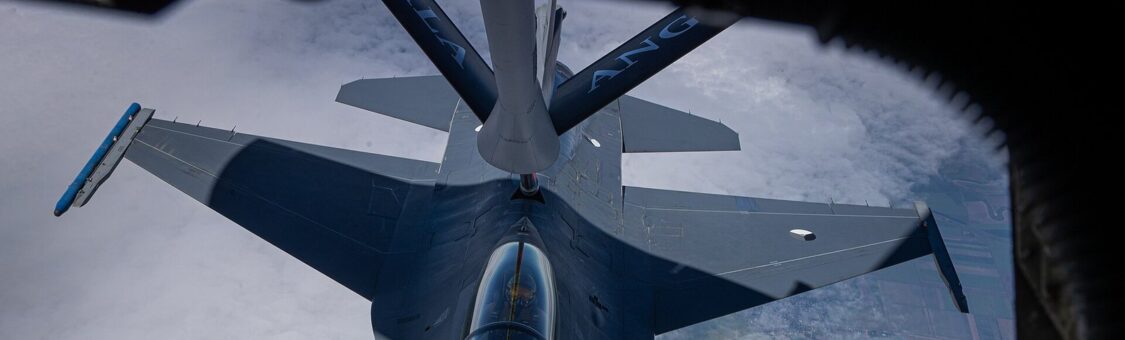
EFTC F-16 receives fuel mid-flight from a KC-135 Stratotanker.jpg Photo: Staff Sgt. Jaccob Hearn

First F-16 Block 72 for Morocco Completes Maiden Flight

The first-ever F-16 Block 72 has completed its maiden flight, marking a major milestone for the program and for Morocco’s effort to field what Lockheed Martin describes as the most advanced version of the Viper. The aircraft, a two-seat F-16D for the Royal Moroccan Air Force (RMAF), flew at Lockheed Martin’s facility in Greenville, South Carolina, the company announced Oct. 6, 2026. The jet will now proceed through flight testing ahead of delivery to Morocco.

Morocco was the first customer to select the Block 72 configuration when the U.S. government approved its purchase in March 2019. At that time, the Defense Security Cooperation Agency said Morocco was seeking 25 F-16C/D Block 72 aircraft in a package estimated at $3.787 billion. The proposed aircraft were to be equipped with the AN/APG-83 Scalable Agile Beam Radar, an active electronically scanned array type, new mission computers, Link 16 Multifunctional Information Distribution Systems, modernized navigation systems, helmet-mounted cueing systems, and a range of air-to-air and air-to-ground weapons.

The distinction between the Block 70 and Block 72 is the engine. The Block 70 uses General Electric’s F110-GE-129, while the Block 72 uses Pratt & Whitney’s F100-PW-229, providing fractionally more power. The two configurations otherwise share the same major avionics and systems modernization package.

For Morocco, the choice of the Block 72 is based on ensuring as much fleet commonality as possible. The RMAF already operates F-16C/D Block 52+ aircraft powered by F100 engines, making the new aircraft a natural fit within its existing support infrastructure. Morocco is also upgrading its existing F-16 fleet to the F-16V configuration, which is broadly similar to the new-build Block 70/72 standard. A separate notification in March 2019 covered the upgrade of Morocco’s existing 23 F-16C/D Block 52+ aircraft to the F-16V standard.

One of the photos published by Lockheed Martin shows the pilot in the front cockpit wearing a Digital Joint Helmet Mounted Cueing Systems (D-JHMCS), an advanced helmet not often seen worn by F-16 pilots, and it is not clear if it has been ordered by Morocco.

The Block 70/72 has attracted customers across Europe, the Middle East, Asia, and elsewhere, including Bahrain, Bulgaria, Jordan, Peru, the Philippines, Slovakia, and Taiwan.

Sources: The War Zone · DVIDS News

News

Boeing gets $14.7B contract to boost PAC-3 seeker production
Strong Teams: 31st ADA Brigade Air Defenders Conduct Patriot Reload Drills Photo: CPT Madison Fuentes

Boeing gets $14.7B contract to boost PAC-3 seeker production

Boeing has been awarded an undefinitized contract worth up to $14.7 billion to increase production of seekers for the PAC-3 Missile Segment Enhancement (MSE) interceptor, the company announced Oct. 5. The seven-year contract was issued by Lockheed Martin, which manufactures the PAC-3, and is intended to accelerate seeker output.

The PAC-3 MSE is a hit-to-kill interceptor launched by the Patriot air defense system to counter missiles and aircraft. The seeker, mounted in the missile’s nose, guides it to its target. The award comes as the U.S. rushes to replenish interceptor stockpiles depleted by conflicts in Ukraine and the Middle East.

“Early investment and a relentless focus on quality and execution have positioned us to now deliver seekers at unprecedented levels in the near-term, and we’re committed to building on that momentum,” said Steve Parker, president and CEO of Boeing’s defense unit.

The contract follows a seven-year framework agreement Boeing reached with the Pentagon in April to triple seeker production, though specific quantities were not disclosed. The new award essentially underwrites that framework.

In July, Lockheed received a nearly $59 billion contract vehicle for PAC-3 MSE production, following a framework agreement to raise missile output to 2,000 units annually by 2030. Like the Lockheed award, the Boeing contract is an undefinitized contract action (UCA), which allows work to begin before final dollar amounts and quantities are settled and permits early work even if appropriations are delayed—notable since a fiscal 2027 budget has not yet been approved by lawmakers.

Boeing said it began ramping up production and hiring earlier this year at its Huntsville, Ala., facilities to support increased output. The seeker has historically been a reported choke point for PAC-3 production.

In August, Boeing revealed it is developing a low-cost alternative seeker called the Ultra Low-Cost Seeker, with future flight tests planned but no disclosed service entry date.

Sources: Breaking Defense · DVIDS News

News

Air Force Conducts First Flight Test of Hypersonic Attack Cruise Missile in Australia
X-51 Hypersonic final flight (11595015293).jpg Photo: US Air Force from USA

Air Force Conducts First Flight Test of Hypersonic Attack Cruise Missile in Australia

The U.S. Air Force, in partnership with Australia, has conducted the first flight test of its Hypersonic Attack Cruise Missile (HACM), with the Royal Australian Air Force executing the release of a test unit over a designated Australian test range, the Air Force confirmed Oct. 5.

“The U.S. Air Force, in partnership with Australia, has conducted a flight test of the Hypersonic Attack Cruise Missile (HACM) as part of our continuous work to advance long-range strike capabilities,” an Air Force spokesperson said. “This effort is part of the Southern Cross Integrated Flight Research Experiment (SCIFiRE), a collaborative agreement built on more than 15 years of partnership between our two nations.”

The spokesperson added: “Leveraging this enduring alliance, the Royal Australian Air Force executed the release of a HACM flight test unit over a designated Australian test range, gathering crucial data to advance the program’s objectives. The flight was the culmination of an extensive series of tests designed to measure the missile’s performance under realistic flight conditions.”

The Air Force did not name the test range or say when the release occurred. It is unknown whether the missile flew under its own power after release or which aircraft carried it aloft. The Air Force previously said it planned to conduct HACM launches in Australia, and the Government Accountability Office (GAO) has reported that RAAF F/A-18F Super Hornets would be used for at least some test launches. The Air Force’s initial launch platform is the F-15E Strike Eagle, though others are expected to follow.

HACM is a scramjet-powered, two-stage missile consisting of a rocket booster and a scramjet cruiser that separates from the booster and dives toward its target, according to GAO. Hypersonic speed is generally defined as anything above Mach 5, but HACM’s peak speed is unknown. Raytheon (now RTX), in cooperation with Northrop Grumman, was chosen to develop the missile in 2022. The weapon has reportedly been designated AHM-4A.

The program has suffered significant delays, and the Air Force has scaled back overall testing plans to try to keep the program on schedule. The original goal had been to begin flight testing in 2024. The stated goal is to be able to make a decision to start rapidly acquiring HACMs in 2027.

Sources: Naval News · The War Zone

News

Anduril, Navy invest $6.6 billion in new submarine component shipyard
US Navy 030803-N-0000X-002 The U.S. Navy's newest and most advanced nuclear-powered attack submarine and the lead ship of its class, PCU Virginia (SSN 774) is moved outdoors for the first.jpg Photo: U.S. Navy photo by General Dynamics Electric Boat

Anduril, Navy invest $6.6 billion in new submarine component shipyard

Defense technology firm Anduril announced Tuesday it will invest $3.7 billion to build a new shipyard in Baltimore County, Maryland, to manufacture critical components for the U.S. Navy’s Virginia-class submarines. The Navy has awarded Anduril a contract worth up to $2.9 billion, with payments tied to production outcomes, bringing the total investment to $6.6 billion.

The facility, called Arsenal-2, will be built at Tradepoint Atlantic in Baltimore County and is expected to begin operations in 2030. It will create 3,100 direct jobs and support more than 11,000 indirect jobs, according to Anduril’s announcement. The site will drive $2 billion in annual economic output, including an estimated $312 million in wages each year.

Arsenal-2 will span more than 2 million square feet on a 187-acre site, with a 1,200-foot graving dock and multimodal road and rail access. The shipyard will use Anduril’s ArsenalOS industrial software platform to manage production workflows.

Anduril will initially manufacture components such as torpedo tubes, with plans to expand into larger submarine modules and hull sections. An industry official said the company’s “very aspirational goal, kind of off in the future, is to be able to produce full ship sections, you know, bows, sterns, etc.” The official added that Anduril will not produce entire submarines.

Permitting and site preparation will begin immediately, with construction starting once approvals are in place. The facility will deliver components to General Dynamics Electric Boat and Huntington Ingalls Industries’ Newport News Shipbuilding for final assembly.

Anduril is also building a 160,000-square-foot facility in Orange County, California, to manufacture Virginia-class components, including torpedo tubes, giving the company a two-year head start to validate production methods before Arsenal-2 comes online.

Christian Brose, Anduril’s chief strategy officer, said of the Navy contract: “It’s really the government buying the results of what we’re able to produce from the facility that we’ve invested in.”

The investment comes as the Navy seeks to increase attack submarine production to meet domestic fleet requirements and AUKUS commitments, according to Anduril’s announcement. The company said adding another source of component work will allow more submarine construction to happen in parallel across the industrial base.

Sources: Defense News · USNI News

News

Ottawa plans Crown corporation to break defence procurement logjam
Canadian Chief of Defence Staff Visits NORAD, USNORTHCOM Photo: Joshua Armstrong

Ottawa plans Crown corporation to break defence procurement logjam

The Liberal government plans to transform its year-old Defence Investment Agency (DIA) into a Crown corporation to move military purchases along more swiftly, two federal sources told CBC News. The proposed overhaul could fundamentally reshape Canada’s defence procurement system and raise questions about oversight and accountability.

The DIA was created just over a year ago and has functioned as a special agency under Public Services and Procurement Canada. Legislation giving the agency broader powers to bypass the decades-old procurement system was put before the House of Commons in the spring and has yet to pass.

Public Works Minister Joël Lightbound plans to introduce new, separate legislation taking the DIA one step further into independent Crown corporation status, according to the sources, who were not authorized to speak publicly. The title of the proposed bill has appeared in House of Commons documents.

The confidential sources said it is expected the Crown corporation would report to an associate minister of defence for public accountability purposes. While details of the new legislation have not been released, it is expected the agency could have its own board, CEO, corporate plan and workforce.

Philippe Lagassé, a defence policy and procurement expert at Carleton University, said the planned move would be significant.

“A Crown corporation could reduce the bureaucratic processes involved with multiple departments and central agencies, notably the federal Treasury Board,” Lagassé said, pointing to Defence Construction Canada as an example of an independent defence agency. “Based on how Defence Construction Canada operates, DIA as a Crown could be the contracting agent for [the Department of National Defence and Canadian Armed Forces], which would slim down the number of actors involved.”

Lagassé noted that fewer ministers would have their say over major projects involving large amounts of taxpayer money, and that there might be less internal oversight. He said the DIA could commit to transparency and its CEO could still appear before parliamentary committee.

Prime Minister Mark Carney made speeding up defence procurement an important campaign promise in the 2025 election. When the first bill to formally create the DIA was tabled earlier this year, it gave the new agency sweeping powers. For decades, the federal government could use four exceptions to suspend the normal procurement process. In the spring, the government proposed to allow up to 14 exceptions, including procurements of national interest, and made economic security a key pillar of the DIA mandate.

Defence Minister David McGuinty and Secretary of State for Defence Procurement Stephen Fuhr are scheduled to hold a media availability on Tuesday to answer questions.

Sources: CBC Politics · CBC Politics

News

PBO: Meeting NATO 5% target could cost $163.6B by 2035
Canadian Soldier participates in Exercise Amber Bridge (6529052).jpg Photo: U.S. Army HQMND-NE by Lt. Col. Ryan Donald

PBO: Meeting NATO 5% target could cost $163.6B by 2035

Direct spending on the Canadian military could reach $163.6 billion by 2035 under the Liberal government’s proposal to meet NATO’s benchmark target of five per cent of GDP, the Parliamentary Budget Office said Tuesday.

The fiscal watchdog’s new report says meeting Canada’s defence commitments “will require substantial increases in government expenditure and investment, with important implications for economic activity, industrial capacity and the composition of production in Canada.”

Because the federal government uses an accrual method for counting defence expenditures, the impact “would increase the budgetary deficit by $63.7 billion, or 1.4 per cent of GDP,” the PBO said.

The report presents two scenarios: one with a gradual, steady increase in equipment purchases, and another where purchases are postponed. The outcome will depend on how Prime Minister Mark Carney’s government manages the increase.

In a previous report, the PBO tracked more than $18 billion set aside for military spending that lapsed under the Trudeau government. Under both Liberal and Conservative governments, it became routine to postpone big-ticket equipment purchases, with funds reprofiled to later years or lapsed and returned to the federal treasury.

Carney ordered the injection of $9 billion into defence last year to meet NATO’s old two per cent of GDP benchmark. The new five per cent target — 3.5 per cent on direct military spending and 1.5 per cent on defence infrastructure — is to be phased in gradually over the next decade. Carney has said the plan is for Canada to hit a four per cent target — 2.5 per cent and 1.5 per cent — by 2030.

Parliamentary Budget Officer Annette Ryan, who took over in the spring, told the House of Commons defence committee on Monday that the government’s plan to reach the new target after 2030 is still a work in progress.

“It’ll take some time before we can actually see the effect of all of these investments,” she said.

Ryan said the PBO has begun work to model the economic impact of the increase. “This is a very rapid increase,” she said in French, noting procurement risks. “I think that Canada’s industrial capacity may not be able to meet the need, which is a risk.… And we might ask, what are we getting back from all of these industrial and technological purchases? That’s another source of risk.”

Sources: CBC Politics · Global News Canada

News

CRS Report Details U.S. Aircraft Combat Losses in Operation Epic Fury
Abraham Lincoln Conducts Flight Operations Photo: PO3 Mario Castro Gamez

CRS Report Details U.S. Aircraft Combat Losses in Operation Epic Fury

A Congressional Research Service (CRS) report released Oct. 5, 2026, details U.S. aircraft combat losses in Operation Epic Fury, the military campaign against Iran that began Feb. 28, 2026. The report, “U.S. Aircraft Combat Losses in Operation Epic Fury: Considerations for Congress,” provides background on the operation, which has involved air, maritime, and missile combat across the Middle East.

According to the report, the United States initiated operations in coordination with Israel. The pace of combat declined amid a ceasefire in April, but some strikes resumed within weeks, and conditions remain fluid. The Department of Defense is using a secondary Department of War designation under Executive Order, the report states.

In a related development, Kingsley Field in Oregon is preparing for a new era of fighter pilot training following the decision to base 26 F-35A Lightning II aircraft there, according to a DVIDS release. The 173rd Fighter Wing will transition from F-15C Eagles to F-35As, with initial aircraft arrival expected in Summer 2027. Col. Adam Gaudinski, 173rd Fighter Wing commander, said, “This is a historic day for the 173rd Fighter Wing, and the Klamath Basin. Twenty-six F-35s will call Kingsley Field home, and with them comes a mission of national importance.”

Meanwhile, at U.S. Army Garrison Ansbach in Germany, the 12th Combat Aviation Brigade hosted the sixteenth Noise Abatement Commission on Sept. 11, 2026, to discuss aviation training and community noise concerns. The semi-annual commission, held since 2010, briefed local mayors on authorized training hours under the Summer Night Flying Program. Flight operations are authorized until 1:30 a.m. in May and August, and until 2 a.m. in June and July. Historical flight tracking showed record lows in flights past midnight over the past four years, with zero flights past midnight at Illesheim and ten at Ansbach. The brigade provided up to 32 compensation days in Ansbach and 26 in Illesheim.

Sources: DVIDS News · DVIDS News

News

Anduril, Navy announce $6.6B Virginia-class submarine parts shipyard in Maryland
060511-N-7434T-001 (May 11, 2006)The forward section and sail unit of US Navy (USN) Virginia Class Submarine Pre-Commissioning Unit (PCU) NORTH CAROLINA (SSN 777), under constructio - DPLA - 4b3387551 Photo: Department of Defense. American Forces Information Service. Defense Visual Information Center. 1994

Anduril, Navy announce $6.6B Virginia-class submarine parts shipyard in Maryland

Anduril and the US Navy announced Tuesday a $6.6 billion public-private partnership to build Arsenal-2, a new shipyard in Baltimore County, Maryland, that will manufacture components for Virginia-class submarines. The company will invest $3.7 billion in private capital, and the Navy has awarded Anduril a contract worth up to $2.9 billion, with payments tied to production outcomes.

The facility will be located at Tradepoint Atlantic on a 187-acre site and span more than 2 million square feet. Anduril said permitting and site preparation will begin immediately, with construction starting once approvals are in place. Initial operations are expected to come online in 2030, with production scaling progressively thereafter.

Anduril said the shipyard will create 3,100 direct jobs and more than 11,000 indirect jobs. White House Principal Deputy Press Secretary Anna Kelly said the project will drive $2 billion in annual economic output.

The company described Arsenal-2 as a “modern shipbuilding system built around software-defined production and advanced manufacturing.” Its industrial software platform, ArsenalOS, will serve as the facility’s “digital backbone,” connecting fabrication workflows, outfitting sequences, material movement, inspection protocols, and documentation requirements in a single system, according to Anduril.

Anduril plans to initially produce basic modules such as torpedo tubes before expanding into more complex components, including full sections of the vessels such as the bow. The components will be delivered to General Dynamics Electric Boat and HII’s Newport News Shipbuilding, which jointly build Virginia-class submarines, for final assembly.

The company is also standing up a 160,000-square-foot facility in Orange County, California, to begin manufacturing submarine parts, including torpedo tubes, ahead of Arsenal-2’s opening. Anduril said the California facility will provide a two-year operational head start to develop and validate manufacturing methods, production workflows, and quality systems.

A senior administration official said Arsenal-2 would add roughly 9 million hours of labor annually to the submarine industrial base, a 15 percent increase for Virginia-class production. The official said torpedo tubes are currently “a gating component that we need to be able to move forward with some of those Virginia-class submarines that are under construction,” and having them earlier would let the Navy move production faster.

Chief of Naval Operations Adm. Daryl Caudle told the House Appropriations Committee in May that he anticipates industry will deliver two Virginia-class submarines annually by around 2032. The Navy’s shipbuilding plan, also released in May, said investing in the submarine industrial base is paramount to meeting those goals. As of June 2025, shipbuilders were producing Virginia-class submarines at a rate of one per year, according to a Government Accountability Office report released in July.

Chris Brose, Anduril’s president and chief strategy officer, said the company has been discussing the need for additional shipyard production capacity with the administration and Navy for nearly two years. “This is not about taking food off the plate of anybody. This is about putting more food on the table and being able to meet the requirements that our country has to produce more submarines,” he said.

Sources: Breaking Defense · DefenseScoop

News

US Air Force Conducts First HACM Hypersonic Cruise Missile Release Over Australian Test Range
AGM-86's pylon on the remote control trailer.JPEG Photo: SSGT BOB SIMONS

US Air Force Conducts First HACM Hypersonic Cruise Missile Release Over Australian Test Range

The U.S. Air Force, in partnership with Australia, has conducted a flight test of the Hypersonic Attack Cruise Missile (HACM), with the Royal Australian Air Force (RAAF) executing the release of a test unit over a designated Australian test range. The Air Force confirmed the test to The War Zone, but did not name the range or specify the date of the release.

“The U.S. Air Force, in partnership with Australia, has conducted a flight test of the Hypersonic Attack Cruise Missile (HACM) as part of our continuous work to advance long-range strike capabilities,” an Air Force spokesperson said. “This effort is part of the Southern Cross Integrated Flight Research Experiment (SCIFiRE), a collaborative agreement built on more than 15 years of partnership between our two nations.”

“Leveraging this enduring alliance, the Royal Australian Air Force executed the release of a HACM flight test unit over a designated Australian test range, gathering crucial data to advance the program’s objectives,” the spokesperson added. “The flight was the culmination of an extensive series of tests designed to measure the missile’s performance under realistic flight conditions.”

It is not known whether the missile flew under its own power after release, or which aircraft carried it aloft. The Air Force has previously stated that it planned to conduct HACM launches in Australia, and the Government Accountability Office (GAO) has reported that RAAF F/A-18F Super Hornets would conduct at least some HACM test launches. The Air Force’s initial launch platform is the F-15E Strike Eagle, though others are expected to follow.

HACM is a two-stage, scramjet-powered missile, consisting of a rocket booster and a scramjet cruiser that separates from the booster and dives toward its target, according to the GAO. Hypersonic speed is generally defined as anything above Mach 5, but HACM’s peak speed is unknown.

Raytheon (now formally RTX), in cooperation with Northrop Grumman, was chosen to develop the missile in 2022. The weapon has reportedly been designated AHM-4A. The program has suffered significant delays; the original goal had been to begin flight testing in 2024. The Air Force has scaled back overall testing plans to try to keep the program on schedule, with the stated goal of being able to make a decision to start rapidly acquiring HACMs in 2027.

Sources: DVIDS News · Naval News