News

News

Russian satellite shadows US-registered ICEYE radar satellite in unprecedented close approach
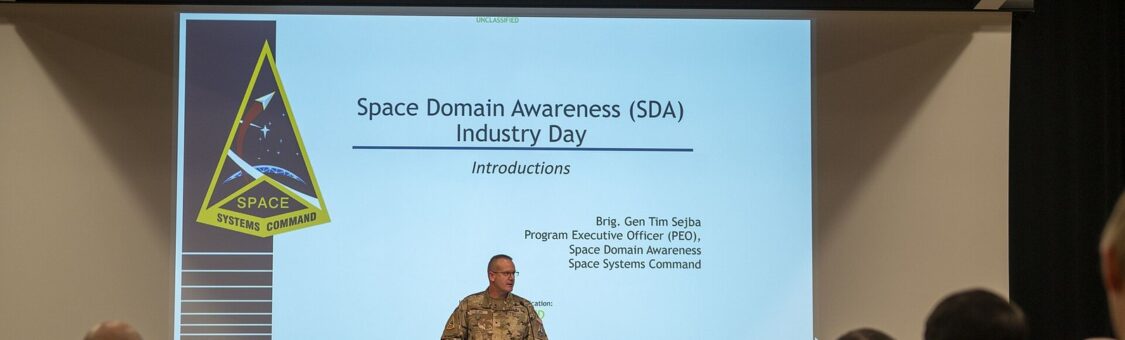
SSC hosts a successful Space Domain Awareness Industry Day (7346990).jpeg Photo: U.S. Air Force photo by [null Courtesy]

Russian satellite shadows US-registered ICEYE radar satellite in unprecedented close approach

A Russian military satellite maneuvered to within approximately 500 meters (1,640 feet) of ICEYE-X36, a US-registered commercial radar imaging satellite, between Oct. 15 and Oct. 19, in what space tracking firms and analysts describe as an unprecedented uncoordinated rendezvous in low Earth orbit.

Space tracking company LeoLabs said in a press release that Russia’s Kosmos 2612 “conducted a deliberate series of maneuvers toward ICEYE-X36” involving “continued maneuvering around ICEYE-X36, shifting between positions ahead of and behind the commercial satellite.” LeoLabs told The War Zone it has “high-confidence that the objects came within approximately 500 meters of each other.” Publicly available tracking data from satellitemap.space and orbitalradar.com showed a close encounter at approximately 16:07 UTC on Oct. 19, with some data suggesting a pass within approximately 85 feet (26 meters).

Independent tracker Jonathan McDowell wrote on X that new tracking data showed Kosmos 2612 made a maneuver on Oct. 16 and was station-keeping within 5 km (3 miles) or less of ICEYE-X36. “To my knowledge this is the first LEO rendezvous of two active satellites where the owner of one of the sats did not give approval,” he wrote.

Adam Marsh, LeoLabs vice president for technical solutions, told Breaking Defense: “This is the most advanced and potentially dangerous uncooperative RPO we’ve observed.”

Kosmos 2612 is one of six Russian military satellites launched on a Soyuz-2.1b rocket from the Plesetsk cosmodrome in April 2026. In May, five of those satellites carried out fuel-hungry maneuvers to shift their orbits into the same plane as ICEYE-X36, and one passed within about 2.5 km of it on May 26, according to an analysis by the Center for Strategic and International Studies. ICEYE CEO Rafal Modrzewski later told Reuters the company had moved its satellite in response.

Trackers said Kosmos 2612 began its stalking mission on Sept. 30, executing a series of maneuvers “clearly designed” to catch up to the ICEYE satellite, according to space watcher Marco Langbroek. Around Oct. 12, analysts saw it make a single burn that put it back at nearly the same altitude, inclination and orbital plane as ICEYE-X36, trailing the commercial satellite by roughly 475 km (295 miles) and slowly catching up, before the Oct. 16 maneuver brought it alongside.

LeoLabs’ analysis concluded that Kosmos 2612 “demonstrated a sequence of capabilities that could be used to inspect, characterize, shadow, or potentially interfere with another spacecraft,” including departing on a controlled trajectory, deliberately matching the orbital plane of another satellite, closing from long range in a controlled manner, repositioning ahead of and behind the target, and making repeated small maneuvers while in proximity.

ICEYE, a Finnish-founded company, operates a fleet of small synthetic aperture radar satellites, which can image the ground at night and through clouds. Ukraine has used ICEYE imagery since 2022, including from a satellite bought with crowdfunded donations. ICEYE-X36 is operated by the company’s US arm, ICEYE US, and was launched from the United States in 2024, making it a US satellite or at least one for which the United States is the launching state, said Victoria Samson, chief director of Space Security and Stability for Secure World Foundation.

Clayton Swope, deputy director of the Aerospace Security Project at the Center for Strategic and International Studies, wrote that given Russia’s history of testing on-orbit weapons, “policymakers should assume Cosmos 2612 could take an action that threatens the commercial satellite.” He added: “A Russian counterspace activity in the vicinity of Western satellites should be assessed within the context of aggressive Russian gray zone activities targeting U.S. and European interests.”

Russia has a history of parking its satellites near other countries’ spacecraft. In 2020, Kosmos 2542 and its subsatellite Kosmos 2543 trailed a U.S. government reconnaissance satellite, prompting public complaints from U.S. Space Command. LeoLabs said the latest observations show the two spacecraft “strongly diverging” and that “the close-proximity activity had ended.”

Sources: Defence Blog · Breaking Defense
News

Four CAF members killed, dozens injured in grass fire during training at CFB Wainwright
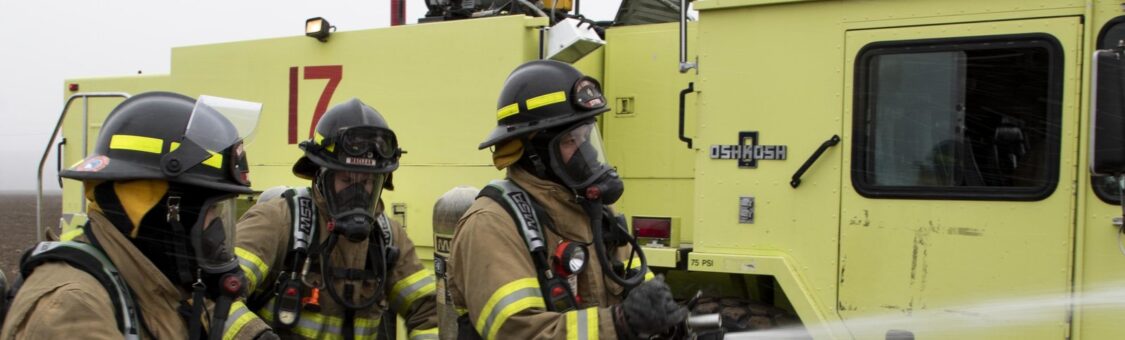
336th Engineer Detachment firefighters join Canadians, Romanians in plane crash emergency response exercise (4907944).jpg Photo: U.S. Army 24TPASE by Sgt. Thomas Calvert

Four CAF members killed, dozens injured in grass fire during training at CFB Wainwright

Four Canadian Armed Forces members were killed and dozens more injured when a fast-moving grass fire swept through a training area at Canadian Forces Base Wainwright, Alberta, on Oct. 17, 2026, according to the Department of National Defence.

A fire ignited within the training area at approximately 4:00 p.m. local time during a scheduled training exercise involving 84 members of the 3rd Battalion of Princess Patricia’s Canadian Light Infantry, said Maj.-Gen. Wade Rutland, commander of the 1st Canadian Division, at a press conference on Oct. 18. Most soldiers were throwing hand grenades on a range while 10 others conducted attack simulations in preparation for potential overseas deployment, including to Latvia.

Rutland said training leaders were aware of a grass fire about a kilometre from the soldiers’ position, but it was not initially deemed a threat. A sudden shift in wind direction and strength caused the fire to spread rapidly toward the range administrative area.

“The fire was a kilometre away when the wind shifted. It is not normal for a fire to move a kilometre in 30 to 60 seconds,” Rutland said.

He said the commander on the ground confirmed that within 30 seconds to a minute, personnel saw no fire, and then the fire was on top of them. Rutland said the fire did not start within the training area and its cause remains under investigation. He added that officials do not believe the fire resulted from oil and gas infrastructure or outside interference.

A preliminary investigation suggests a munition from the live training exercise may have sparked the fire, according to multiple military sources verified by Global News on Oct. 17. Investigators say it could be weeks before details of how the fire started are determined.

Health officials and Alberta Premier Danielle Smith confirmed at an Oct. 18 press conference that 30 emergency units, including 22 ground ambulances and eight aircraft, were deployed to Wainwright on Oct. 17. Saskatchewan provided air ambulance support. Hospitals declared a Code Orange, a mass casualty response, said Dr. Sayeh Zielke, CEO of Acute Care Alberta. By 6:00 p.m. on Oct. 17, health agencies had stood up a command centre.

Defence Minister David McGuinty announced from Ottawa at around 7:30 p.m. Mountain time on Oct. 17 that there were multiple fatalities and many more were injured. On Oct. 19, the House of Commons observed a moment of silence for the victims. Prime Minister Mark Carney said the House was meeting “united in grief,” adding, “This loss touches every corner of our nation.”

Rutland said the weather earlier in the day was “well within standard procedures, well below 50 kilometres [per hour],” describing the wind shift as “uncommon, rapid.” Environment Canada had issued a high-wind warning for Alberta on Oct. 17, with gusts up to 100 km/h reported in parts of the province.

Sources: Canada DND Newsroom · Canada DND Newsroom

News

Low fire risk before sudden wind shift sparked deadly CFB Wainwright blaze: memo
A Canadian army CH-135 helicopter airlifts a lightweight utility vehicle during the combined United States-Canadian NATO exercise RENDEZVOUS '83 - DPLA - 5124acba52e3bed785889e174dbd63fd.jpeg Photo: Department of Defense. American Forces Information Service. Defense Visual Information Center. 1994

Low fire risk before sudden wind shift sparked deadly CFB Wainwright blaze: memo

Four Canadian Armed Forces members were killed during a fire at Canadian Forces Base Wainwright in Alberta on Oct. 18, 2026, according to the Department of National Defence. The fire occurred during a training exercise, and a Canadian Armed Forces memo obtained by Global News says the blaze started despite a low fire risk rating, with a sudden wind shift turning it deadly.

The department confirmed the deaths in a news release published Oct. 18, 2026, stating that the four members were killed during training at CFB Wainwright. The release did not identify the members or provide further details about the incident.

According to the Canadian Armed Forces memo, the fire risk at the time of the incident was rated as low. However, a sudden shift in wind direction caused the fire to spread rapidly, leading to the fatalities. The memo did not specify the exact wind speed or the time of the fire.

Defence Minister McGuinty and officials from the Canadian Armed Forces and the Government of Alberta were scheduled to hold a media briefing on Oct. 18, 2026, to discuss the incident. The briefing was announced in a separate DND news release published the same day.

The department said it is investigating the incident.

Sources: Canada DND Newsroom · Canada DND Newsroom

News

Airman dies in rappelling incident at UTSA-Navy football game
TACP Airmen master vertical infiltration Photo: Melissa Hydrick

Airman dies in rappelling incident at UTSA-Navy football game

An Air Force service member died Saturday night after falling during a pregame rappelling demonstration at a college football game in San Antonio, Texas. The incident occurred before the game between the University of Texas at San Antonio and the Naval Academy at the Alamodome.

A spokesperson for Nellis Air Force Base confirmed that a service member assigned to the 6th Combat Training Squadron, Detachment 2, died from injuries sustained in the fall. The Air Force did not identify the deceased.

The demonstration was part of UTSA’s annual Salute to Armed Forces & Veterans game. Four military members were to rappel from the rafters of the Alamodome to the ground. According to the San Antonio Express-News, halfway through the descent, one person slid down the rope in “an uncontrolled manner” and hit the ground hard. Football staff rushed to the injured man, and medical personnel provided first aid before the airman was put on a stretcher.

The San Antonio Fire Department told Task & Purpose that it transported a person with a life-threatening injury to a hospital. The Air Force later confirmed the airman had died.

“The incident is under investigation. More information will be released as it becomes available,” the Nellis spokesperson said.

The 6th Combat Training Squadron selects and trains students for the Air Force’s Tactical Air Control Party, or TACP, special operations job at Lackland Air Force in San Antonio. TACPs are airmen trained in both Army ground combat operations and Air Force air control procedures, and they embed with soldiers and Marines to direct and coordinate airstrikes from ground positions. The squadron is based at Nellis Air Force Base in Nevada, although Detachment 2 operates from Joint Base San Antonio-Camp Bullis.

The incident remains under investigation, and the Air Force said more information will be released as it becomes available.

Sources: DVIDS News · Task & Purpose

News

4 Canadian service members killed, dozens injured in fire at CFB Wainwright
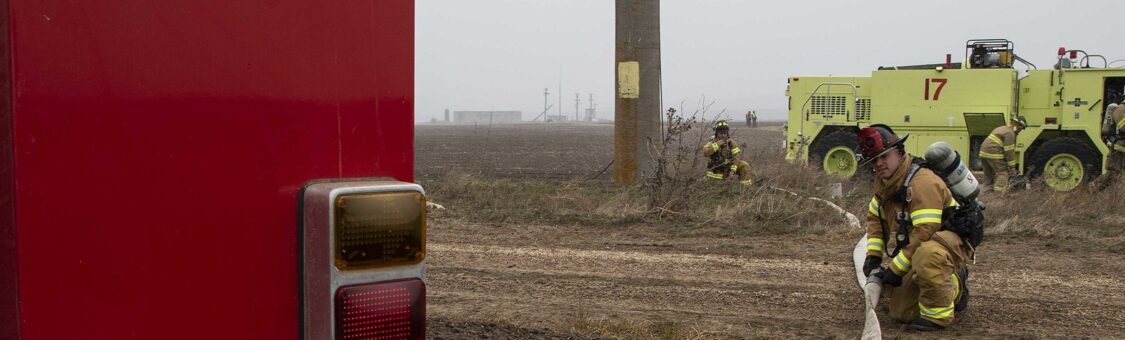
Firefighters’ Evacuation and Rescue Training (4809732).jpg Photo: U.S. Army video by Eugen Warkentin

4 Canadian service members killed, dozens injured in fire at CFB Wainwright

Four Canadian service members were killed and dozens more injured in a fire that broke out Saturday at Canadian Forces Base Wainwright in Alberta, Prime Minister Mark Carney said in a televised address Sunday. The service members were participating in military training when the fire occurred, Carney said, and the families of those killed have been notified.

The Canadian military said Sunday there were no indications the incident was the result of terrorism, but the cause remained under investigation. The Royal Canadian Mounted Police said officers were called shortly after 4 p.m. Saturday following reports of a fire in a training area at the base.

Fire crews battled the blaze late Saturday as fierce winds — with gusts up to 100 kph (62 mph) — whipped flames beyond the base and into the surrounding rural area. By 11 p.m., the Municipal District of Wainwright said on social media the fire was being held and that property and critical infrastructure were protected. No evacuation order was issued for residents.

The exact number of injured was not immediately clear. Carney said the wounded were being treated in Wainwright, Edmonton, Red Deer and Calgary. A doctor at a hospital in Edmonton, 180 kilometers (112 miles) northwest of the base, said patients were taken to hospitals across the city as healthcare facilities around the base became “completely overwhelmed.”

“This number of patients would overwhelm the city of Edmonton,” Dr. Warren Thirsk, an emergency department physician at the Royal Alexandra Hospital, told CBC News. “It is more patients than any of us want to count right now. It’s a disaster. It’s a one in every 15- to 25-year disaster.”

Wainwright Mayor Bruce Pugh said the town’s small hospital was not designed to handle a mass-casualty incident but praised the response of local medical personnel. Helicopters and planes transported patients to other facilities for treatment, he said.

Defense Minister David McGuinty said the Royal Canadian Mounted Police were involved in investigating the incident and described the situation as “very, very active and delicate.” He said he was traveling to Edmonton to be briefed on the latest developments.

“I cannot recall such an incident in my short time for sure as a minister, but I cannot recall an incident like this in recent memory,” McGuinty said. “We will have more to say in the coming hours and days.”

Flags will fly at half-staff on federal buildings across the country in honor of those affected, Carney said. The base is home to the Canadian Maneuver Training Center and the 3rd Canadian Division Training Centre.

Sources: DVIDS News · DVIDS News

News

Second Chinese UUV Mothership Emerges, Signaling Rapid Expansion of Underwater Drone Fleet
Unmanned Undersea Vehicle Group (UUVGRU) 1 conducts UUV operations during BALTOPS 2026 Photo: PO1 Brandie Nuzzi

Second Chinese UUV Mothership Emerges, Signaling Rapid Expansion of Underwater Drone Fleet

A second Chinese vessel designed to launch and recover uncrewed underwater vehicles (UUVs) has emerged, this time at a shipyard in Guangzhou, according to imagery circulating on Chinese social media and analyzed by defense publications. The new ship, spotted in the Pearl River near the Panyu district, is smaller than a similar vessel first reported under construction in Shanghai in September 2026, but shares the same distinctive features: a stern well deck, lifting masts, and a hangar behind the forward superstructure.

The Shanghai vessel, built at Hudong-Zhonghua Shipyard on Changxing Island, is slightly over 200 meters long and features twelve lifting masts in two rows of different heights. The Guangzhou ship is roughly a third smaller, with an estimated length closer to 150 meters, and has only six masts of similar height. Both are believed to be motherships for very large UUVs, potentially up to 50 meters in length, which would make them the largest known military UUVs in the world, according to Naval News.

The Guangzhou vessel was likely built at the COMEC shipyard (formerly Guangzhou Shipyard International) on Longxue Island, a subsidiary of China State Shipbuilding Corporation, based on archival satellite imagery from October 2, 2026, showing the ship in a covered graving yard before launch. The ship is still missing all sensor and communication equipment and is being towed for fitting-out, with at least two other yards belonging to Huangpu further up-river as plausible candidates to finish the fitting-out work.

The emergence of two such vessels in quick succession underscores China’s significant investment in UUV technology, according to The War Zone. The publication notes that a growing fleet of these motherships would have increasing tactical and strategic importance, enabling the deployment of large numbers of UUVs far from Chinese shores. Large UUVs can be used for tasks ranging from sea floor mapping to hunting submarines, laying mines, launching cruise missiles, or serving as weapons themselves.

The U.S. Navy has no similar vessel in its inventory, and launch and recovery of large UUVs remains a conceptual work in progress for the U.S., The War Zone reported. The second ship’s appearance follows reports that China is evaluating at least two very large UUV designs between 35 and 45 meters in length.

Observers speculate that these vessels may be part of a larger program that could see more ships constructed, which would indicate the utility of these motherships will extend beyond testing and limited operational use, according to The War Zone. Further assessment of the Guangzhou ship’s purpose will require more detailed imagery, Naval News noted.

Sources: DoD News · Defence Blog

News

Ukraine Launches More Than 1,000 Drones at Russia, Setting St. Petersburg Oil Facilities Ablaze
Fire at the Moscow Oil Refinery on June 18, 2026 (20260618 131954).jpg Photo: Rotafinus

Ukraine Launches More Than 1,000 Drones at Russia, Setting St. Petersburg Oil Facilities Ablaze

Ukraine launched more than 1,000 drones at Russia on Oct. 18, 2026, setting oil facilities in St. Petersburg ablaze, according to the Associated Press. The attack comes as Ukrainian President Volodymyr Zelenskyy said Russia had attacked Ukraine’s energy, oil and gas sectors 76 times since the Trump administration’s energy ceasefire announcement.

The strike is the latest in a series of escalating attacks on Russian oil infrastructure, directly challenging the ceasefire that the Trump administration had brokered.

Zelenskyy’s statement, posted on X on Sunday, highlighted the frequency of Russian attacks on Ukraine’s energy infrastructure since the ceasefire was announced. The Ukrainian president’s comments came as the drone strike on St. Petersburg underscored the fragility of the energy ceasefire.

Sources: DVIDS News · Stars and Stripes

News

Carrier Strike Group 9 arrives in Japan ahead of Keen Sword exercise
Flickr - Official U.S. Navy Imagery - Carrier Strike Group 8 is underway..jpg Photo: Official Navy Page from United States of America MC2 Julia A. Casper/U.S. Navy

Carrier Strike Group 9 arrives in Japan ahead of Keen Sword exercise

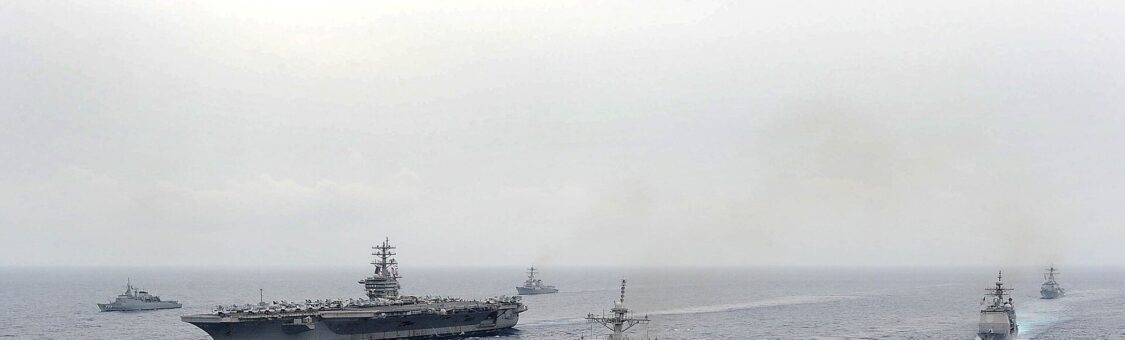
The Nimitz-class aircraft carrier USS Theodore Roosevelt (CVN 71), flagship of Carrier Strike Group (CSG) 9, arrived at Commander, Fleet Activities Yokosuka, Japan, on Oct. 16, 2026, together with the Ticonderoga-class guided-missile cruiser USS Chosin (CG 65) and the Arleigh Burke-class guided-missile destroyer USS Decatur (DDG 73). The strike group is preparing to participate in exercise Keen Sword, a biennial joint-bilateral field training exercise with the Japan Self-Defense Forces.

The port visit is the first time in more than four years that a non-forward-deployed carrier has pulled into Yokosuka, according to USNI News and The War Zone. The strike group also deployed with the Medium Unmanned Surface Vessel (MUSV) Seahawk, USNI News reported. The War Zone reported that the Roosevelt completed the journey from San Diego in 19 days, maneuvering around a typhoon in the Western Pacific.

While in port, the strike group will conduct routine maintenance and resupply, and staff will hold professional exchanges with counterparts from the Japan Maritime Self-Defense Force (JMSDF) to align tactical procedures ahead of Keen Sword 2027, according to a U.S. Navy release. The U.S. Navy did not give dates for this year’s exercise or say how many ships and aircraft will take part, Defence Blog reported.

“Our crew is honored to visit Yokosuka and experience the rich culture and hospitality of Japan,” said Capt. Will Mathis, commanding officer of Theodore Roosevelt, in the release. “Port visits like this are vital for crew morale and mission readiness, allowing our Sailors to rest, recharge, and prepare to operate seamlessly alongside our allies during exercise Keen Sword.”

Rear Adm. Marcos Jasso, commander of CSG-9, said in the release: “The U.S.-Japan Alliance serves as the cornerstone of peace and security across the region. Every engagement with our JMSDF allies and the Japan community deepens the mutual trust vital to keeping this region free and open, especially as we transition to complex bilateral operations during Keen Sword.”

Before the port visit, commanders emphasized to crews that they are expected to uphold good order and discipline, comply with the liberty policy, and treat their Japanese hosts with respect, according to the release.

The strike group is conducting routine operations in the U.S. 7th Fleet area of operations. The War Zone reported that the five-ship CSG is operating on a disaggregated basis, with USS Carl M. Levin operating at an undisclosed location and USS Paul Hamilton having left San Diego on Oct. 10.

Keen Sword is designed to increase readiness and interoperability between the Japan Self-Defense Forces and U.S. military forces, according to the Navy release.

Sources: DVIDS News · Defence Blog

News

Airman dies in rappelling fall during pregame demonstration at Alamodome
TACP students receive rappel training Photo: A1C Amanda Yastrzab

Airman dies in rappelling fall during pregame demonstration at Alamodome

A service member assigned to an Air Force training unit died Saturday night after falling from the rafters of the Alamodome in San Antonio, Texas, during a pregame rappelling demonstration before a football game between the University of Texas at San Antonio and the Naval Academy.

A spokesperson for Nellis Air Force Base confirmed that the service member, assigned to the 6th Combat Training Squadron, Detachment 2, died from injuries sustained in the fall. The Air Force did not identify the deceased.

The incident occurred during UTSA’s annual Salute to Armed Forces & Veterans game. Four military members were scheduled to rappel from the rafters to the ground. According to the San Antonio Express-News, halfway through the descent, one person slid down the rope in “an uncontrolled manner” and hit the ground hard. Football staff rushed to the injured man, and medical personnel provided first aid before he was placed on a stretcher.

The San Antonio Fire Department told Task & Purpose that it transported a person with a life-threatening injury to a hospital. The Air Force later confirmed the airman had died.

“The incident is under investigation. More information will be released as it becomes available,” the Nellis spokesperson said.

Prior to the Air Force’s announcement, a spokesperson for UTSA Athletics confirmed that the rappel team consisted of members of the 6th Combat Training Squadron, Detachment 2. The squadron selects and trains students for the Air Force’s Tactical Air Control Party, or TACP, role. TACPs embed with soldiers and Marines and direct and coordinate airstrikes from ground positions.

The 6th Combat Training Squadron is based at Nellis Air Force Base in Nevada, while Detachment 2 operates from Joint Base San Antonio-Camp Bullis.

The incident remains under investigation, with the Air Force saying more information will be released as it becomes available.

Sources: DVIDS News · Task & Purpose

News

Seven Dead, Dozens Injured in Explosion and Fire at CFB Wainwright, Alberta
336th Engineer Detachment firefighters join Canadians, Romanians in plane crash emergency response exercise Photo: SFC Thomas Calvert

Seven Dead, Dozens Injured in Explosion and Fire at CFB Wainwright, Alberta

At least seven people are dead and dozens more are injured following an explosion and fire at Canadian Forces Base (CFB) Wainwright, Alberta, according to multiple military sources cited by Global News Canada.

The fire ignited within the base’s training area at approximately 4:00 p.m. local time on October 17, 2026, according to a statement from the Department of National Defence (DND). The DND said the fire spread rapidly beyond the boundaries of the training area, and that military and civilian emergency services responded quickly to control the blaze and to support those affected by the incident.

The DND statement did not provide a specific number of casualties, and the exact count of injured personnel has not been officially confirmed. Military sources told Global News that the death toll stands at seven, with dozens of additional injuries reported.

Details on the cause of the explosion and the identities of the deceased have not yet been released. The DND said emergency response efforts were ongoing, with personnel working to contain the fire and provide medical assistance to the wounded.

CFB Wainwright is a major Canadian Army training facility located in east-central Alberta, used for large-scale exercises involving armoured vehicles, artillery, and infantry units.

The DND has not announced an official investigation timeline, but stated that the immediate priority remains fire suppression and care for the injured. Further updates are expected as the response continues.

Sources: Global News Canada · Canada DND Newsroom