News

News

Navy Adds $99.1M for Final Zumwalt Destroyer Sea Trials
150421-N-YE579-301 (26339720110).jpg Photo: National Museum of the U.S. Navy

Navy Adds $99.1M for Final Zumwalt Destroyer Sea Trials

The U.S. Navy has added $99.1 million to an existing contract with Huntington Ingalls Industries to conduct sea trials for USS Lyndon B. Johnson (DDG 1002), the final Zumwalt-class stealth destroyer, which is being fitted with hypersonic missiles. The modification, announced by the U.S. Department of War, raises the contract ceiling for work at Ingalls Shipbuilding in Pascagoula, Mississippi, where about 95% of the work will occur. The Navy obligated about $59.3 million at signing, split between fiscal 2025 and fiscal 2026 shipbuilding funds, with completion scheduled for October 2028.

During sea trials, the ship will test propulsion, steering, combat systems, and other equipment at sea before Navy acceptance. For Lyndon B. Johnson, the trials follow years of work to install Conventional Prompt Strike, a hypersonic missile designed to reach targets thousands of kilometers away at more than five times the speed of sound.

The Zumwalt class was originally built around two 155 mm Advanced Gun Systems, but the Navy canceled the guns’ special long-range shells in 2016 after costs soared, leaving the destroyers with unusable guns. The Navy later decided to remove the guns and give the ships a new strike mission with hypersonic missiles.

Lyndon B. Johnson was built by General Dynamics Bath Iron Works in Maine and christened in April 2019. It moved to Ingalls for combat system activation and entered dry dock in January 2025 to install the large missile tubes for Conventional Prompt Strike. The Navy said at that time it planned to commission the destroyer in 2027.

The lead ship, USS Zumwalt (DDG 1000), completed the same conversion first, replacing its forward gun with four large-diameter tubes that each hold three hypersonic missiles, for a total of 12. Zumwalt completed builder’s sea trials in January 2026 after nearly three years in the yard. The second ship, USS Michael Monsoor (DDG 1001), is set to receive the same missile system during a future yard period.

Conventional Prompt Strike shares its hypersonic glide body with the U.S. Army’s Dark Eagle long-range hypersonic weapon, which is fielded on truck-mounted launchers. Lockheed Martin, the prime contractor, received a $1.36 billion contract modification earlier this year to support missile and launcher production.

Ingalls is due to finish Lyndon B. Johnson’s sea trials and related work by October 2028, which would make it the second Zumwalt-class destroyer to go to sea with hypersonic missile tubes.

Sources: Defence Blog · Defence Blog

News

Russian Satellite Shadows Commercial Radar Sat Used by Ukraine
CMSSF Visits Vandenberg SFB Photo: Amn Enso Valle

Russian Satellite Shadows Commercial Radar Sat Used by Ukraine

A Russian military satellite has maneuvered to within about 5 km (3 miles) of a commercial radar imaging satellite used by Ukraine, and appears to be holding position there, according to tracking data and analysts.

Kosmos 2612 made a maneuver on Oct. 16 and is now station-keeping close to ICEYE-X36, a synthetic aperture radar satellite operated by ICEYE, independent tracker Jonathan McDowell wrote on X. McDowell, an astrophysicist who tracks spacecraft using public orbital data, said it may be the first rendezvous in low Earth orbit between two active satellites without the consent of one of the owners.

“New TLEs show that K2612 made a manuever on Oct 16 and is now stationkeeping within 5 km or less of ICEYE X36. To my knowledge this is the first LEO rendezvous of two active satellites where the owner of one of the sats did not give approval,” McDowell wrote.

Space tracking company LeoLabs told Axios that the Russian satellite’s movement appeared to be a deliberate approach and that, as of Oct. 17, Kosmos 2612 was roughly three miles from ICEYE-X36. ICEYE declined to comment. The satellite is tied to the company’s U.S. arm, ICEYE US.

ICEYE, a Finnish-founded company, operates a fleet of small synthetic aperture radar satellites that can image the ground at night and through clouds. Ukraine has used ICEYE imagery since 2022, including from a satellite bought with crowdfunded donations. A Ukrainian official told Axios that the military works with the company but could not say whether ICEYE-X36 itself supports Ukraine.

Kosmos 2612 is one of six Russian military satellites launched on a Soyuz-2.1b rocket from the Plesetsk cosmodrome in April 2026. In May, five of those satellites carried out fuel-hungry maneuvers to shift their orbits into the same plane as ICEYE-X36, and one passed within about 2.5 km of it on May 26, according to an analysis by the Center for Strategic and International Studies. ICEYE CEO Rafal Modrzewski later told Reuters the company had moved its satellite in response.

Around Oct. 12, analysts saw Kosmos 2612 make a single burn that put it back at nearly the same altitude, inclination and orbital plane as ICEYE-X36, trailing the commercial satellite by roughly 475 km (295 miles) and slowly catching up, before the Oct. 16 maneuver brought it alongside.

Russia has a history of parking its satellites near other countries’ spacecraft. In 2020, Kosmos 2542 and its subsatellite Kosmos 2543 trailed a U.S. government reconnaissance satellite, prompting public complaints from U.S. Space Command. Analysts say a satellite this close could photograph, monitor or potentially interfere with its target, though the purpose of Kosmos 2612 is not publicly known.

Sources: Military.com · Stars and Stripes

News

Pentagon Wireless Services Exposed Sensitive Locations, Watchdog Finds
2nd Security Force Assistance Brigade assembles satellite communications equipment (8433630).jpg Photo: U.S. Army Reserve photo by Nicholas J. De La Pena

Pentagon Wireless Services Exposed Sensitive Locations, Watchdog Finds

Security vulnerabilities meant malicious groups could “pinpoint sensitive locations like safe houses or command posts, and expose operational vulnerabilities, significantly compromising national security,” according to a watchdog finding reported by Task & Purpose.

The finding did not specify the exact dollar amounts, quantities, or dates of the exposure, but the watchdog’s assessment highlighted a concrete security vulnerability with direct force-protection implications. The report did not name the specific wireless services or the locations affected, nor did it detail the duration of the exposure.

The watchdog’s finding comes amid broader concerns about military communications security. In a separate development, a letter demanding a probe into Ukraine’s loss of access to Starshield, a military-grade version of the Starlink satellite network, was sent to the Pentagon’s inspector general, according to Stars and Stripes. Ukraine said its forces this week lost some access to the network, which is used for military communications.

Sources: Defence Blog · DVIDS News

News

Marine Corps Activates First Medium-Range Missile Battalion at Camp Lejeune
1.12th Marine operates NMESIS.jpg Photo: U.S. Marine Corps photo by Cpl. Luke Cohen

Marine Corps Activates First Medium-Range Missile Battalion at Camp Lejeune

The U.S. Marine Corps formally re-designated 1st Battalion, 10th Marine Regiment as its first medium-range missile battalion on Oct. 9, 2026, at Camp Lejeune, North Carolina, replacing its artillery mission with a ground-based anti-ship missile capability under the service’s Force Design 2030 plan.

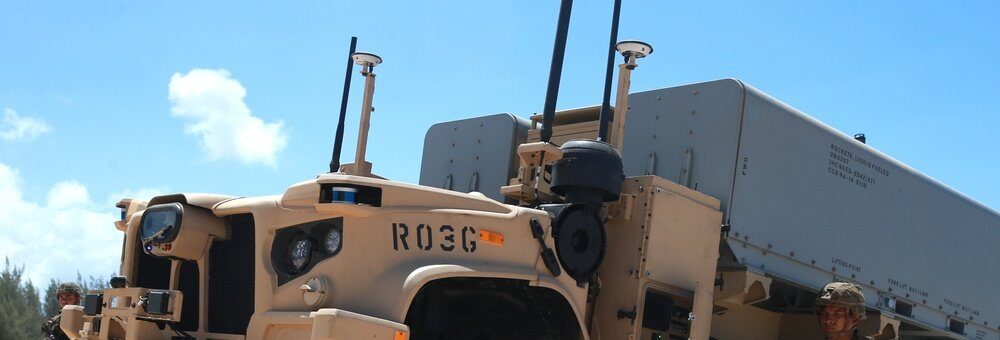
The battalion, part of 2nd Marine Division, will operate the Navy-Marine Expeditionary Ship Interdiction System (NMESIS), which pairs a launcher carrying two Naval Strike Missiles with an uncrewed, remotely operated vehicle built on a Joint Light Tactical Vehicle chassis. The Naval Strike Missile has an effective range of more than 130 nautical miles (240 km) and can target surface ships and fixed ground targets, according to the Marine Corps.

“The Medium-Range Missile Battalion employs the NMESIS,” said Lt. Col. Joseph Mozzi, the battalion’s commanding officer. “[The NMESIS] is the Marine Corps’ emerging ground based anti-ship missile capability, and it will also be a ground based long-range precision fires platform.”

The system first went to the 3rd Marine Littoral Regiment in Hawaii in 2024. The Marine Corps tested it during Large Scale Exercise 2021, firing a Naval Strike Missile off the coast of Hawaii at a target ship, and Marines have since deployed NMESIS to the Philippines during Balikatan exercises near the Luzon Strait, according to Defence Blog.

The re-designation follows the Commandant’s Planning Guidance and aligns with the Marine Corps Force Design 2030 modernization effort. The battalion is part of the service-retained force, giving the commanding general of II Marine Expeditionary Force and the wider Marine Corps flexibility for crisis response.

“The requirement for the Marine Corps to have a land-based capability to conduct sea denial was identified as a crucial step to facilitate the maritime component commanders to fight for sea control,” said Mozzi.

10th Marine Regiment will retain M777 lightweight howitzers in another battalion. Col. William Soucie, the regiment’s commander, said NMESIS complements rather than replaces cannon artillery.

“Projecting combat power ashore from the sea is historically what [Marines] do,” said Soucie. “What we will be able to do with [the NMESIS] is shoot in support of not only maneuver that’s already ashore, we will also be able to shoot in support of maneuver at sea.”

Soucie said the Marines and sailors in the battalion remain the same people who served in it as an artillery unit. “While the transition of the weapons platform is interesting, what makes the story compelling is that the Marines and Sailors in that formation are not changing,” he said.

The 2nd Marine Division described the re-designation as the start of a broader modernization of artillery battalions across the Marine Corps, with 1st Battalion, 10th Marines now the first unit to carry the medium-range missile battalion title.

Sources: DVIDS News · Defence Blog

News

Air Force successfully tests reentry vehicle for new Sentinel ICBM
Minuteman III ICBM Launch (5312953).jpg Photo: U.S. Air Force photo by Tech. Sgt. Brittany Murphy

Air Force successfully tests reentry vehicle for new Sentinel ICBM

The U.S. Air Force successfully tested the reentry vehicle for its new Sentinel intercontinental ballistic missile on Oct. 16, 2026, according to a service announcement. The test validated the vehicle’s performance during reentry into the Earth’s atmosphere, a critical step for the program that the Air Force has designated as its highest-priority nuclear modernization effort.

The Sentinel, also known as the LGM-35A, is designed to replace the aging Minuteman III ICBM fleet. The reentry vehicle test is part of the system’s development and evaluation phase, which aims to ensure the missile can deliver its warhead accurately and reliably.

The successful test follows a series of milestones for the Sentinel program. The Air Force has emphasized its importance for maintaining the nation’s nuclear deterrence capabilities. The service has stated that the Sentinel is essential to modernize the land-based leg of the nuclear triad, which also includes submarine-launched missiles and strategic bombers.

Sources: Naval News · Defence Blog

News

F-22 pilot directs YFQ-44A CCA in first airborne tactical control demo
F-22 Raptor edit1 (cropped).jpg Photo: F-22_Raptor.JPG : Master Sgt. Andy Dunaway

F-22 pilot directs YFQ-44A CCA in first airborne tactical control demo

An F-22A Raptor pilot took control of a YFQ-44A Fury Collaborative Combat Aircraft (CCA) in flight for the first time during an airborne tactical control demonstration in early October 2026, the U.S. Air Force announced Oct. 16.

During the test, the F-22 pilot served as an airborne “quarterback,” issuing high-level tactical directives to a single YFQ-44A, according to an Air Force news release. The drone’s autonomy software executed the directives, performing dynamic flight maneuvers and simulated combat tasks.

“This flight shows the power of crewed-uncrewed teaming and the advantage it provides our warfighters,” Air Force Chief of Staff Gen. Ken Wilsbach said in the release. “We must test often, learn fast and give commanders what they need, when they need it.”

The demonstration involved personnel from the 412th Test Wing, 422nd Test and Evaluation Squadron, 309th Software Engineering Group, Experimental Operations Unit, F-22 System Program Office and the CCA Software Autonomy and Teaming Branch, the service said.

The Air Force has previously identified the F-22 as the “threshold platform” for the CCA program, meaning the Raptor will be the first fighter paired with the drones, with integration on F-16s, F-35As, F-15Es and F-15EXs still under consideration. The F-22 had previously controlled an MQ-20 Avenger surrogate in a manned-unmanned teaming test, a platform used for more than five years to validate autonomy concepts.

Secretary of the Air Force Troy Meink said the achievement “demonstrates what is possible when we are aligned with industry on a shared imperative: delivering capability to the warfighter at unprecedented speed.”

The flight follows earlier tests this summer in which crewed fighters flew alongside both the YFQ-44 and YFQ-42 without the pilots controlling the drones. The Air Force has since awarded engineering and manufacturing development and production contracts for the FQ-42 and FQ-44, as well as mission autonomy production contracts, months ahead of schedule. The two designs dropped their prototype “Y” designations with the production contract awards.

Meink has said the service plans to procure over 150 combat-capable CCAs by the end of the decade, a goal later updated to 500 aircraft by 2032, out of 1,000 planned by the end of the decade. The FQ-42 and FQ-44 received the popular names Vengeance and Fury, respectively.

Both the YFQ-42 and YFQ-44 continue to be tested by the Experimental Operations Unit, with more aircraft recently delivered.

Sources: DVIDS News · Air & Space Forces Magazine

News

Government Plans $1.5B Hyperscale Data Centre for National Capital Region
Data center roof.jpg Photo: Rsparks3

Government Plans $1.5B Hyperscale Data Centre for National Capital Region

The federal government is planning to build a $1.5-billion hyperscale data centre in the National Capital Region, according to the Ottawa Citizen. The project was reported on April 1, 2026.

Details about the facility’s location, timeline, and specific purpose have not been disclosed. The report does not specify which department or agency is leading the project, nor does it provide details on procurement or construction schedules.

The data centre is expected to support the government’s digital operations, though no official statement has been released regarding its intended functions or security features.

No further details are available at this time.

Sources: CBC Politics · CBC Politics

News

Drone Strikes on Black Sea Shipping Kill Two, Test NATO’s Response Near Romania
USS Carney (DDG 64) is underway alongside the Romanian navy corvette ROS Admiral Horia Marcellariu (F 265) in the Black Sea.jpg Photo: Official U.S. Navy Page

Drone Strikes on Black Sea Shipping Kill Two, Test NATO’s Response Near Romania

Suspected drone attacks on commercial shipping in the Black Sea have killed two people, marking the latest challenge to NATO’s maritime security near its southeastern flank, according to reports published Oct. 16, 2026.

The strikes occurred in the exclusive economic zones of two countries, threatening a global shipping route, and have raised fears of Russian escalation that could test NATO’s response, the Associated Press reported via Military.com.

Stars and Stripes described the incidents as the latest suspected drone attacks on commercial shipping near NATO’s southeastern flank, noting that risks from Russia’s war in Ukraine are reaching beyond the battlefield.

The attacks come as NATO allies bolster readiness in the region. In a separate development, the U.S. Navy demonstrated a successful drone ship landing without GPS, according to a Department of War news release published Oct. 16, 2026. The demonstration highlights ongoing efforts to enhance drone capabilities in contested environments.

Meanwhile, on Oct. 14, Winn Army Community Hospital at Fort Stewart, Georgia, conducted a mass casualty exercise simulating a drone attack. The drill involved 10 patients transferred to Liberty Regional Medical Center in Hinesville to test inter-facility communications and regional surge capacity. The exercise included simulated victims arriving at the emergency department, with staff from primary care, radiology, surgery, and other departments participating.

Jeni Davis, the charge nurse during the exercise, said the team’s ability to come together was the most notable outcome. Col. Alex Montgomery, hospital director, said the exercise provided “invaluable data on how we hold up during a surge.”

The Black Sea drone strikes, which have left two people dead, underscore the growing threat to commercial shipping in the region. The incidents are the latest in a series of suspected drone attacks near NATO’s southeastern flank, as the conflict in Ukraine continues to spill over into broader security concerns.

Sources: Stars and Stripes · DVIDS News

News

U.S. bunker-buster inventory dwindles, raising questions on Iran strike options
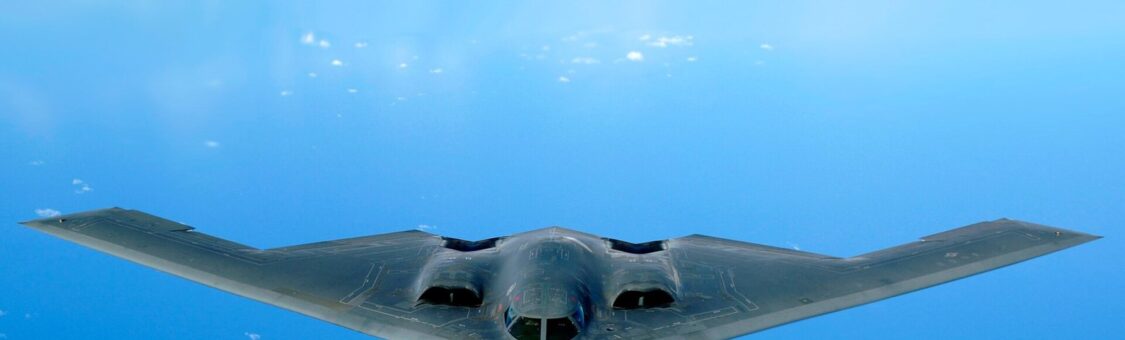
B-2 Spirit (cropped).jpg Photo: Staff Sgt. Bennie J. Davis III

U.S. bunker-buster inventory dwindles, raising questions on Iran strike options

An analysis warns that the U.S. has only a few bunker-buster bombs left in its inventory, raising questions about its ability to strike Iran’s deepest underground military facilities, according to a report published Oct. 16 by Stars and Stripes.

The report says the dwindling stock of penetrating munitions could limit U.S. military options against Iranian sites.

The warning comes amid the sudden withdrawal of U.S. B-1 bombers from RAF Fairford in the United Kingdom, as noted in a separate War on the Rocks article. That piece also raised questions about whether hosting U.S. military bases in the Arab Gulf states exposes those countries to Iranian retaliation while offering insufficient protection.

In a related development, Defense Secretary Pete Hegseth said the Pentagon is seeking $50 billion for mass drone production, according to an Air Force Times video report.

The report did not provide a timeline for replenishing the bunker-buster stockpile.

Sources: Air Force Times · War on the Rocks

News

Marine Corps Activates First Medium-Range Missile Battalion at Camp Lejeune
FIM-92A missile launch.jpg Photo: Meghan Gonzales, U.S. Marine Corps

Marine Corps Activates First Medium-Range Missile Battalion at Camp Lejeune

The U.S. Marine Corps formally re-designated 1st Battalion, 10th Marine Regiment as its first medium-range missile battalion during a ceremony at Camp Lejeune, North Carolina, on Oct. 9, 2026. The unit, part of the 2nd Marine Division, will operate the Navy-Marine Expeditionary Ship Interdiction System (NMESIS), a ground-based anti-ship missile launcher.

The re-designation aligns with the Marine Corps Force Design 2030 plan and the Commandant’s Planning Guidance, according to service statements. The battalion will employ NMESIS, which combines a remotely operated ground unit for expeditionary fires (ROGUE-Fires) carrier with a launcher capable of firing two Naval Strike Missiles. The system can be positioned along a coastline and controlled from a distance, with no driver or crew aboard the launcher.

“The Medium-Range Missile Battalion employs the NMESIS,” said Lt. Col. Joseph Mozzi, commanding officer of 1st Battalion, 10th Marines. “[The NMESIS] is the Marine Corps’ emerging ground based anti-ship missile capability, and it will also be a ground based long-range precision fires platform.”

The Naval Strike Missile, developed by Norway’s Kongsberg and produced with Raytheon, has an effective range of more than 130 nautical miles (240 km) and can target surface ships and fixed ground targets, according to the Marine Corps. The system was first introduced to the 3rd Marine Littoral Regiment in 2024 and was tested during Large Scale Exercise 2021 off the coast of Hawaii, where a missile was fired at a surface target at sea. Marines have also deployed NMESIS to the Philippines during Balikatan exercises near the Luzon Strait.

“The requirement for the Marine Corps to have a land-based capability to conduct sea denial was identified as a crucial step to facilitate the maritime component commanders to fight for sea control,” said Mozzi.

The re-designation is the start of a broader modernization of artillery battalions within the Marine Corps, according to the 2nd Marine Division. The battalion retains lightweight howitzer capabilities and 86 years of artillery experience, while 10th Marines will keep M777 lightweight howitzers in another battalion. Col. William Soucie, commanding officer of 10th Marine Regiment, called NMESIS a complement to cannon artillery, not a replacement.

“Projecting combat power ashore from the sea is historically what [Marines] do,” said Soucie. “What we will be able to do with [the NMESIS] is shoot in support of not only maneuver that’s already ashore, we will also be able to shoot in support of maneuver at sea.”

As part of the service-retained force, the battalion is available to the commanding general of II Marine Expeditionary Force and the wider Marine Corps for crisis response. Soucie noted that the Marines and sailors in the battalion remain the same personnel who served in it as an artillery unit.

“While the transition of the weapons platform is interesting, what makes the story compelling is that the Marines and Sailors in that formation are not changing,” said Soucie.

Sources: DVIDS News · DVIDS News