News

News

Coast Guard exchanges gunfire with migrants on Mexico side of Rio Grande
Border patrol and Coast Guard boats, in Bellingham - 2005-02-10.jpg Photo: PA3 Mike Zolzer

Coast Guard exchanges gunfire with migrants on Mexico side of Rio Grande

Coast Guard personnel exchanged gunfire with individuals on the Mexican side of the Rio Grande on Oct. 2 during a migrant interdiction operation, according to officials.

No Coast Guard personnel were reported injured, and the status of the individuals on the Mexican side was not immediately disclosed.

Officials provided no further details on what prompted the gunfire or whether any migrants were taken into custody. The Coast Guard has not released additional information about the number of personnel involved or the weapons used.

Sources: Stars and Stripes

News

Army establishes new autonomy command, acquisition executive
Ironhorse brigade trains to bring new technology to the fight Photo: 1LT Tyler Williams

Army establishes new autonomy command, acquisition executive

The Army is establishing a new major command, Army Futures and Autonomous Systems Command (FASCOM), and a new acquisition executive dedicated to autonomy, according to a memo signed Oct. 1 by Acting Army Secretary Adam Telle and reviewed by Breaking Defense.

The memo, titled “Army Autonomous Initiatives,” orders the creation of FASCOM and designates a new Program Acquisition Executive (PAE) for Autonomy. Currently, the service’s autonomy efforts fall under Capability Portfolio Executive Mission Autonomy, which reports to PAE Layered Protection and Integration.

“Secretary of War Pete Hegseth made it clear: We are done with the bureaucratic inertia holding back modernization,” Telle said in a statement. “The Army is rapidly advancing to maintain our lethal edge. We are forging the U.S. Army Futures and Autonomous Systems Command to get cutting-edge technology into the hands of Soldiers, while prioritizing autonomy in our formations, our acquisitions, and our training to dominate the future of warfare.”

The memo also directs new “autonomous force developments” to create force structure aligned with autonomous capabilities in aviation, armored, sustainment, and training formations. It orders the new PAE to prioritize acquisition and fielding of autonomous fires, combat vehicles, watercraft resupply, and manned-unmanned teaming, among other capabilities, no later than fiscal 2028.

Additionally, the order directs the Assistant Secretary of the Army for Manpower and Reserve Affairs to expand authorizations for the 15X tactical unmanned aircraft systems specialist and 390A robotics technician specialist units “to all applicable Army units.”

The announcement follows Defense Secretary Pete Hegseth’s September initiatives to create a new four-star command, Autonomous Warfare Command (AUTOWARCOM), focused on drones and similar technology, and a working group on the future of defense.

Separately, the Army activated the 390A Robotics Technician military occupational specialty on Oct. 1, 2026, at the U.S. Army John F. Kennedy Special Warfare Center and School, Fort Bragg, N.C., with 10 inaugural warrant officers inducted Oct. 2, 2026, after completing a 19-week course. Maj. Gen. Slider, the school’s commanding general, said the 390A provides “warrant officers who can turn robotics and autonomy into real combat capability.”

Sources: DVIDS News · Breaking Defense

News

Pentagon Doubles Down on Pacific Area Denial, High-End Munitions in 2026 NDS Update
Patriot Missile Launches during Palau Live-Fire Exercise (7275175).jpg Photo: U.S. Army 94AAMDC by Maj. Nicholas Chopp

Pentagon Doubles Down on Pacific Area Denial, High-End Munitions in 2026 NDS Update

The Pentagon has doubled down on plans to establish a forward-deployed area denial and anti-access network along the First Island Chain as part of its 2026 National Defense Strategy (NDS) update, according to a Sept. 22 report to the Senate Armed Services Committee. Defense Under Secretary for Policy Elbridge Colby highlighted the department’s efforts to build a “deterrence by denial” posture in the Indo-Pacific against China, a move that officials say will require expansive logistics and large missile inventories.

The update, detailed in the 2026 NDS, marks the culmination of attempts within the last decade to prepare American forces for a potential conflict against China. Colby’s report emphasized the need for high-end munitions to support the new posture, though specific dollar amounts or quantities were not disclosed in the sources provided.

In a related development, the Space Force is preparing to launch its next batch of satellites for the Proliferated Warfighter Space Architecture (PWSA), a network designed to provide resilient missile warning and tracking data to warfighters. The launch is scheduled for Oct. 5 at 1:15 a.m. Pacific Time from Vandenberg Space Force Base, California.

The upcoming launch will add 21 Northrop Grumman-built satellites to the constellation. Gurpartap “GP” Sandhoo, director of the Space Development Agency, told reporters that the PWSA will eventually include multiple layers of data transport and missile tracking satellites from various vendors. “We have three planes on orbit, 63 satellites, and with our next one we bring in a third vendor on the transport side,” Sandhoo said.

The PWSA is part of a broader effort to build a resilient satellite architecture that can withstand adversary attacks. Sandhoo noted that “the whole point” of the PWSA is to boost survivability, with persistent regional coverage expected by the end of Tranche 1 and persistent global coverage by the end of Tranche 2.

Separately, the Pentagon is developing a Space Data Network (SDN) featuring military-owned and commercial satellites. In May, the department awarded SpaceX a $2.3 billion contract to deliver an operational prototype for the SDN’s “backbone” by the end of next year. Other agreements have been awarded to Lockheed, Northrop, Rocket Lab, and Amazon LEO for Government to demonstrate ground-to-space and space-to-space data transport between platforms built by disparate vendors.

Sandhoo said the PWSA and SDN will create different “enclaves” of systems that will need to be interconnected. “We are in active risk-reduction activities to make sure we can connect with them,” he said, referring to efforts to link the various satellite networks.

The NDS update and satellite launches come as the Pentagon emphasizes the need for high-end munitions to support its Indo-Pacific strategy. The sources did not specify the exact munitions quantities or funding levels, but the focus on area denial and missile volleys underscores the shift in U.S. defense priorities.

Sources: Air & Space Forces Magazine · USNI News

News

Navy Awards RTX $24.4B Contract for More Than 1,900 SM-6 Missiles
USS Higgins Live Fire Missile Launch (8326257).jpg Photo: U.S. Navy photo by Petty Officer 1st Class Hannah Fry

Navy Awards RTX $24.4B Contract for More Than 1,900 SM-6 Missiles

The U.S. Navy has contracted RTX to produce more than 1,900 Standard Missile-6s (SM-6) over five years in a $24.4 billion deal announced on Thursday. The award covers the multi-year production of the ship-launched interceptor, a key munition in the Navy’s fleet defense arsenal.

Chief of Naval Operations Adm. Daryl Caudle said in a Navy release that the contract provides industry with demand certainty.

“This SM-6 award gives industry the demand signal and stability to expand production, strengthen the munitions industrial base, and build the magazine depth our fleet needs. That is the foundry delivering for the fleet – and ensuring our sailors have the combat power to fight and win,” Caudle said.

Neither RTX nor the Navy specified the exact number of SM-6s that will be delivered under the contract, beyond the more than 1,900 figure. The deal spans five years, according to the announcement.

The new contract follows a broader Pentagon effort to rebuild munitions stockpiles, which were drawn down by recent conflicts and sustained support to allies.

Sources: DVIDS News · USNI News

News

US Detonates Conventional Explosives in Nevada Tunnel to Mimic ‘Decoupled’ Nuclear Test
Air Force helicopters fly DOE radiation monitoring personnel and photographers over Yucca Flat.jpg Photo: Photo courtesy of National Nuclear Security Administration / Nevada Site Office

US Detonates Conventional Explosives in Nevada Tunnel to Mimic ‘Decoupled’ Nuclear Test

The U.S. government detonated conventional high-explosives inside P Tunnel in Area 12 of the Nevada National Security Site on Sept. 30, 2026, in an experiment designed to replicate a so-called “decoupled” nuclear detonation, according to a National Nuclear Security Administration (NNSA) press release. The test, which also used radiotracers, was conducted to help improve methods for detecting this type of nuclear testing.

The experiment comes after U.S. officials accused China of using decoupling to conceal new nuclear tests despite its stated moratorium. At the Conference on Disarmament in Geneva in February, Thomas DiNanno, Under Secretary of State for Arms Control and International Security, said China had conducted at least one such test at Lop Nur on June 22, 2020. The Comprehensive Nuclear-Test-Ban Treaty Organization (CTBTO) said its International Monitoring System had not detected an event matching that description at that location on that date. China has denied the accusation.

“This experiment is especially focused on further enhancing the U.S. capabilities to detect a ‘decoupled’ explosion,” the NNSA release said. “Data collected from the experiment will be used to validate scientific models and refine algorithms that are critical to U.S. nuclear explosion detection efforts.”

The release explained that in a decoupled test, a device is detonated inside a large underground chamber, reducing the explosion’s seismic signature. Researchers gathered measurements using accelerometers, seismometers, infrasound sensors, electromagnetic sensors, chemical and radiotracer samplers, and meteorological sensors.

The U.S. maintains the U.S. Atomic Energy Detection Systems (USAEDS) network, overseen by the Air Force Technical Applications Center (AFTAC), which includes more than 3,600 sensors worldwide. The network is tied into the CTBTO’s International Monitoring System. AFTAC also uses WC-135R Constant Phoenix aircraft to monitor for nuclear testing and atmospheric radiation spikes.

China is a signatory to the Comprehensive Nuclear-Test-Ban Treaty but has never ratified it. The U.S. has also signed but not ratified the treaty and has maintained a self-imposed moratorium on nuclear testing since 1992. The treaty does not ban sub-critical testing, which involves fissile material but does not produce a full nuclear reaction.

Last week, The Wall Street Journal reported that the Trump administration has been holding talks with China regarding its nuclear arsenal and the testing allegations, ahead of a state visit by Chinese President Xi Jinping to Washington.

Sources: The War Zone · Defence Blog

News

Taiwan takes delivery of first two F-16 Block 70 jets, years behind schedule
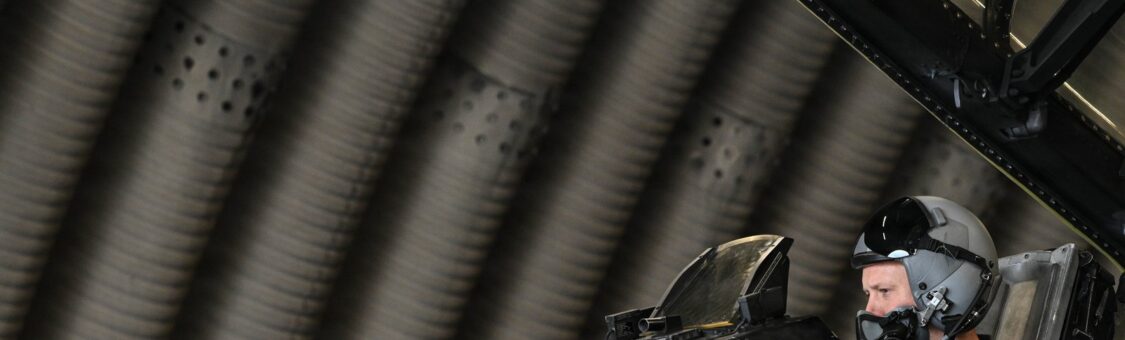
F-16 Fighting Falcon crews launch training sorties at Spangdahlem Air Base Photo: SrA Demi M. Ebert

Taiwan takes delivery of first two F-16 Block 70 jets, years behind schedule

Taiwan’s Air Force received the first two of 66 new F-16 Block 70 fighter jets on Oct. 2, when the aircraft landed at Chihhang Air Base in the eastern county of Taitung around noon, roughly three years behind the original delivery schedule for the $8 billion order.

The United States approved the sale of 66 F-16 Block 70 jets to Taiwan in 2019. Deliveries were originally expected to begin in 2023 and finish by the end of 2026, but production delays, supply chain problems and software integration issues pushed the schedule back, according to Defence Blog. The two jets had been due in Taiwan by late August or early September but were held in Hawaii for weeks before continuing via Guam, Focus Taiwan reported.

The aircraft, serial numbers 6727 and 6728, are the first factory-new fighter jets delivered to Taiwan in 25 years, according to The War Zone. They will join the air force’s 7th Tactical Fighter Wing at Chihhang, replacing the F-5 Tiger II fighters the unit retired in 2024, Breaking Defense reported.

Taiwan’s government budgeted NT$247.2 billion, about $8 billion, for the purchase between 2020 and 2026. The new jets will be based at Chihhang, where they will undergo ground inspections while pilots and maintainers convert to the aircraft, Defence Blog reported.

The Block 70 is the newest production version of the F-16, built at Lockheed Martin’s Greenville, South Carolina, plant. It carries the AN/APG-83 active electronically scanned array radar, a newer mission computer, updated electronic warfare and communications systems, and conformal fuel tanks. It is powered by the General Electric F110 engine, unlike the Pratt and Whitney F100 engine in Taiwan’s older F-16s, Breaking Defense reported.

Taiwan already operates more than 140 older F-16A/B fighters upgraded to a similar F-16V standard in a program completed in 2023. The 66 new jets will bring Taiwan’s F-16 fleet to more than 200 aircraft, according to Defence Blog.

Taiwanese President Lai Ching-te wrote on Facebook that the delivery is “an important development in strengthening Taiwan’s air defense capabilities,” thanking the United States for its support. Defense Minister Wellington Koo said more F-16Vs will arrive soon but did not give details, Defense News reported.

The delivery came about a week after U.S. President Donald Trump met Chinese President Xi Jinping in Washington. Taiwan is still waiting for U.S. approval of a separate arms package worth about $14 billion that Trump paused after Chinese objections, AFP reported. Trump did approve a package worth $11 billion in December 2025, Defense News reported.

Taiwanese officials have said more F-16 Block 70s will arrive before the end of the year, but have not given a number. Remaining deliveries are expected to stretch into 2027 and 2028, Defence Blog reported.

Sources: Defence Blog · Defense News

News

US Navy awards Raytheon $24.4B multiyear contract for SM-6 interceptors
US Navy 100623-N-0251Z-004 The guided-missile destroyer USS Sterett (DDG 104) successfully launches its second Tomahawk missile.jpg Photo: U.S. Navy photo by Fire Controlman 1st Class Stephen J. Zeller

US Navy awards Raytheon $24.4B multiyear contract for SM-6 interceptors

The U.S. Navy awarded RTX subsidiary Raytheon a multiyear contract worth up to $24.4 billion to produce Standard Missile-6 (SM-6) interceptors, the service said on Thursday. The five-year agreement includes two additional option years and is intended to provide a steady supply of the missile, which can perform both offensive strikes and missile defense missions.

The Pentagon said the deal is designed to “accelerate” SM-6 production, increase manufacturing throughput, and deliver cost savings across the defense industrial base. The exact number of missiles covered by the contract was not disclosed by either the Pentagon or Raytheon.

The award is part of a broader push by the Pentagon to replenish munitions stockpiles depleted by conflicts in the Middle East and to pressure contractors into ramping up output. It follows a $20.7 billion provisional multiyear deal for Raytheon’s AMRAAM air-to-air missiles in late September and a $58.6 billion Patriot interceptor deal awarded to Lockheed Martin in July.

In mid-August, the Navy awarded Raytheon a $22.9 billion contract to ramp up production of the Tomahawk cruise missile to 1,000 rounds per year. The Pentagon noted that the SM-6 agreement, coupled with the recent Tomahawk award, provides the defense industry with long-term predictability needed to expand workforce capacity and secure critical supply chains.

Industry executives have warned that Congress has not yet appropriated funding for these deals, meaning contractors may be unable to invest at scale in components and facilities until lawmakers act. RTX has said it has invested heavily to keep up with demand, expanding its skilled workforce, strengthening partnerships, and automating production.

Raytheon says the SM-6 is the only combat-proven weapon that can perform anti-air warfare, anti-surface warfare, and ballistic missile defense. It has been fired from Navy ships and land-based launchers. The deal follows a framework agreement signed in February between the Pentagon and Raytheon to pave the way for a multi-year contract and production increase.

Sources: Naval News · Defense News

News

US anti-ship missile launcher to deploy to Yonaguni for Keen Sword exercise
24th Marine Expeditionary Unit Conducts Live Fire Training 150211-M-YH418-002.jpg Photo: Cpl. Todd Michalek

US anti-ship missile launcher to deploy to Yonaguni for Keen Sword exercise

The U.S. military will deploy its NMESIS anti-ship missile launcher to Yonaguni, Japan’s westernmost inhabited island and about 107 km (66 miles) from Taiwan, during a major U.S.-Japanese exercise this month, Japan’s Kyodo News reported on Oct. 2, citing the Yonaguni town government.

The launcher will take part in Keen Sword, a large joint exercise held every two years. Japan’s public broadcaster NHK reported that this year’s live field training will start on Oct. 19 and run for 11 days, with both countries bringing their newest ground-based anti-ship missiles, and that it will be the first time NMESIS is deployed on Yonaguni, SBS reported.

Neither government has said how many launchers will go to the island, how long they will stay, or whether any missiles will be fired.

NMESIS, short for Navy-Marine Expeditionary Ship Interdiction System, is a U.S. Marine Corps weapon built on an unmanned Joint Light Tactical Vehicle that carries two Naval Strike Missiles. The missiles can hit ships at ranges of more than 185 km (115 miles), and the remotely driven launcher is designed to move between islands and hide, so it can threaten enemy warships from shore while staying hard to find.

The system belongs to the 12th Marine Littoral Regiment, a unit based on Okinawa that the U.S. Marine Corps reorganized to defend and hold key islands in a conflict. The regiment formally received NMESIS, along with the MADIS counter-drone system, in June 2026. Its Hawaii-based sister unit, the 3rd Marine Littoral Regiment, was the first to field NMESIS in late 2024 and took it to the Philippines for the Balikatan exercise.

NMESIS first arrived in Japan in July 2025. During the Resolute Dragon exercise that September, Marines moved a launcher to Ishigaki, about 240 km (150 miles) from Taiwan, and displayed it alongside Japan’s Type 12 anti-ship missile at the Japanese base there, though no missiles were fired. Yonaguni is closer to Taiwan still.

Japan has stationed troops on Yonaguni since 2016, when a Ground Self-Defense Force coastal surveillance unit and radar began operating there. Tokyo announced in February 2026 that it plans to place surface-to-air missiles on the island by 2031. The 12th Marine Littoral Regiment has also used the island before, deploying its AN/TPS-80 G/ATOR radar to the Japanese base there during Resolute Dragon in 2024.

Sources: DVIDS News · DVIDS News

News

Army Awards $1.2B Lockheed Martin Contract for Precision Strike Missile Increment 2
U.S. Army Conducts High Mobility Artillery Rocket Systems Live Fire Operations For Exercise Orient Shield Photo: MSG Raymond Boyington

Army Awards $1.2B Lockheed Martin Contract for Precision Strike Missile Increment 2

The U.S. Army announced a $1.2 billion contract with Lockheed Martin on Sept. 21 for the Precision Strike Missile (PrSM) Increment 2, moving the system from development into production and doubling the service’s capacity to strike moving targets, according to a company statement reported by Military.com.

The contract, announced as part of broader plans to replace the aging Army Tactical Missile System (ATACMS), enables the PrSM to engage moving land and maritime targets, expanding the Army’s long-range strike options, Lockheed Martin said in a statement.

Hal Kempfer, a retired Marine intelligence officer and global defense expert, told Military.com the system is a “future game changer.” He noted that two PrSMs can be fired from a HighMar, or four from an M270 Multiple Launch Rocket System. “So, right off the bat, you get to keep using legacy launchers with more missile power and tremendous range. It about doubles the range,” Kempfer said.

Kempfer also highlighted survivability benefits: “You can reach out and touch a target from a lot further out. The farther you get away from the front lines, the less likely you are to encounter battery fire. So if you can put that thing back, 50 miles or 100 miles, you’re a lot safer. Your chances of getting your system taken out by air or something else drops dramatically. It’s a more survivable system.”

While the billion-dollar cost may seem high, Kempfer argued it will save the Army money in the long run: “Yes, the cost is a little more expensive, but you can put two of these things out there on a battlefield, as opposed to one. So, in that regard, you more than double your money. And in terms of firepower, you get a lot more. You get a lot more utility out of your HIMARS system. So, that’s where the savings are.”

Dave Griser, Lockheed Martin’s vice president for Precision Fires Launchers and Missile, called the deal “an important step” in facilitating the technology and putting it in the hands of warfighters.

Kempfer linked the contract to U.S. operations in the Indo-Pacific, where ground forces might engage enemy ships at sea while defending against air strikes at extended distances. He cited the South China Sea as an example of an “area denial strategy” involving U.S. use of islands as fire support bases. “In that regard, what you want is a system that’s going to meet your requirements there. PrSM does that. The ATACMS really don’t,” Kempfer said. “The ATACMS are great against stationary targets, not great at moving targets.”

Separately, the Army announced Tuesday that five companies—Anduril, Castelion, Lockheed Martin Missiles and Fire Control, Mach Industries, and RTX—were awarded through five Other Transaction Authority agreements to develop and deliver their pitches for the PrSM Increment 4 program, which targets long-range maritime moving targets. Prototypes are expected within Fiscal Year 2027, with follow-on contracts possible by FY28, according to USNI News.

Sources: DVIDS News · USNI News

News

Seven F-22 Pilots Awarded Distinguished Flying Cross for CENTCOM Missions, Including Midnight Hammer
An F-22 Raptor assigned to the United States Air Force's 3rd Wing flies.jpg Photo: TheForeverStory

Seven F-22 Pilots Awarded Distinguished Flying Cross for CENTCOM Missions, Including Midnight Hammer

The U.S. Air Force has awarded the Distinguished Flying Cross (DFC) to seven F-22 Raptor pilots for combat actions in the U.S. Central Command area of responsibility, including support for Operation Midnight Hammer in June 2025. Six of the pilots received the award during a ceremony Aug. 31, 2026, at Langley Air Force Base, Virginia, from Gen. Adrian Spain, commander of Air Combat Command. A seventh F-22 pilot received the DFC at a separate event in Essen, Germany, announced Sept. 30, 2026.

The DFC is the military’s highest award for valor in flight and the fourth-highest military award overall, above the Bronze Star and Purple Heart. The Air Force has not released the pilots’ names or detailed citations, citing operational security.

“In the interest of operational security, the 1st Fighter Wing will not release pilot or any further mission details,” an Air Force official said in an email. The official photos from the Langley ceremony show Spain beside an empty stage, with no pilots present.

Spain described the pilots’ role in the operation: “Their job was to provide air superiority. The bombers and the rest of the support package relied on these Raptor pilots to clear the skies, shield them from surface threats, and ensure a safe route through heavily contested airspace.”

Since Air Force pilots began flying active combat missions against Iranian missile and drone attacks in April 2024, the service has announced the awards of 76 DFCs to 75 pilots and aircrew for combat flights. One airman received two DFCs for separate flights. The awards have come at 15 bases, given out to groups ranging from a single fighter pilot in Alaska to 12 tanker pilots and boom operators at a single ceremony at Fairchild Air Force Base, Washington.

Of those, the Air Force has released virtually no information for 11 of those awards. Along with the seven anonymous F-22 pilots, the Air Force released no information on two DFCs awarded to F-16 pilots with the 510th Fighter Squadron at Aviano Air Base, Italy, in June 2025. The same is true for two pilots who appear to have received DFCs this month from Air Force Chief of Staff Kenneth Wilsbach at Spangdahlem Air Base, Germany.

Spain said the rarity of the award reflects its significance: “We haven’t awarded many of these in the last few decades, as it’s intended to recognize true heroism and highly exceptional accomplishment in flight, which means that it should be rare, and it is.”

The Air Force has not indicated when the awarded flights took place, beyond the Midnight Hammer reference, or what specific actions the pilots took. No further details have been announced.

Sources: Task & Purpose · The Aviationist