News

News

Navy Decommissions 2 More Cruisers, Leaving 5 Ticonderoga-Class Ships in Service
US Navy 050325-N-6363M-017 The Ticonderoga-class guided missile cruiser USS Monterey (CG 61) underway in the Red Sea.jpg Photo: U.S. Navy photo by Photographer’s Mate Airman Philip V. Morrill

Navy Decommissions 2 More Cruisers, Leaving 5 Ticonderoga-Class Ships in Service

The Navy decommissioned two Ticonderoga-class guided-missile cruisers as Fiscal Year 2026 closed on Sept. 30, leaving the service with five cruisers in its fleet.

USS Shiloh (CG-67) was formally decommissioned Sept. 30 at Joint Base Pearl Harbor-Hickam, Hawaii, after 34 years of service. USS Lake Erie (CG-70) was decommissioned on Friday after 33 years of service during a ceremony in San Diego.

The decommissioning of Lake Erie and Shiloh leaves the Navy with five cruisers in service: USS Robert Smalls (CG-62), USS Princeton (CG-59), USS Gettysburg (CG-64), USS Chosin (CG-65) and USS Cape St. George (CG-71).

Also decommissioned as the fiscal year closed was Whidbey Island-class dock landing ship USS Germantown (LSD-42), which was decommissioned Sept. 24 in San Diego after 40 years of service. Germantown was the first dock landing ship to conduct Landing Craft Air Cushion amphibious operations and served during Desert Shield, Desert Storm, Operation Iraqi Freedom and Operation Enduring Freedom.

Other ships decommissioned in 2026 included Los Angeles-class submarine USS Alexandria (SSN-757) on June 29 and Freedom-class Littoral Combat Ship USS Fort Worth (LCS-3) on July 29. Military Sealift Command inactivated three replenishment oilers, two roll-on/roll-off ships and one offshore petroleum distribution system ship. Los Angeles-class submarine USS Newport News (SSN-750) and Watson-class vehicle cargo ship USNS Red Cloud (T-AKR-313) had their active service extended after being slated for decommissioning in 2026.

USS Robert Smalls departed Yokosuka, Japan, on Sept. 26 for a permanent homeport change to San Diego, ending its forward-deployed tour to U.S. 7th Fleet and Carrier Strike Group 5. The ship was replaced by Arleigh Burke-class guided-missile destroyer USS Mustin (DDG 89). Robert Smalls is expected to be decommissioned in Fiscal Year 2027.

The Navy extended the service life of three cruisers — Gettysburg, Cape St. George and Chosin — which completed the cruiser modernization plan. The extensions added a cumulative total of 10 years of service from fiscal years 2026-29. Gettysburg, Chosin, Princeton and Robert Smalls are set to be decommissioned in FY 2027 and Cape St. George in FY 2028, according to the Navy’s Shipbuilding Plan.

“This is our sayonara, leaving Japan for the last time” Capt. Francisco Garza, commanding officer of Robert Smalls, said in a news release. “This crew, and the crews that came before us on this hull, earned the trust of our Japanese partners and of the strike group.”

Sources: DVIDS News · USNI News

News

Hegseth taps Musk, Luckey, Gingrich to lead Pentagon future-warfare study
250402-D-PM193-1139 SecDef Hegseth Hosts Teleconference with NFL Players in Kuwait Visiting 386th AEW from the Pentagon, April 2, 2025.jpg Photo: U.S. Secretary of Defense

Hegseth taps Musk, Luckey, Gingrich to lead Pentagon future-warfare study

WASHINGTON — Defense Secretary Pete Hegseth announced Sept. 30 that SpaceX CEO Elon Musk, Anduril founder Palmer Luckey and former House Speaker Newt Gingrich will co-lead Project Meridian, a 120-day Pentagon study on the future of warfare, during a “State of the Force” speech at Marine Corps Base Quantico, Virginia.

The study will map the trajectory of future warfare, identify critical capability gaps and propose actionable solutions aligned with the 2026 National Security Science and Technology Strategy, according to a Pentagon memo. The findings are due Jan. 28, 2027, and are expected to be released in an unclassified report with a classified annex.

Hegseth said the project was deliberately futuristic and would consider wars the United States cannot afford to fight in 2030, 2050 and 2100. He said it was not meant to produce new strategies or policies.

“The future of warfare is not about developing new strategies or new policies,” Hegseth said. “We already do that. Rather, its purpose is to creatively look to the future and identify the domains that we must conquer and capabilities we must master.”

The three co-leads will work under Emil Michael, the Department of War’s chief technology officer, alongside a wider team drawn from industry, academia and the policy world. The Pentagon has not said how many people will take part or whether the co-leads will be paid. The co-leads held their first meeting immediately after the speech in a secure facility at the base, according to The Hill.

Musk’s SpaceX holds billions of dollars in U.S. military contracts for rocket launches and satellites, and Luckey’s Anduril builds drones, counter-drone systems and other autonomous weapons for the U.S. Army and U.S. Navy. The Pentagon has not said how it will handle potential conflicts of interest. The appointment is Musk’s first official advisory role in the Trump administration since he left the Department of Government Efficiency, Axios reported.

Project Meridian was one of several initiatives Hegseth announced in the same speech. He also unveiled plans for a new four-star command called Autonomous Warfare Command, or AUTOWARCOM, with “service-like authorities built to scale autonomous and robotic capabilities across the joint force.” As an interim step, the autonomy Direct Reporting Portfolio Manager will become “Project Agincourt,” led by Defense Innovation Unit head Owen West and Max Strasiser, with the goal of standing up the new command by October 2027, pending congressional approval.

Hegseth also said the Pentagon has cut 10 percent of generals and admirals across the force and reduced the overall number of general officer slots by an additional 10 percent. He previously ordered the removal of at least 20 percent of four-star jobs inside the active component.

Sen. Jack Reed, the top Democrat on the Senate Armed Services Committee, said Hegseth has “taken countless reckless, partisan actions” and called on him to provide oversight committees with written information before further cuts. Sen. Richard Blumenthal, D-Conn., called the approach to force cuts “draconian.”

Sources: Breaking Defense · Defence Blog

News

Pentagon obligated $142B of reconciliation funds before sequestration deadline, leaving billions at risk
CFO Hurst, Joint Staff J8 Conduct Press Briefing on FY2027 Budget Photo: PO1 Alexander Kubitza

Pentagon obligated $142B of reconciliation funds before sequestration deadline, leaving billions at risk

The Pentagon obligated about $142 billion of the roughly $152 billion in defense funding it received from last year’s Republican reconciliation bill before the Oct. 1 sequestration deadline, leaving about 7 percent of the total subject to across-the-board spending cuts, a source familiar with the matter told Breaking Defense.

A defense official confirmed that only 93 percent of the total amount had been obligated ahead of fiscal 2027, which began Oct. 1, but could not provide details about which funding lines remained unspent.

The party-line reconciliation bill, known as the “One Big Beautiful Bill,” included about $152 billion in defense spending for priorities including Golden Dome, two Arleigh Burke-class destroyers, munitions and fighter jets. The funding is available for several years, but any amount not obligated before Oct. 1 suffers an 8.3 percent cut known as sequestration.

The unspent 7 percent — around $10 billion, according to Breaking Defense’s estimates — is now subject to that cut, meaning roughly $830 million of defense buying power has been lost.

Reconciliation funding was initially slow to be awarded. In late April, Defense Secretary Pete Hegseth told a Senate panel that only $26 billion had been placed on contract. By June, a senior department official said the Pentagon had issued guidance to program offices on how to spend the money quickly. In late July, Hegseth told the Senate Appropriations Committee that roughly $75 billion remained unobligated, but projected that 95 percent would be under contract by the end of the fiscal year.

The deadline pressure also drove a major fighter jet purchase. The Air Force bought 22 additional F-15EX fighter jets at the budget deadline, Stars and Stripes reported Oct. 1.

Separately, the Pentagon launched its new Cyber Mastery Incentive Pay (C-MIP) program on Oct. 1, a two-tiered, military-wide pay structure intended to reward troops for advanced technical cyber skills. Internal documents reviewed by DefenseScoop show skill-based pay cuts ranging from $100 to $1,000 a month for some troops, with the Army triggering a temporary pay protection policy to soften the blow for soldiers expected to face cuts. The Air Force was still “working to finalize” its rollout last week, according to a service spokesperson.

Sources: Breaking Defense · DefenseScoop

News

Hegseth announces new four-star Autonomous Warfare Command
U S Army Europe and Africa hosts Best Drone Warfighter Competition (9803619).jpg Photo: U.S. Army photo by Staff Sgt. Jamie Robinson

Hegseth announces new four-star Autonomous Warfare Command

Defense Secretary Pete Hegseth announced plans Sept. 30 for a new four-star combatant command dedicated to autonomous warfare, to be established by Oct. 1, 2027, according to a Pentagon memo released after his “State of the Force” address at Marine Corps Base Quantico, Virginia.

The Autonomous Warfare Command will have “service-like authorities built to scale autonomous and robotic capabilities across the joint force,” Hegseth said. Its portfolio will include drones, artificial intelligence, and command and control systems. Hegseth said a four-star commander will soon be named to lead it.

As an interim step, the Pentagon will launch “Project Agincourt,” which will draw from existing efforts like the Defense Innovation Unit and the Drone Dominance program. The project will be led for the next year by DIU director Owen West and Navy SEAL Senior Chief Max Strasiser, the first enlisted SEAL to graduate from Navy Test Pilot School. Hegseth described the pair as a “CEO, COO partnership.”

“The pace of war is changing faster than the process to support it,” Hegseth said. The new command is intended to address an acquisition system that cannot keep pace with technological change on the battlefield.

Project Agincourt will test what Hegseth called “warfighting acquisition,” bringing military operators, engineers and private companies into rapid development cycles and moving acquisition decisions and funding closer to combatant commands and frontline units. Realistic training exercises — and, when possible, combat — will be used to test autonomous systems, he said.

Hegseth also announced that the Army, Navy, and Air Force will create new military occupational specialty frameworks to support the shift toward autonomous warfare, creating career paths for a new generation of autonomous warfighters.

In the same address, Hegseth announced several other initiatives:

  • A 20 percent reduction in the total number of generals and admirals across the military.
  • A new program office, led by a two-star officer, to ensure military installations can generate their own power.
  • “Project Meridian,” a group to study the future of warfare led by Palmer Luckey, Elon Musk, and former Speaker of the House Newt Gingrich.
  • The “Next Great American Base,” a new installation to host 15,000-25,000 service members, with governors and adjutant generals from every state invited to the Pentagon to pitch locations.
  • Five new corps of cadets at Hillsdale College, Louisiana State University, Liberty University, Mississippi State University, and Tuskegee University.
  • A new “Office of Religious Affairs” reporting directly to the Secretary of Defense.

Senate lawmakers had proposed creating such a combatant command during deliberations for the 2027 defense policy bill. The measure cleared the committee, but the bill is still pending, and the House would also have to approve it for the command to be authorized.

Sources: Air & Space Forces Magazine · Army Times

News

Navy awards Raytheon $24.4B multiyear contract for SM-6 interceptors
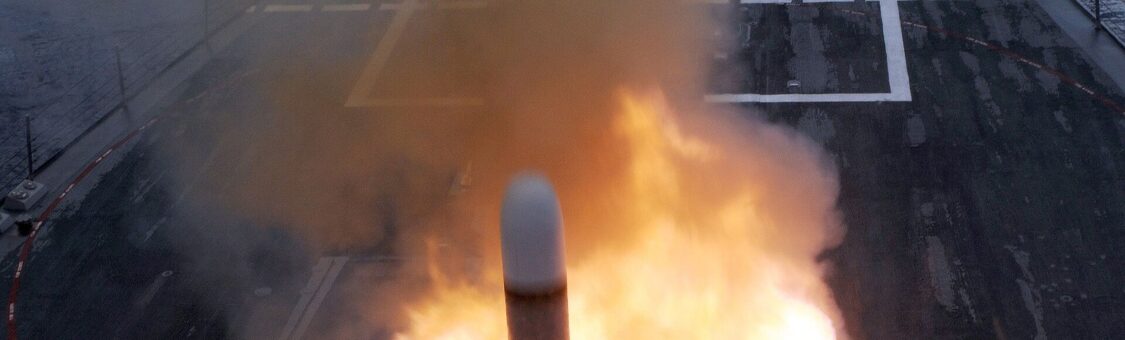
US Navy 090825-N-1522S-020 A Tactical Tomahawk Cruise Missile launches from the forward missile deck aboard the guided-missile destroyer USS Farragut (DDG 99) during a training exercise.jpg Photo: U.S. Navy photo by Mass Communication Specialist 1st Class Leah Stiles

Navy awards Raytheon $24.4B multiyear contract for SM-6 interceptors

The U.S. Navy awarded RTX’s Raytheon a multiyear contract worth up to $24.4 billion to produce Standard Missile-6 (SM-6) interceptors, the service said on Oct. 1, as the Pentagon works to replenish munitions stockpiles depleted by conflicts in the Middle East.

The five-year contract includes two additional option years, the Navy said, and is meant to provide a steady and reliable supply of the SM-6, a missile that can carry out both offensive strikes and missile defense missions.

The SM-6 award is the latest in a series of large munitions contracts the Pentagon has pursued this year to pressure contractors into ramping up output. It follows a $20.7 billion provisional multiyear deal for Raytheon’s AMRAAM air-to-air missiles in late September and a $58.6 billion Patriot interceptor deal awarded to Lockheed Martin in July.

The production agreements are designed to entice contractors to move faster while surging production. They are part of a broader push by the Trump administration to prioritize weapons production over shareholder returns.

Industry executives have warned that Congress has not yet appropriated funding for the deals, meaning contractors may be unable to invest at scale in components and facilities until lawmakers act.

RTX has said it has invested heavily to keep up with rising demand. It has expanded its skilled workforce, strengthened partnerships across the defense industrial base and automated production, with the aim of significantly increasing output for near- and long-term needs.

Raytheon says the SM-6 is the only combat-proven weapon that can perform anti-air warfare, anti-surface warfare and ballistic missile defense. It has been fired from a range of Navy ships as well as from land-based launchers.

Sources: DVIDS News · The Aviationist

News

Royal Navy Fires Torpedo From Uncrewed Submarine in Historic First
US Navy 110520-N-VQ827-895 The Royal Navy Trafalgar-class submarine HMS Torbay (S90) is underway in formation with the Military Sealift Command fle.jpg Photo: U.S. Navy photo by Mass Communication Specialist 3rd Class Nicholas Hall

Royal Navy Fires Torpedo From Uncrewed Submarine in Historic First

The Royal Navy has completed its first torpedo firing from an uncrewed submarine, a milestone in the development of autonomous undersea warfare capabilities.

The firing took place during a demonstration of the vessel’s ability to engage targets without a crew on board. The torpedo launch was part of a series of trials aimed at proving the platform’s combat capabilities.

The Royal Navy has been investing in uncrewed systems as part of its broader strategy to modernize its fleet and maintain a technological edge. The successful torpedo firing represents a significant step forward in integrating autonomous systems into naval operations.

While the Royal Navy has not disclosed specific details about the type of torpedo used or the exact location of the test, the event marks a first for the service. The demonstration aligns with ongoing efforts by the UK Ministry of Defence to explore how uncrewed vessels can complement traditional manned submarines.

Further trials and evaluations are expected as the Royal Navy continues to assess the operational potential of such systems.

Sources: DVIDS News · USNI News

News

Air Force Awards Boeing $2.38B Contract for 22 More F-15EX Fighters
Photographer (52019588837).jpg Photo: Joint Base San Antonio from San Antonio, USA

Air Force Awards Boeing $2.38B Contract for 22 More F-15EX Fighters

The U.S. Air Force awarded Boeing Defense a $2.38 billion contract on Sept. 29, 2026, for 22 F-15EX Eagle II fighters under Lot 7, bringing the total number of aircraft under contract to 120. The award was announced by the Air Force Life Cycle Management Center and confirmed by Boeing in a separate release.

The contract uses previously available funds from the 2026 budget and the ‘One Big Beautiful Bill’ reconciliation package, which required the money to be spent before the fiscal year ended Sept. 30, according to Air & Space Forces Magazine. The Air Force did not disclose the contract value; Boeing announced the $2.38 billion price tag. Based on that figure, Air & Space Forces Magazine estimated an average cost of $108 million per airframe, excluding the GE Aerospace F110-GE-129 engines, which the service will purchase separately.

The Lot 7 award accounts for current programmatic realities, including the effects of 2025 production disruptions and inflation in the defense industrial base, according to a Defense News report. Brig. Gen. Timothy Helfrich, portfolio acquisition executive for the Fighters and Advanced Aircraft Directorate, said in a release: ‘The team remained focused on affordability, production continuity and delivering the aircraft needed to modernize the U.S. Air Force’s fighter fleet for the threats we face today and into the future.’

Col. Jonathan Varoli, System Program Manager of the F-15 Program Office, added: ‘The Lot 7 award demonstrates what is possible when the acquisition enterprise moves with purpose, remains accountable to the taxpayer and stays focused on delivering capability to the warfighter.’

The F-15EX is intended to replace aging F-15C and F-15D aircraft, and the larger acquisition will also begin recapitalization of the F-15E Strike Eagle fleet, according to The Aviationist. The Air Force increased its planned F-15EX fleet from 129 to 267 aircraft in April 2026. Boeing said it is currently delivering Lot 3 aircraft and will continue for the remainder of the year; the company is working with the Department of War and the Air Force to increase production to two aircraft per month.

On the same day, the Department of War awarded a separate $10 million sole-source contract to Astronautics Corp. of America for F-15EX engine fuel hydraulic display depot activation, with work performed in Oak Creek, Wisconsin, and expected completion by October 2029.

Sources: Air & Space Forces Magazine · The Aviationist

News

Ottawa Senators to Start Season Without Sanderson and Zub on Defence
From left, U.S. Army Maj. Gen. David J. Conboy, the commander of the 416th Theater Engineer Command, his aide Capt. Curtis Miller, and Sgt. John Pudowski watch a National Hockey League (NHL) game at S Photo: SFC Michel Sauret

Ottawa Senators to Start Season Without Sanderson and Zub on Defence

The Ottawa Senators will begin the 2025-26 NHL regular season without defencemen Jake Sanderson and Artem Zub, both of whom remain sidelined with injuries as the team prepares for its opener.

Head coach Travis Green confirmed the two players will not be available for the season opener, though he did not specify a timeline for their return. Sanderson and Zub have both been absent from recent practices, and neither has participated in full team drills leading up to the opener.

The team has not announced a replacement pairing or a call-up from the American Hockey League’s Belleville Senators as of this report.

The Senators will rely on a young defensive corps to fill the void in the interim.

Sources: Ottawa Citizen

News

Army Awards $4.15B in Counter-Drone Contracts to 10 Firms
2d Cavalry Regiment Validation Exercise (9621836).jpg Photo: U.S. Army Reserve photo by Sgt. Joseph Honce

Army Awards $4.15B in Counter-Drone Contracts to 10 Firms

The U.S. Army has awarded 10 companies counter-drone contracts with a combined ceiling of $4.15 billion, the U.S. Department of War announced. The firm-fixed-price, indefinite-delivery/indefinite-quantity contracts were awarded on Sept. 28 by Army Contracting Command at Detroit Arsenal, Michigan, and run through late September 2029.

Seven companies received ceilings of $500 million each: Allen Control Systems of Austin, Texas; Digital Force Technologies of San Diego; DroneShield’s U.S. arm in Warrenton, Virginia; Napatree Technology of McLean, Virginia; RADA Technologies of Germantown, Maryland; SRC of Syracuse, New York; and Wescam USA of Nashville, Tennessee. Echodyne of Kirkland, Washington, and PVP Advanced EO Systems of Lake Forest, California, received $250 million each, and Smart Shooter of Herndon, Virginia, received $150 million.

The figures are ceilings on what the Army can order from each company over three years, with work locations and funding set order by order. The Pentagon’s notices describe the work only as commercial counter-unmanned aerial systems and counter small-unmanned aerial systems capabilities, without naming specific products. The solicitation drew 50 bids.

The overall contract vehicle could eventually be worth as much as $7 billion, according to Breaking Defense. Army acquisition chief Brent Ingraham told reporters the awards span sensors, weapons to defeat drones, and command and control systems, and will also support counter-drone needs elsewhere in the federal government.

Only a small share of the money has been committed. Joint Interagency Task Force 401, the Army-led office coordinating counter-drone work across the Pentagon, said $50 million had been obligated across the 10 contracts as of Sept. 29, DefenseScoop reported. The task force has now awarded more than $5 billion in counter-drone contracts overall, including earlier deals of roughly $500 million each with AeroVironment and CACI.

The contracts feed the Pentagon’s drone and counter-drone marketplaces, which officials describe as commercial-style hubs where local, state, federal and some allied customers can buy equipment. They also support Domestic Shield, the task force’s program to protect U.S. military bases and critical infrastructure from small drones.

Matt Ross, who leads the task force, has said the U.S. Army wants layered defenses able to detect, track, identify and defeat hostile drones. The winners cover different parts of that chain. On the detection side, RADA Technologies builds compact radars designed to find small drones, while Echodyne makes compact electronically scanned radars and SRC works on radar and electronic warfare systems. Wescam USA makes the WESCAM MX family of stabilized electro-optical and infrared camera turrets. On the defeat side, DroneShield sells radio-frequency detection systems and jammers, Allen Control Systems builds the Bullfrog autonomous gun turret, and Smart Shooter makes the SMASH fire-control sight.

Sources: Defence Blog · DVIDS News

News

Boeing wins $20B Navy F/A-XX contract for sixth-generation carrier fighter
Flickr - Official U.S. Navy Imagery - A jet lands on the flight deck of USS Dwight D. Eisenhower..jpg Photo: Official Navy Page from United States of America MC2 Julia A. Casper/U.S. Navy

Boeing wins $20B Navy F/A-XX contract for sixth-generation carrier fighter

The U.S. Navy selected Boeing on Sept. 29 to develop its F/A-XX sixth-generation carrier-based fighter, awarding a contract valued at more than $20 billion for the full-scale development phase. The announcement came from the Department of War, which said the contract covers multiple test aircraft for ground, airworthiness, systems, and weapons integration testing. Boeing beat out Northrop Grumman for the award.

The F/A-XX is the strike fighter component of the Navy’s Next Generation Air Dominance (NGAD) Family of Systems. The new jet is expected to augment and eventually replace the Navy’s F/A-18E/F Super Hornets and EA-18G Growlers beginning in the 2030s, operating from carriers alongside the F-35C and Collaborative Combat Aircraft. The service released a single artist’s rendering of Boeing’s design, but Boeing said the aircraft’s technical and programmatic details remain classified under U.S. national security and export laws.

The win gives Boeing both of the U.S. military’s next-generation crewed fighter programs. The Air Force selected Boeing for the F-47 on March 21, 2025, over Lockheed Martin. Lockheed was reportedly eliminated from the Navy contest that same month, leaving Boeing and Northrop Grumman as the final two bidders.

“Delivering two advanced fighters in parallel was always our plan, and we invested accordingly. We are ready and able to build multiple concurrent future combat aircraft franchise programs,” said Steve Parker, president and chief executive officer of Boeing Defense, Space & Security.

Boeing points to its St. Louis operation as the answer to capacity concerns. The company said construction continues there on a secure manufacturing facility that it describes as the largest in the United States. On the same day as the fighter award, the Navy gave Boeing a separate contract worth about $16.7 million to plan and prepare the shutdown of the Super Hornet and Growler production lines.

The award ends a long stretch of uncertainty around the program. F/A-XX stalled for months after the F-47 decision while funding fluctuated. The Pentagon approved moving ahead with a choice between Boeing and Northrop Grumman in October 2025 without naming a winner. Congress then set aside $897 million for F/A-XX in the fiscal 2026 defense appropriations act and required the Pentagon to award a development contract. The announcement came shortly before the end of the fiscal year, when the funding Congress added for the program was due to expire.

Northrop Grumman, which can still challenge the outcome, acknowledged the decision and said it was waiting for more information about the selection, Aviation Week reported. The company had hoped the program would return it to the role of fighter prime contractor, a position it has not held in decades.

Sources: The Aviationist · Defence Blog