News

News

Saudi-backed Yemeni forces launch offensive to retake all Houthi-held territory
Wadiah war1.png Photo: Unknown author Unknown author

Saudi-backed Yemeni forces launch offensive to retake all Houthi-held territory

Yemen’s Saudi-backed, internationally recognized government announced Sunday it is launching a major military campaign to recapture all areas of the country controlled by the Iran-backed Houthis. President Rashad al-Alimi said in a televised address that the armed forces would press the offensive “until the country is liberated from the grip of the terrorist militia,” and a military spokesman later called on the Houthis to lay down their weapons.

The Houthis, formally known as Ansar Allah, have held Yemen’s capital Sanaa and vast parts of the northwest since 2014. They launched a surprise offensive last month that captured the strategic Bab el-Mandeb strait and about 90 miles of Red Sea coast in a matter of weeks, giving them new leverage over the international shipping route.

As the government made its announcement, the Houthis said they had launched ballistic missiles and drones at Saudi Aramco sites in Riyadh and the Khurais area of Saudi Arabia. They claimed the attacks caused major fires and were in response to what they said were 50 Saudi-led air and missile strikes in Yemen in the past 12 hours. There was no immediate confirmation from Saudi Arabia.

Alimi said the decision to launch the counteroffensive came after all chances of de-escalating the conflict had been exhausted. He thanked Saudi Arabia for its support and called on Yemen’s regional allies and international partners to support the Presidential Leadership Council’s forces and institutions.

Regional and Western officials told Reuters earlier this week that Saudi Arabia and its Yemeni allies were planning to launch an assault, with the Saudis leading aerial combat and Yemeni forces fighting on the ground. The U.S. is already providing intelligence to support Riyadh’s operations in Yemen, while some regional and European nations are providing mainly defensive military aid to the kingdom, six people with knowledge of the Saudi preparations told Reuters.

In the last 48 hours, the Houthis have also made gains against government and local forces on strategic hilltops near Yemen’s Taiz, military sources said, advancing on the last road between the city and Aden on the southern coast. Houthi control over the Taiz-Aden road would lead to an effective siege of the city, Yemen’s third-largest, inhabited by hundreds of thousands of civilians and where thousands of government forces are also stationed.

The World Food Programme said last week that three in four families in parts of Yemen are going hungry from the impact of the surge in fighting, which has displaced tens of thousands of people and disrupted supplies to millions.

Sources: Defense News · Stars and Stripes

News

All 12 B-1B Bombers Withdrawn From RAF Fairford After New Iranian Threat Reports
B-1B Lancers return to Dyess (8131553).jpg Photo: U.S. Air Force photo by Airman 1st Class Emma Anderson

All 12 B-1B Bombers Withdrawn From RAF Fairford After New Iranian Threat Reports

All 12 U.S. Air Force B-1B Lancer bombers deployed to RAF Fairford in the United Kingdom departed the base on Oct. 4, 2026, returning to their home stations in the United States, a U.S. defense official confirmed to The War Zone. The withdrawal came after commanders received new threats about an Iran-backed plot against the installation, The New York Times reported, citing two U.S. officials.

The hasty movement was reportedly sparked by new Iranian threats against the base, although the Pentagon did not confirm that assertion. The aircraft left in several waves, according to the DefenceGeek X account, run by the senior editor of the U.K. Defence Journal. At least three of the planes had landed at their home base in South Dakota by Sunday, The New York Times reported.

The sudden withdrawal came a week after a major incident was declared near Fairford following the arrest of five men on suspicion of driving bomb-laden vans toward it. They were later released on bail after no explosives were found. Counter-Terrorism police are continuing the investigation and said they were considering whether a foreign state had been involved. On Wednesday, British Prime Minister Andy Burnham said the incident might have had an Iranian link.

Tehran directly threatened RAF Fairford in July over its use as a base to launch attacks against Iran. Tasnim News Agency, a quasi-state outlet in Iran with ties to the Islamic Revolutionary Guard Corps, claimed on Telegram on July 23: “Any base that is used to invade Iran’s territory is our legitimate goal.”

U.S. officials declined to tell The New York Times the specific nature of the new information that prompted the Lancer withdrawal, some of which had just arrived in the past week as part of a normal rotation of forces. One U.S. official said the new information was part of the same threat warnings that surfaced three weeks ago, but specific details and a sense of urgency spiked in the past 24 hours, alarming commanders.

The withdrawal was highly unusual: Such moves are rarely made so quickly from an allied air base in a peacetime country thousands of miles from a combat zone, The New York Times reported. The need to move the bombers out of the base was deemed so urgent that some of the planes and their flight crews left while aerial refueling aircraft were still being scrambled to support their flights to the United States.

In response to questions about the movement, the Pentagon stated: “U.S. Air Force bombers routinely operate around the world to support global force readiness and operational requirements. While operational security precluded us from confirming the movement of our assets and forces in real-time, we can acknowledge now that all U.S. bombers that were deployed to RAF Fairford have re-deployed to their home stations in the United States. The Airmen that operate America’s bomber force, including B-1s, B-2s, and B-52s, remain ready to deliver precision global strike capabilities – including through operations that launch and recover from the continental United States – anywhere, anytime.”

The defense official who confirmed the withdrawal said the aircraft movements won’t affect overall readiness. This is the first time in months that RAF Fairford has not hosted U.S. bombers.

Sources: DVIDS News · DVIDS News

News

USS Dwight D. Eisenhower Returns to Port After Growler Mishap Injures Four Sailors
IKE conducts tailored ships training availability in the Atlantic Ocean Photo: SA Nicholas Roberts

USS Dwight D. Eisenhower Returns to Port After Growler Mishap Injures Four Sailors

The aircraft carrier USS Dwight D. Eisenhower (CVN-69) is returning to Naval Station Norfolk, Va., after a Sept. 28 incident that injured four sailors and resulted in the loss of an EA-18G Growler, USNI News has learned. The return to port will “allow for a comprehensive assessment of the ship’s aircraft launch and recovery equipment following the Sept. 28 aviation mishap,” according to a statement from Naval Air Force Atlantic released early Saturday morning.

“The decision reflects the Navy’s deliberate approach to flight safety and readiness. While the cause of the mishap remains under investigation, Navy technical experts will conduct a thorough assessment,” the statement read.

The Navy has not released further details about the cause of the incident or the condition of the four injured sailors.

The Eisenhower’s return to Norfolk comes as other carrier operations continue elsewhere. The Nimitz-class aircraft carrier USS George H.W. Bush (CVN 77), flagship of Carrier Strike Group (CSG) 10, and the Arleigh Burke-class guided-missile destroyer USS Delbert D. Black (DDG 119) arrived in Phuket, Thailand, on Oct. 4, 2026, for a scheduled port visit, according to a DVIDS release.

The George H.W. Bush Carrier Strike Group includes Carrier Air Wing (CVW) 7 with nine embarked aviation squadrons, the guided-missile destroyer USS Mason (DDG 87), and Destroyer Squadron (DESRON) 22 with the guided-missile destroyers USS Ross (DDG 71) and USS Donald Cook (DDG 75). The strike group departed Norfolk and Mayport, Florida, in March for operations in the U.S. 5th Fleet and U.S. 7th Fleet areas of operation. For the last six months, it supported Operation Epic Fury and the U.S. naval blockade in the U.S. Central Command area of responsibility.

“The performance and resiliency of this strike group over the last six months has been exceptional,” said Rear Adm. Todd F. Cimicata, commander, CSG-10. “Thailand is one of America’s oldest friends anywhere in the world, which is why it is such a privilege to visit Phuket and provide our Sailors and Marines an opportunity to experience this unique and amazing culture.”

Phuket is the first port visit for the strike group since its deployment. Scheduled engagements include sightseeing tours and community relations events, such as a U.S. vs. Thailand soccer match hosted by the George H.W. Bush Morale, Recreation, and Welfare Committee.

Sources: DVIDS News · USNI News

News

Coast Guard Search for Missing Medical Flight Off Nantucket Focuses on Debris Field
Coast Guard Search and Rescue Demonstration DVIDS1084443.jpg Photo: https://www.dvidshub.net/image/1084443

Coast Guard Search for Missing Medical Flight Off Nantucket Focuses on Debris Field

The U.S. Coast Guard is searching for an air ambulance carrying six people that disappeared early Saturday, Oct. 3, 2026, off the coast of Nantucket, Massachusetts, after the pilot reported electrical problems and declared an emergency during a flight from Bermuda to Boston. Searchers found a debris field off the coast of Nantucket, Coast Guard Northeast District Rear Adm. Matt Lake said Sunday.

According to air traffic control audio, the pilot told a controller the aircraft was “coming in blind” as it approached the coast. The flight had departed Bermuda and was bound for Boston when it vanished.

Authorities said Sunday that the search continued and that crews planned to scour the ocean floor.

The aircraft was an air ambulance carrying six people.

The debris field was located later Saturday.

The pilot reported electrical problems and declared an emergency before the aircraft disappeared.

Sources: DVIDS News · Military.com

News

Taiwan Takes Delivery of First New-Build F-16C Block 70 Fighters
USAF Fighter Jets Out During REFORPAC 2025 (9251365).jpg Photo: U.S. Air Force photo by Senior Airman Brittany Russell

Taiwan Takes Delivery of First New-Build F-16C Block 70 Fighters

Taiwan’s Air Force received the first two of 66 new-build F-16C Block 70 fighter jets on Oct. 2, 2026, at Chihhang Air Base in Taitung County, marking the start of deliveries under a long-delayed, approximately $8 billion U.S. foreign military sale approved in 2019.

The two single-seat aircraft, serials 6727 and 6728, touched down around noon local time after a delivery flight that began Aug. 17 from Lockheed Martin’s production facility in Greenville, South Carolina. The jets were held in Hawaii for more than a month, then departed Hawaii again on Oct. 1, stopping in Guam before completing the final leg to Taiwan.

Taiwan’s government budgeted NT$247.2 billion (about $8 billion) for the purchase between 2020 and 2026. Deliveries were originally expected to begin in 2023 and finish by the end of 2026, but production-line adjustments, supply-chain problems, software integration issues, and COVID-related impacts pushed the schedule back. Lockheed Martin unveiled the first newly built F-16 Block 70 for Taiwan in March 2025.

The Block 70 is the newest production version of the F-16, featuring the AN/APG-83 active electronically scanned array radar, a newer mission computer, updated electronic warfare and communications systems, conformal fuel tanks, and strengthened landing gear. The aircraft are equipped with the L3Harris AN/ALQ-254(V)1 Viper Shield electronic warfare suite, which Taiwan’s Ministry of National Defense acknowledged in late September was a factor in delivery delays as the system was still moving into production.

The new jets will be based at Chihhang, where they will undergo ground inspections while pilots and maintainers convert to the aircraft. Taiwan already operates more than 140 older F-16A/B fighters upgraded to a similar F-16V standard in a program completed in 2023. The 66 new jets will take Taiwan’s F-16 fleet to more than 200 aircraft.

Taiwanese Defense Minister Wellington Koo said more F-16Vs will arrive before the end of the year, though he did not provide a specific number. Remaining deliveries are expected to stretch into 2027 and 2028. The delivery came about a week after U.S. President Donald Trump met Chinese leader Xi Jinping in Washington. Taiwan is still waiting for U.S. approval of a separate arms package worth about $14 billion that Trump paused after Chinese objections.

Taiwan’s Ministry of National Defense has stated the procurement was launched in response to “enemy threats and urgent national defense needs,” and that the deal demonstrates the U.S. government’s commitment to assist Taiwan in improving its self-defense capabilities in accordance with the Taiwan Relations Act and the Six Assurances.

Sources: Defence Blog · Defense News

News

Navy Commissions Flight III Destroyer USS Ted Stevens in Alaska
US Navy 040918-N-3228G-035 The Arleigh Burke-class guided missile destroyer USS Chung-Hoon (DDG 93) shortly before the ship's commissioning ceremony held in Pearl Harbor, Hawaii.jpg Photo: U.S. Navy photo by Photographer’s Mate 1st Class William R. Goodwin

Navy Commissions Flight III Destroyer USS Ted Stevens in Alaska

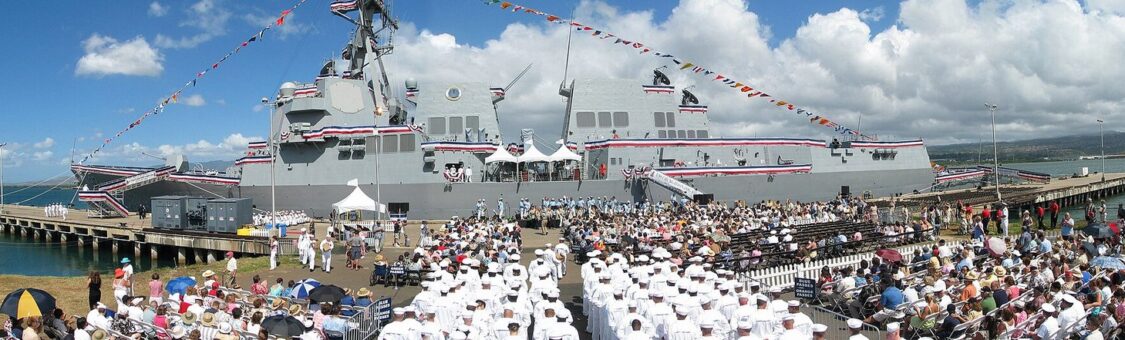
The U.S. Navy commissioned its newest Flight III Arleigh Burke-class guided-missile destroyer, USS Ted Stevens (DDG 128), during a formal ceremony Oct. 3, 2026, in Whittier, Alaska. The ship is the second Flight III destroyer to enter active service, according to a Navy press release.

The destroyer is built around the AN/SPY-6(V)1 Air and Missile Defense Radar and the Aegis Baseline 10 combat system, which the Navy said delivers a generational leap in simultaneous anti-air warfare and ballistic missile defense. The ship also features enhanced electrical power distribution and expanded cooling capacity, according to the release.

The ship is named for the late Sen. Ted Stevens of Alaska, a Republican who served in the U.S. Senate from 1968 to 2009. Stevens was an Army Air Forces pilot during World War II, flying transport missions over “The Hump” in the China-Burma-India theater with the 14th Air Force “Flying Tigers,” earning two Distinguished Flying Crosses and two Air Medals. He also played a role in securing Alaska statehood in 1959, the Navy said.

During the ceremony, Acting Secretary of the Navy Hung Cao addressed the crew.

“Today, USS Ted Stevens is no longer preparing to join the fleet. Today, Ted Stevens is the fleet,” Cao said. “Today, USS Ted Stevens stands ready to defend the homeland, deter aggression, and when called upon, fight and win.”

The ship’s sponsors — Catherine Ann Stevens, the senator’s wife, and his daughters Susan Stevens Covich and Lily Stevens Becker — gave the traditional order to “Man our ship and bring her to life!” The commissioning crew then ran aboard to man the rails and set the first watch.

Capt. Mary Katey Hayes, the ship’s commanding officer, said the crew was ready to answer the nation’s call “whether the winds of war blow near the rugged coast of Alaska, or in the far reaches of the globe.”

The ship’s motto is “Lead with Courage.” The Navy said the commissioning location in Whittier, a deep-water port, emphasizes the service’s operational presence in high-latitude environments. The ship arrived in Whittier on Sept. 28, 2026, ahead of the ceremony, marking the first time a Navy vessel had visited the city in 80 years, according to Military.com.

Following post-commissioning operations, USS Ted Stevens will transit to its permanent homeport in Norfolk, Virginia, the Navy said.

Sources: Military.com · DoD News

News

US Marine Arrested in Okinawa Woman’s Death, Japanese Officials Express Outrage
A US Marine Corps (USMC) Marine, Security Detail, Camp Foster, Marine Corps Base (MCB) Camp Smedley D. Butler, Okinawa, Japan, signals to his NCOIC that the driver of a suspicious v - DPLA - 615d9f4a5 Photo: Department of Defense. American Forces Information Service. Defense Visual Information Center. 1994

US Marine Arrested in Okinawa Woman’s Death, Japanese Officials Express Outrage

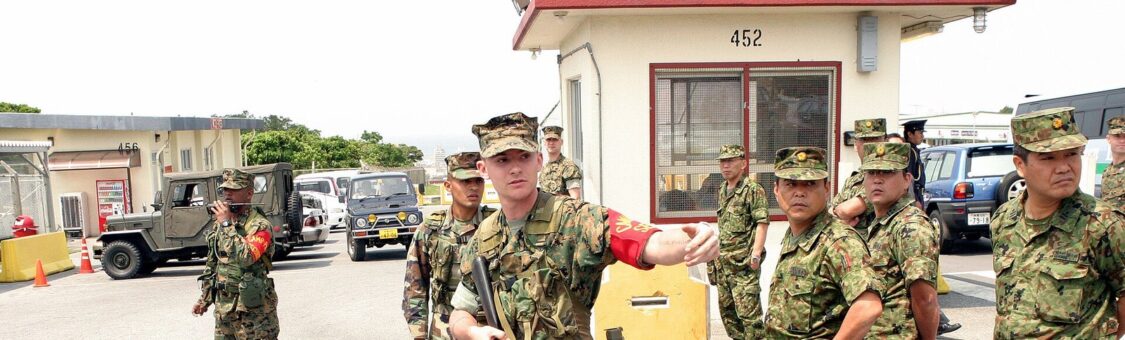
Japanese police arrested a U.S. Marine on suspicion of the robbery and murder of a woman on Okinawa, officials said Sunday, in a case that has drawn sharp criticism from local leaders.

The Okinawa prefectural police said they arrested the Marine in connection with the alleged killing, according to the Associated Press. The arrest follows reports from Stars and Stripes that Okinawa police took the Marine into custody on suspicion of killing a Japanese woman at a hotel.

Okinawa Gov. Genta Koja said the case “deals a major shock and adds fear to the Okinawans who have already been forced to live next to U.S. bases,” according to the Associated Press.

The incident is the latest criminal case on the southern island, where the heavy American troop presence has remained a sensitive issue, the AP reported.

Details about the victim, the circumstances of the alleged crime, or the Marine’s identity have not been released by authorities. The investigation is ongoing.

The U.S. military has not yet issued a public statement about the arrest. Japanese officials have not announced any specific policy changes in response to the case.

Sources: DVIDS News · Military.com

News

Pentagon raises hostile fire, imminent danger pay for first time since 2002
U.S. Army soldiers board charter aircraft before deployment Photo: SPC Shelby Bickmore

Pentagon raises hostile fire, imminent danger pay for first time since 2002

The Pentagon has enacted the first increase in hostile fire and imminent danger pay for all troops since 2002, officials announced Oct. 1. The new rates took effect Thursday, the start of the new fiscal year.

A memo from Timothy Dill, Assistant Secretary of War for Manpower and Reserve Affairs, raises hostile fire pay to $450 per month from its previous top rate of $250, and imminent danger pay to $275 monthly, or $9.16 per day, up from the prior cap of $225 or $7.50 per day. The memo is dated July 14 and was released by the Pentagon.

The memo cites a Department of War Instruction updated in 2024 that gives the assistant secretary for manpower and reserve affairs the authority to determine hazard pay amounts.

The Marine Corps had already announced in September that it was updating its pay caps to the amounts set in the memo, but did not describe the move as a military-wide change.

Troops can receive hostile fire pay if their base or unit is attacked by hostile forces, or if they are wounded by hostile fire or explosions. If a commander authorizes it, troops are given a lump sum of $450 for the month. Imminent danger pay is given to troops in a location subject to the threat of physical harm or imminent danger based on civil insurrection, civil war, terrorism, or wartime conditions in a designated foreign area. Under the new rates, it is prorated to $9.16 per day. As in the past, troops cannot receive both types of combat pay in the same month.

Undersecretary of Personnel and Readiness Anthony Tata said in a statement on Oct. 1: “Those who face combat deserve higher compensation that reflects the risks that they willingly undertake on behalf of our nation. Raising imminent danger and hostile fire pays for the first time in two decades is a step toward recognizing that sacrifice.”

The change comes as the Iran conflict is in its seventh month. Tens of thousands of U.S. personnel remain deployed in the U.S. Central Command area of responsibility. The military has rotated out some units, most notably carrier strike groups on extended tours, and extended the deployments of other forces.

Sources: Army Times · Navy Times

News

US Marine arrested in Okinawa woman’s death as NMESIS heads to Yonaguni
Security guard Atsushi Shimabukuro checks identification documents at the gate of U.S. Marine Corps Base Camp Smedley D. Butler in Okinawa, Japan, Oct. 28, 2010, as the area is hit by rain and wind fr Photo: LCpl Patricia D. Lockhart

US Marine arrested in Okinawa woman’s death as NMESIS heads to Yonaguni

Okinawa police arrested a U.S. Marine on Oct. 3 on suspicion of killing a Japanese woman at a hotel, Stars and Stripes reported. The arrest comes as the U.S. military prepares to deploy its NMESIS anti-ship missile launcher to Yonaguni Island for the Keen Sword exercise, which is set to begin Oct. 19 and run for 11 days.

Details of the arrest were limited. Stars and Stripes did not name the Marine, the victim, or the hotel, and did not state the date of the alleged killing. Police have not released further information, and the Marine’s status with the military was not specified.

Separately, the U.S. military will deploy the Navy-Marine Expeditionary Ship Interdiction System (NMESIS) to Yonaguni, Japan’s westernmost inhabited island, about 107 km (66 miles) from Taiwan, during Keen Sword, Kyodo News reported Oct. 2, citing the Yonaguni town government. NHK reported it will be the first time NMESIS is deployed on Yonaguni. Neither government has said how many launchers will go, how long they will stay, or whether any missiles will be fired.

NMESIS is a Marine Corps system built on an unmanned Joint Light Tactical Vehicle carrying two Naval Strike Missiles, which can hit ships at ranges of more than 185 km (115 miles). The system belongs to the 12th Marine Littoral Regiment, based on Okinawa, which formally received NMESIS in June 2026. The regiment previously deployed its AN/TPS-80 G/ATOR radar to Yonaguni during Resolute Dragon in 2024.

Japan has stationed troops on Yonaguni since 2016, when a Ground Self-Defense Force coastal surveillance unit and radar began operating there. Tokyo announced in February 2026 plans to place surface-to-air missiles on the island by 2031.

The arrest and the deployment come as the U.S. and Japan conduct Keen Sword, a biennial exercise. The Marine’s arrest could affect host-nation relations, though no official has commented on that possibility. The exercise is scheduled to proceed as planned.

Sources: Defence Blog · Stars and Stripes

News

Navy Awards Raytheon $24.4B Multi-Year Contract for SM-6 Interceptors
USS Winston S. Churchill fires a Standard Missile (SM) 2. (40385281895).jpg Photo: Official U.S. Navy Page from United States of America Lt. Jared Hallahan/U.S. Navy

Navy Awards Raytheon $24.4B Multi-Year Contract for SM-6 Interceptors

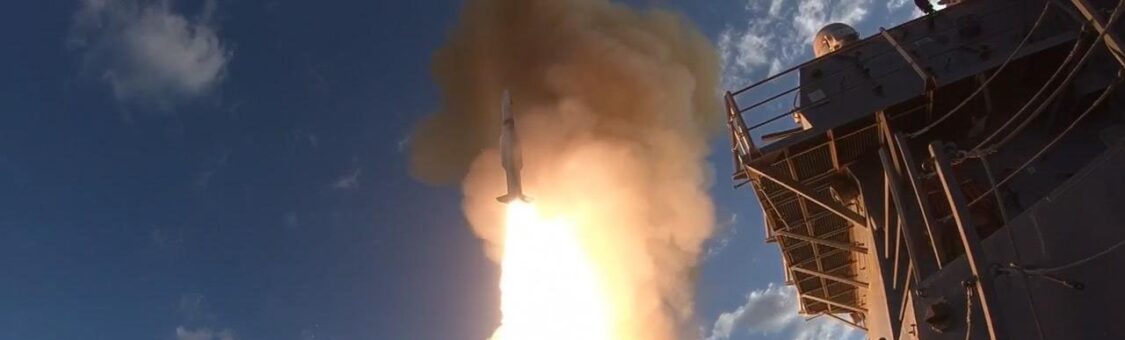
The U.S. Navy has awarded Raytheon a multi-year contract valued up to $24.4 billion for Standard Missile-6 (SM-6) interceptors, the company announced. The deal covers a five-year contract with two additional option years and is intended to ensure a consistent supply of the missile for the Navy.

Raytheon said the long-term order builds on earlier agreements between the company and the Department of War.

Raytheon President Phil Jasper said the company is focused on meeting demand for the missile.

“SM-6’s multi-mission capability is vital to our customer, and Raytheon is intensely focused on meeting the demand,” Jasper said. “By continuously investing in our operations and facilities, we are removing constraints and boosting capacity to ensure we deliver this critical capability our sailors depend on.”

To keep pace with rising demand, Raytheon said it has invested in its workforce, built stronger partnerships across the defense industrial base, and automated production. These combined efforts are intended to support significantly higher output for near and long-term needs.

The SM-6 is the only combat-proven weapon that can perform anti-air warfare, anti-surface warfare, and ballistic missile defense, according to Raytheon. It has been fired from various U.S. Navy ship-based platforms and launchers on land.

Sources: USNI News · DVIDS News