News

News

Five Arrested Near RAF Fairford on Suspicion of Explosives Offenses
Bomber Task Force concludes strategic mission at RAF Fairford (7435740).jpg Photo: U.S. Air Force photo by Staff Sgt. Eugene Oliver

Five Arrested Near RAF Fairford on Suspicion of Explosives Offenses

British police arrested five men early Sunday on suspicion of explosives-related offenses near RAF Fairford, a U.S. Air Force base in Gloucestershire, England, prompting a major incident declaration and the evacuation of about 85 households, authorities said.

The arrests came after police received a call at approximately 12:45 a.m. local time Sunday about three suspicious vehicles traveling toward the base, according to Gloucestershire police Assistant Chief Constable Richard Ocone. Armed officers responded and detained the men in the nearby village of Whelford, where a 400-meter cordon was established around the vehicles.

“The Army’s specialist explosive ordnance disposal team are currently examining a number of vehicles,” Gloucestershire Constabulary said in a statement. “The local residents are being evacuated to a nearby leisure center.”

“A cordon is currently in place, but we’d like to reassure people that we believe this incident is contained,” the force added.

The men were taken into custody and remain there, Ocone said. Live camera feeds from news helicopters documented activity by military EOD robots inspecting vehicles, and a Temporary Flight Restriction was imposed over Whelford, applying to all aircraft, including any small balloon, any kite, any UAS and any parachute.

RAF Fairford is a major hub for U.S. military aircraft, with strategic assets like B-1B Lancer bombers being forward deployed to the base and tactical and other assets often using it as a pit stop during flights across the pond. Bomber strikes launched from Fairford were a central aspect of major U.S. combat operations against Iran earlier this year.

It is still unconfirmed, though very likely, that Fairford went to FPCON Delta, the highest level possible, while other bases like Lakenheath went to FPCON Charlie. Other U.S. bases in the UK, including RAF Lakenheath and RAF Mildenhall, also stepped up security, with an air ambulance denied transit through Mildenhall’s airspace on Saturday.

A U.S. Air Force spokesperson declined to discuss specific force protection measures, saying, “For operational security reasons we will not discuss specific force protection measures. The 501st Combat Support Wing and our fellow UK-based Wings remain vigilant and will take appropriate actions to ensure the safety and security of our U.S. service members, civilians, contractors, and their families.”

No connection has been established between the incident and any particular group, but the base has drawn threats from Iran in the past. In July, the semi-official Tasnim News Agency quoted officials of the Ministry of Foreign Affairs as saying, “Any base that is used to invade Iran’s territory is our legitimate goal.”

The investigation is ongoing, and police said they are “working closely with our partners and are enacting the well-rehearsed plans we have in place.”

Sources: The Aviationist · The War Zone

News

US Army to temporarily deploy Typhon, HIMARS to Okinawa
2024-04-07 Typhon MRC Salaknib 002.jpg Photo: Capt. Ryan DeBooy, U.S. Army Pacific Public Affairs Office

US Army to temporarily deploy Typhon, HIMARS to Okinawa

WASHINGTON — The U.S. Army will temporarily store Typhon mid-range missile systems and High Mobility Artillery Rocket Systems (HIMARS) at Kadena Air Base on Okinawa, according to a Sept. 28, 2026, report from Stars and Stripes.

The deployment places the two advanced strike systems on the Japanese island, which hosts the bulk of U.S. forces in the region. The report did not specify the number of launchers or the exact duration of the temporary storage.

The Typhon system, which can fire Standard Missile-6 and Tomahawk cruise missiles, gives ground forces a land-based mid-range strike capability. The HIMARS is a wheeled artillery launcher capable of firing guided rockets and the Army Tactical Missile System.

Kadena Air Base is the largest U.S. air base in the Pacific and sits roughly 400 miles from mainland China, according to the report.

The report said the systems will be stored at Kadena on a temporary basis, but did not provide a specific timeline for when they would be removed or rotated.

Officials with U.S. Army Japan and U.S. Forces Japan did not respond to requests for comment from Stars and Stripes by press time.

Sources: DVIDS News · DVIDS News

News

Navy Faces Multi-Billion Dollar Gap After Constellation Cancellation; US and Foreign Designs Under Consideration
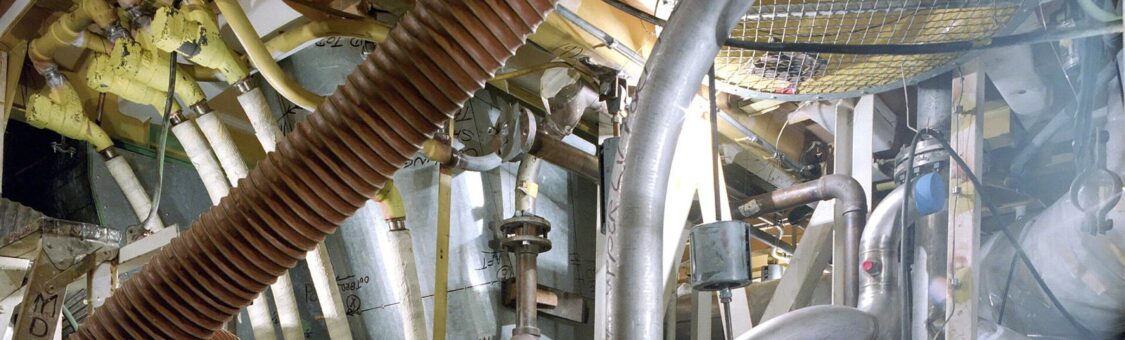
The main engine room on the guided missile frigate USS FORD (FFG 54), under construction (70 percent complete) at Todd Pacific Shipyards Corporation - DPLA - 81ce5cf5c0c62745c8ef9384e47f010d.jpeg Photo: Department of Defense. American Forces Information Service. Defense Visual Information Center. 1994

Navy Faces Multi-Billion Dollar Gap After Constellation Cancellation; US and Foreign Designs Under Consideration

The U.S. Navy is weighing domestic and foreign frigate designs to fill the multi-billion dollar gap left by the cancellation of the Constellation-class frigate program, according to a USNI News report published September 27, 2026. The decision will shape the future of the Navy’s small surface combatant fleet, though no specific replacement design or timeline has been announced.

The Constellation-class program, originally slated to deliver its first ship in 2026, was cancelled earlier this year after cost overruns and schedule delays. The Navy has not disclosed the total value of the cancelled contract, but the program was expected to cost billions of dollars for a planned fleet of 20 frigates.

According to the USNI report, Huntington Ingalls Industries (HII) is progressing with its FFX patrol frigate design, which is one of the domestic options under consideration. The Navy is also evaluating foreign designs, including the Italian FREMM EVO frigate from Fincantieri, which has been mentioned as a potential alternative in other contexts.

“The Navy is reviewing both U.S. and international options to ensure the fleet gets the capability it needs at a cost the nation can afford,” a Navy official told USNI News on condition of anonymity. The official did not provide a timeline for a decision.

The cancellation leaves a gap in the Navy’s small surface combatant plans, which had relied on the Constellation-class to replace the aging Oliver Hazard Perry-class frigates and supplement the larger Arleigh Burke-class destroyers.

In a related development, the Dutch-Belgian ASWF frigate program has faced delays, with the first Dutch frigate now expected in 2033 instead of 2030, according to a Naval News report from September 26, 2026. That program, however, is separate from the U.S. Navy’s efforts.

The Navy’s decision on a replacement is expected to be made in the coming months, according to the USNI report, which cited unnamed sources familiar with the process.

Sources: DVIDS News · Naval News

News

Five Arrested in Suspected Terror Plot Targeting RAF Fairford, UK Base for US Bombers
Bomber Task Force - Europe 22-2 (7075789).jpg Photo: U.S. Air Force photo by Tech. Sgt. Corban Lundborg

Five Arrested in Suspected Terror Plot Targeting RAF Fairford, UK Base for US Bombers

British police arrested five men early Sunday on suspicion of offenses under the Explosives Act after three suspicious vehicles were reported traveling toward RAF Fairford, a UK base that hosts US Air Force bombers, authorities said.

The incident began around 12:45 a.m. local time Sunday when police received a call about the vehicles, according to Gloucestershire Constabulary Assistant Chief Constable Richard Ocone. Armed officers responded and arrested the five men in the Whelford area, about a mile from the base. Police declared a major incident and ordered evacuations of approximately 85 households in the village of Whelford while British Army explosive ordnance disposal teams examined the vehicles.

A 400-meter cordon was placed around the vehicles, and residents were evacuated to a nearby leisure center, Ocone said. Police said they believe the incident is contained.

Counterterrorism officers are leading the investigation. Authorities have not identified the suspects or disclosed the exact nature and scale of the suspected attack.

RAF Fairford is a regular host of US strategic assets, including B-1B Lancer bombers and U-2 spy planes, and serves as a staging point for aircraft being ferried between the United States and Europe. B-1B Lancers and B-52 Stratofortresses operated from the base for strikes against Iran earlier this year. The Air Force’s 501st Combat Support Wing is based at Fairford.

A US Air Force spokesperson declined to discuss specific force protection measures, citing operational security, but said the 501st Combat Support Wing “appreciates the swift response and continued support of our local law enforcement partners.”

A Temporary Flight Restriction was imposed over Whelford following the incident, applying to all aircraft including drones and balloons.

Speaking to reporters, President Donald Trump said the suspects were aiming to do “big damage.” British Prime Minister Andy Burnham said the investigation is ongoing.

The base has drawn direct threats in the past. Tasnim News Agency, an Iranian outlet with ties to the Islamic Revolutionary Guard Corps, said on Telegram on July 23 that “any base that is used to invade Iran’s territory is our legitimate goal,” in a statement about B-1 planes flying from Fairford. No connection has been established between Sunday’s incident and any particular group.

Sources: Stars and Stripes · The War Zone

News

Army Special Operations Soldier Dies in Nevada Airborne Training Incident
3rd Special Forces Group (Airborne) hosts Memorial PT Photo: SPC Seu Chan

Army Special Operations Soldier Dies in Nevada Airborne Training Incident

A U.S. Army Special Operations soldier died Sept. 22, 2026, from injuries sustained during a military airborne training event in Nevada, according to U.S. Army Special Operations Command (USASOC).

The soldier was identified as Sgt. 1st Class Andrew Frakes, 34, of Savannah, Georgia. The incident occurred during a military airborne training event, though the command did not provide additional details about the circumstances.

Lt. Gen. Lawrence “Gil” Ferguson, commanding general of USASOC, said in a statement: “Sgt. 1st Class Andrew Frakes represented the finest qualities of our nation’s special operations forces and performed at the highest echelons of our military. The loss of such an exceptional warrior is felt deeply across the Special Operations community. Our deepest condolences, thoughts, and prayers are with his family, loved ones, and teammates during this difficult time.”

Sources: DVIDS News · US Army

News

British police arrest five in thwarted attack plot on RAF Fairford, base used by US bombers
B-52 Stratofortress arrives at RAF Fairford for BTF 25-2 (8867677).jpg Photo: U.S. Air Force photo by Senior Airman Brooklyn Golightly

British police arrest five in thwarted attack plot on RAF Fairford, base used by US bombers

British police on Sunday arrested five men near RAF Fairford, an air base in western England that hosts U.S. Air Force personnel and has been used to launch bomber strikes against Iran, on suspicion of explosive and terrorism offenses. The arrests followed a tip that three vans were traveling toward the base in the early hours of the morning, according to British counter terrorism detectives leading the investigation.

The five men were detained by armed officers and later held on suspicion of preparation of a terrorist act. Police said they believed the incident was now contained. A 400-meter cordon was placed around the base while a bomb disposal unit investigated the vans, and residents in 85 homes in a nearby village were evacuated, police said.

U.S. President Donald Trump said the suspects had been under investigation by British and U.S. authorities and were looking to do “big damage.”

“We had them under investigation. They were looking to do big damage to our port and working with the British worked out great. … We had them under view for a long time, and we got them,” Trump told reporters.

Counter Terrorism Policing Senior National Coordinator Vicki Evans said the investigation was in its early stages and the five men remained in custody. Gloucestershire Police Assistant Chief Constable Richard Ocone said the cordon was in place as a precaution and an emergency services presence would remain in the area.

The British government has authorized the U.S. to use bombers based at Fairford to strike Iranian missile sites that were attacking ships in the Strait of Hormuz. The government said Prime Minister Andy Burnham was being updated on the incident, and Burnham wrote on X that it “will be deeply concerning for local residents and for many people following developments across the country.”

Police have not identified who they believe was involved. A source familiar with the investigation said an Iranian-linked motive was considered the most likely, while a Russian sabotage operation or an Islamist plot were also being examined. Britain said in July its armed forces were ready to protect the country from any attack after Iran’s Revolutionary Guards warned it not to allow U.S. bombers to fly from Fairford, saying any base used to launch attacks would be a legitimate target.

Reuters witnesses said security was increased at other U.S.-used bases, with armored vehicles and soldiers at the gates of RAF Lakenheath and RAF Mildenhall in eastern England. A U.S. Air Force spokesperson declined to discuss specific force protection measures but said the 501st Combat Support Wing and other UK-based wings “remain vigilant” and constantly assess factors that determine protective measures.

British ministers have previously briefed critical infrastructure providers on the threat from Russia, with the government increasingly concerned about possible sabotage and cyberattacks. Russia denies mounting hybrid attacks on Western nations. In June 2025, a British military air base in central England was broken into by the Palestine Action protest group, which has since been proscribed as a terrorist organization.

Sources: Defense News · Army Times

News

F-15Es Return From Iran Operations With Mortal Kombat Nose Art and Drone Kill Markings
CENTCOM F-15E Aerial Refuel (8675404).jpg Photo: U.S. Air Force AFCENT by Senior Airman Rachel Pakenas

F-15Es Return From Iran Operations With Mortal Kombat Nose Art and Drone Kill Markings

Ten F-15E Strike Eagles from the 4th Fighter Wing returned from combat operations against Iran, arriving at RAF Mildenhall between Sept. 24 and 26, 2026, with Mortal Kombat-themed nose art and a combined 45 Shahed drone kill markings, according to The Aviationist.

The jets are the first of 24 Strike Eagles from the 4th FW that deployed to the Middle East between January and March 2026. The first section of four aircraft, callsigns TABOR 21-24, arrived Sept. 24, supported by a KC-135R tanker. The second section of six jets, callsigns TABOR 11-16, arrived Sept. 26.

The aircraft and their nose art names are:

  • TABOR 21, AF 89-0490, “Liu Kang”
  • TABOR 22, AF 87-0181, “Sub Zero”
  • TABOR 23, AF 89-0492, “Kitana”
  • TABOR 24, AF 89-0505, “Scorpion”
  • TABOR 11, AF 90-0229, “Reptile”
  • TABOR 12, AF 89-0478, “Kano”
  • TABOR 13, AF 87-0193, “Cage”
  • TABOR 14, AF 87-0177, “Smoke”
  • TABOR 15, AF 88-1704, “Shao Kahn”
  • TABOR 16, AF 88-1670, “Jax”

In addition to the nose art, the jets displayed Shahed-like kill markings for Iranian drone shootdowns, along with weapon silhouettes for AGM-158 JASSMs, GBU-39 Small Diameter Bombs, and AGR-20 APKWS II laser-guided rockets, the report said.

The APKWS II has become a weapon of choice for the counter-UAS mission, offering a comparatively inexpensive way to engage drones without expending more costly air-to-air missiles, according to The Aviationist. Integration of the APKWS II onto the F-15E began in May 2025, and with six LAU-131 rocket launchers, the F-15E can carry 42 laser-guided rockets in addition to its standard loadout of eight air-to-air missiles, giving up to 50 opportunities to engage aerial targets.

The 4th FW jets are the latest F-15Es to return from the CENTCOM area of responsibility, following 12 Strike Eagles from the 366th Fighter Wing that stopped at RAF Lakenheath on Sept. 16 on their way back to Mountain Home AFB.

Sources: DVIDS News · DVIDS News

News

Navy Establishes New Center to Integrate Robotic, Autonomous Systems Across Fleet
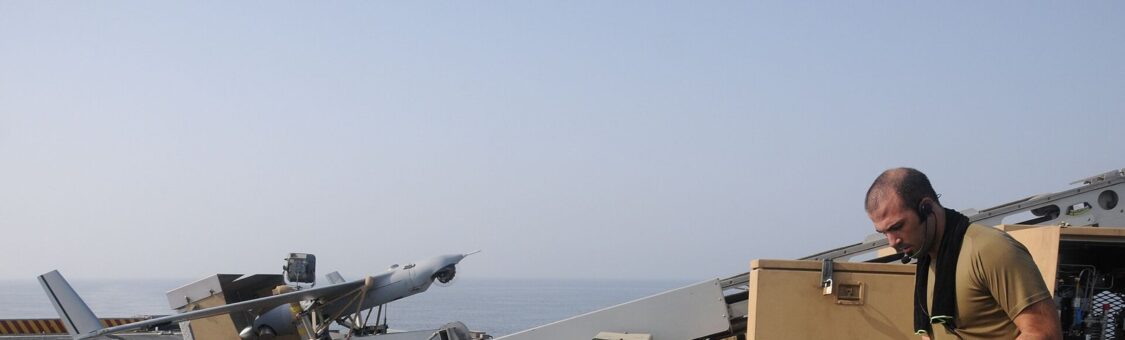
Flickr - Official U.S. Navy Imagery - A contractor prepares a Scan Eagle unmanned aerial vehicle launch..jpg Photo: Official Navy Page from United States of America Mass Communication Specialist 2nd Class Toni Burton/U.S. Navy

Navy Establishes New Center to Integrate Robotic, Autonomous Systems Across Fleet

The U.S. Navy formally established a new center this week at Joint Expeditionary Base Little Creek in Virginia to integrate robotic and autonomous systems across its fleet. The Robotic and Autonomous Systems Warfighting Development Center (RASWDC) will serve as the single operational home for uncrewed systems in the air, on the surface, and under the sea, according to an administrative message from Chief of Naval Operations Adm. Daryl Caudle posted on a Navy HR website.

Rear Adm. Melvin Smith has been tapped to command the new center. He is spearheading a phased near-, mid-, and long-term implementation plan that includes developing the command structure, mission relationships, and resource requirements as the organization progresses toward full operational capability. The center falls under U.S. Fleet Forces Command.

“To maintain our decisive maritime advantage, we must rapidly integrate robotic and autonomous systems into how we operate, train, and deploy,” Caudle said in a statement. “The establishment of RASWDC ensures our Sailors are equipped with the tactical edge, advanced training, and specialized doctrine required to win the high-end fight.”

The center has three core missions: develop warfighting concepts, train sailors, and field and test new technology. It will test unmanned systems in realistic conditions, including environments where communications are degraded or denied, and will write the doctrine and tactics for using them. It will also send performance data from testing, experiments, and training back to the engineers and program managers who design and buy the systems.

“Our purpose here is to consolidate the Navy’s autonomous efforts across air, surface, and undersea domains, and give them a single home here at Little Creek,” Smith said. “Our mandate is straightforward: educate our warfighters, equip the Fleet with tools that actually survive the environment, and develop the combined tactics to employ them decisively. We are here to make sure our forces don’t just field unmanned systems, but dominate with them.”

The Navy said RASWDC will not take over work done by its existing warfighting development centers, type commanders, or systems commands, but will coordinate with them to share lessons and feed in new requirements.

The establishment of RASWDC follows the Navy’s creation on Aug. 5 of a Direct Reporting Portfolio Manager for Robotic and Autonomous Systems, a single office responsible for buying, budgeting, setting technical standards, and fielding unmanned systems. Christopher Miller, who also leads the Navy’s maritime acquisition portfolio, is serving as acting head of that office and reports directly to William Toti, who is performing the duties of Under Secretary of the Navy. That move replaced the head of the Navy’s previous drone acquisition office eight months after it was set up.

“Systems that work will move forward. Systems that do not will be improved, redirected, or stopped,” Caudle wrote. “The measure of success is not how many prototypes we demonstrate. It’s how much combat power we can repeatedly generate, deploy, sustain, and adapt.”

Sources: DVIDS News · DefenseScoop

News

Marine Corps Awards Kongsberg $404.4 Million for Naval Strike Missile Launchers
Valiant Shield 24: Live Fire Exercise Photo: Sgt Nello Miele

Marine Corps Awards Kongsberg $404.4 Million for Naval Strike Missile Launchers

The U.S. Marine Corps has awarded Norway’s Kongsberg Defence & Aerospace a contract worth up to $404.4 million for full-rate production and support of Naval Strike Missile launchers and the fire control system that aims them, the U.S. Department of War announced Sept. 25.

The firm-fixed-price contract covers the Naval Strike Missile Launcher Unit, its Weapon Control System and related support equipment. Kongsberg will do 85% of the work in Kongsberg, Norway, and 15% in Johnstown, Pennsylvania, through Sept. 24, 2034. No money was obligated at award. The Marine Corps will fund the work through individual orders as it places them, so the final amount spent depends on how much it buys.

The Marine Corps did not compete the award, citing a federal rule that allows sole-source contracts when only one company can meet the requirement. The Marine Corps’ Portfolio Acquisition Executive at Quantico, Virginia, is managing the contract. The announcement did not say how many launchers or control systems the Marine Corps plans to order.

The Marine Corps fires the Naval Strike Missile from the Navy-Marine Expeditionary Ship Interdiction System, or NMESIS. Each NMESIS launcher carries two missiles on an unmanned, remotely driven version of the Joint Light Tactical Vehicle built by Oshkosh Defense, called ROGUE-Fires. With no crew cab, the vehicle can hide among coastal terrain and move between firing positions while its operators stay out of the target area.

The Naval Strike Missile is a stealthy, sea-skimming anti-ship missile that flies at high subsonic speed and weighs 407 kg (897 pounds). It finds its target with an imaging infrared seeker and an onboard database that lets it pick out the right ship on its own. Kongsberg lists its range as more than 300 km (186 miles). The Marine Corps has described NMESIS as having a striking range of about 185 km (115 miles). Raytheon is Kongsberg’s U.S. production partner, and the U.S. Navy also carries the missile on its warships.

The 3rd Marine Littoral Regiment received the first NMESIS launchers in November 2024. Marines took the system to the Philippines for Balikatan 2025, flying launchers across northern Luzon and the Batanes Islands, and to Okinawa, Japan, that summer for its first training there. During Balikatan 2026, they moved NMESIS by C-130J to the island of Itbayat and landed it by ship on Calayan, both in the Luzon Strait north of the Philippine main islands.

The Marine Corps has made NMESIS its main long-range anti-ship weapon and dropped plans for a ground-launched Tomahawk. Its fiscal 2027 budget request includes 32 NMESIS launchers and 103 Naval Strike Missiles. In May, Oshkosh received a delivery order for more ROGUE-Fires vehicles, due through September 2028. In July, Kongsberg received a $50.3 million modification for launcher missile modules.

Sources: DVIDS News · Defence Blog

News

Laser Weapons to Be Deployed at Cape Canaveral Spaceport to Counter Drone Threats
Patrick Space Force Base enhances base security and readiness (8999859).jpg Photo: U.S. Space Force photo by Senior Airman Spencer Contreras

Laser Weapons to Be Deployed at Cape Canaveral Spaceport to Counter Drone Threats

Cape Canaveral Space Force Station, Florida, is getting a directed-energy laser system to shoot down unauthorized drones, a spokesperson for Space Launch Delta 45 (SLD 45) confirmed. The system, tested by the Air Force Research Laboratory (AFRL), will be part of a broader security modernization effort at the spaceport, which hosts launches for SpaceX, United Launch Alliance, Blue Origin and Relativity Space.

Col. Brian Chatman, who commands SLD 45, told Florida Today that the facility is “bringing on a directed-energy system that can do a kinetic kill against UASs (Unmanned Aircraft Systems) that are coming into the area that are having nefarious intent.” The AFRL-tested system “has been proven to be able to safely bring down a drone,” Florida Today reported. Neither Chatman nor the SLD 45 spokesperson named the specific system.

The spokesperson said the modernization effort “integrates detection, tracking, and defensive capabilities to include directed energy systems. These will provide security forces with real-time situational awareness and the necessary tools to safeguard personnel, launch complexes, and national security payloads.” No timeline for when the system will be operational was provided.

Lasers are considered particularly important at the spaceport because traditional radio-frequency jamming to disrupt drone connections could damage spacecraft. “If you start blasting a bunch of RF energy you run into potential challenges,” Chatman explained. “You don’t want that.”

The move comes amid frequent drone incursions in the region. There were 500 unauthorized drone flights over the adjacent Port Canaveral in 2025, Port Canaveral CEO Capt. John Murray said. On Sept. 18, a Chinese tourist, Xiaodong He, pleaded guilty to a federal misdemeanor charge after flying a drone in restricted airspace above NASA’s Kennedy Space Center (KSC) in late July. The drone came within 1.56 miles of pad 39B, from which the next crewed lunar flight is expected to launch in 2028. It is unclear if the new laser system will also protect skies over KSC; the spokesperson said they were checking.

The deployment follows other military uses of directed energy. Late last month, troops from Joint Task Force-Southern Border employed an Army Multipurpose High Energy Laser (AMP-HEL) system during an operation dubbed Ardent Vanguard, using it “to engage and defeat three hostile UAS,” according to a media release.

Sources: DVIDS News · Military.com