News

News

Carney says he studied risk of U.S.-led military action in Canada
Canadian and Afghan National Army soldiers patrol in Badula Qulp during Operation Moshtarak.jpg Photo: Published by ISAF Headquarters Public Affairs Office . U.S. Air Force photo by Tech. Sgt. Efren Lopez

Carney says he studied risk of U.S.-led military action in Canada

Prime Minister Mark Carney said he studied the possibility of U.S.-led military action in Canada, according to a New York Times interview published Wednesday, Sept. 23, 2026. Carney declined to discuss in detail what that examination involved, but said it would be irresponsible not to prepare for what he called “extreme tail risk.”

“I think you have a responsibility in these roles to look at extreme tail risk,” Carney told the Times. “That’s just risk management. That’s not a base case, but it would be irresponsible not to [prepare].”

The statement comes as U.S. President Donald Trump has repeatedly mused about making Canada the 51st state. Trump ruled out using military force to annex Canada in January 2025, but has said he would consider using “economic force” to get Canada to join the United States.

In the same interview, Carney discussed Canada’s plans to reduce reliance on Elon Musk’s Starlink satellite internet service and said Canada is considering alternatives to buying American F-35 fighter jets. Canada’s plan to procure a full fleet of F-35 stealth fighters remains under political review by Carney’s government, a review launched more than a year ago in response to the trade war started by Trump.

Asked by CBC News if the Canadian military is re-examining plans for potential U.S.-led military action, Defence Minister David McGuinty said “all militaries in the world spend time analyzing risk scenarios.”

The trade war between Canada and the United States has escalated after efforts to reach a trade deal failed in mid-August. The day after talks broke down, Trump imposed 50 per cent duties on $28 billion in Canadian goods, while Canada implemented retaliatory tariffs in early September. The president also signed an order to identify and remove products of Canadian origin from U.S. government procurement systems.

The New York Times report says Carney disclosed that he and Trump speak “frequently,” even since trade talks collapsed last month. Carney and Trump did not meet when they both attended the 81st session of the United Nations General Assembly this week. It was Carney’s first trip to the United States since trade negotiations fell apart last month.

Sources: Global News Canada · CBC Politics

News

Canada, Germany deepen defence ties; universities launch transatlantic research alliance
Royal Canadian Navy arrive RIMPAC 2024.jpg Photo: Petty Officer 2nd Class Sarah Eaton

Canada, Germany deepen defence ties; universities launch transatlantic research alliance

Canada’s foreign minister was set to speak on September 25, 2026, following trade and security talks with German officials, according to Global News.

Separately, the University of New Brunswick, Cardiff University, and the University of South Wales signed a Memorandum of Understanding with Marshall Land Systems to create the Marshall Land Research Alliance. The alliance will focus on deployable infrastructure for military and humanitarian use, including mobile CT scanners, hospital facilities, mechanical maintenance, and command centres.

The agreement enables technology transfer, staff exchanges, and joint research and development. Initial projects will focus on Marshall Land Systems’ deployable infrastructure products.

“In an increasingly volatile world, the long-standing and fundamental alliance between Canada and the UK is becoming ever more important,” said Marshall Land Systems CEO Gareth Williams. “As NATO allies invest to protect our way of life, this transatlantic research alliance will bring together the smartest brains in support of the effort to keep us safe and the world stable.”

Dr. David MaGee, vice-president of research at the University of New Brunswick, said the partnership will help “advance innovative technologies and contribute to Canada’s NATO commitments.”

The alliance reflects the growing importance of defence technology in driving economic growth and international cooperation between NATO nations, according to the partners. Marshall Land Systems is establishing a major new facility in South Wales, and the alliance aligns with plans for the South Wales Deeptech Academy, the universities said.

Sources: Canadian Army Today · Ottawa Citizen

News

Senate rejects resolution to halt Iran war in narrow vote
111th US Senate class photo.jpg Photo: U.S. Senate, 111th Congress, Senate Photo Studio

Senate rejects resolution to halt Iran war in narrow vote

The Senate voted on Sept. 24, 2026, on a resolution that would have halted U.S. military involvement in the Iran war, an outcome that underscored deep divisions over the conflict now past its seven-month mark.

The vote came as Republicans, who control Congress, have largely avoided directly confronting President Trump over the war, according to an Associated Press report published by Military.com.

The war has become a political issue ahead of the midterm elections, the report noted.

In a related development, a Congressional Research Service report released Sept. 23, 2026, detailed Bahrain’s role in U.S. military operations in the region. Bahrain, a small island nation connected by a causeway to Saudi Arabia (15.5 miles away) and once claimed by Iran (124 miles away), has hosted a U.S. naval command headquarters since 1948. The U.S. maintains Naval Support Activity (NSA) Bahrain, home to U.S. Naval Central Command (NAVCENT) and the U.S. Fifth Fleet.

The midterm elections, scheduled for November 2026, could shift the political landscape and influence future decisions on the conflict.

Sources: USNI News · Military.com

News

Air Force Takes Delivery of First Collaborative Combat Aircraft
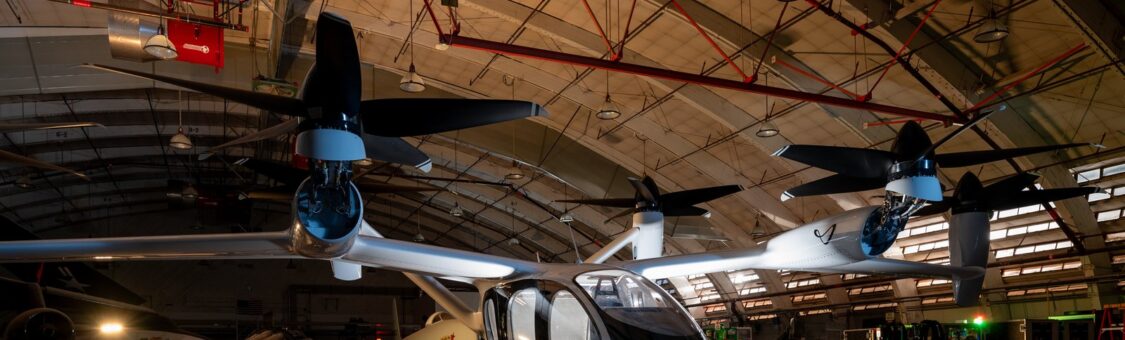
Emerging Technologies Integrated Test Force Takes Delivery of First eVTOL Aircraft Photo: Harley Huntington

Air Force Takes Delivery of First Collaborative Combat Aircraft

The U.S. Air Force has taken delivery of its first two Collaborative Combat Aircraft (CCA)—uncrewed jets built to fly alongside fighter pilots—at Creech Air Force Base, Nevada, the Department of the Air Force said Sept. 24.

Anduril delivered its YFQ-44A Fury to the base’s Experimental Operations Unit in August, and General Atomics followed with its YFQ-42A, which the Air Force calls Vengeance, last week. Air Force operators are now flying the Fury on their own, Anduril said. Air Combat Command will use both aircraft to work out how the drones should fight next to crewed fighters in contested airspace.

“Putting CCA in the hands of Airmen is how we build the operational future of this program,” said Secretary of the Air Force Troy Meink. “Anduril’s Fury and General Atomics’ Vengeance deliveries show we can move at incredible speed, compete, and deliver cost-effective combat power to the force.”

“We’re thrilled to welcome Fury and Vengeance to the experimental operational unit,” said Air Force Chief of Staff Gen. Ken Wilsbach. “Our Airmen are excited to see what Collaborative Combat Aircraft can do.”

CCA are semi-autonomous drones meant to carry weapons and sensors on missions with jets such as the F-35 and the future F-47. Each is expected to cost roughly a third as much as an F-35A. Anduril’s Fury is about half the size of an F-16.

Airmen at Creech have started testing how small teams can launch and recover the aircraft from scattered, austere locations, an approach the Air Force calls Agile Combat Employment. The service ran its second such exercise with CCA at Creech in July. The same month, a YFQ-44A fired an AIM-120 air-to-air missile in a live test.

The Air Force picked Anduril and General Atomics in 2024 to build prototypes for the first round of the program, known as Increment 1. The YFQ-42A first flew in August 2025 and the YFQ-44A in October 2025. General Atomics paused flight testing earlier this year after one of its aircraft crashed, then resumed.

On June 17, the Air Force ordered both designs into production, four months ahead of schedule, rather than choosing one. Production aircraft drop the “Y” prototype prefix and become the FQ-42A and FQ-44A. The service has said it wants more than 150 CCAs by the end of the decade and has asked for $1 billion in fiscal 2027 procurement funding, plus $1.4 billion for development. It has not disclosed contract values, unit prices or how orders will be split between the two companies.

Both firms are already building production jets. On July 28, Anduril rolled out the first FQ-44A built at its Arsenal-1 factory in Pickaway County, Ohio, and General Atomics said full-scale manufacturing of the FQ-42A was underway.

The Air Force is also planning a second round of the program, Increment 2, but has not released firm requirements. Northrop Grumman’s Talon Blue design has already received the YFQ-48A designation.

Sources: DVIDS News · DVIDS News

News

Navy awards Northrop $123.8 million for delayed F-35 radar parts
USS Carl Vinson (CVN 70) conducts flight operations Photo: PO2 Kenneth Ostas

Navy awards Northrop $123.8 million for delayed F-35 radar parts

The U.S. Navy has awarded Northrop Grumman up to $123.8 million to buy long-lead parts for 67 AN/APG-85 radars, the new radar meant for the F-35 fighter, as brand-new jets continue to reach U.S. squadrons with ballast in their noses instead of radars.

The contract, announced Sept. 24 by the U.S. Department of War, covers materials, parts and components for what it calls APG-85 Lot 7, supporting the delivery schedule for 67 production radars for the U.S. Air Force, U.S. Marine Corps and U.S. Navy. Long-lead items are parts that take years to make and must be ordered well before final assembly.

The U.S. Air Force is paying $66.5 million and the U.S. Navy $57.3 million from fiscal 2026 aircraft procurement funds, all obligated at award. Northrop Grumman will do the work in Linthicum Heights, Maryland, and is scheduled to finish in February 2031. The fixed-price incentive contract, with a firm target price, was not competed. Naval Air Systems Command at Patuxent River, Maryland, is managing it.

The APG-85 is an active electronically scanned array radar built with gallium nitride components. It is designed to replace the APG-81 that has flown on the F-35 for years and is a core piece of the Block 4 upgrade package. The F-35 Joint Program Office had planned to start fitting it to some jets in Lot 17, the aircraft production batch delivered from 2025 through September 2026.

The radar has not arrived on time. Lockheed Martin redesigned the nose structure of Lot 17 jets to hold the APG-85, and the new mounting cannot accept the older APG-81 without major structural rework. With no radar to install, Lockheed has been delivering jets with ballast in the nose to keep the aircraft balanced. Development problems with cooling and power consumption have contributed to the delay, Avionics International reported.

The first radar-less F-35B flew its acceptance flight in late February 2026. At a Senate Armed Services Committee hearing on June 23, Lt. Gen. Gregory Masiello, head of the F-35 Joint Program Office, told lawmakers the U.S. Marine Corps had accepted six F-35Bs without radars. He said he would not count those jets as fully mission capable. The U.S. Air Force and U.S. Navy were expected to start accepting aircraft in the same configuration later in 2026.

The jets can still fly and use their other sensors, including electro-optical systems, and they can receive data from other aircraft. They cannot search for, track or target aircraft on their own radar.

A fix on the production line is still years away. Lockheed has proposed a nose bulkhead that can take either radar, but it is not expected to be ready until Lot 20, whose deliveries begin in 2028, Breaking Defense reported. Jets delivered before then without radars are due to be retrofitted once APG-85s become available.

Export customers are not affected. F-35s built for foreign buyers, including Poland, still carry the APG-81, because the APG-85 is not being offered abroad.

The Marine Corps said the Block 4 schedule depended on developing several components at the same time and that delays to some of them disrupted the plan. It called that approach a calculated risk the program office needed to take.

Sources: Defence Blog · Defence Blog

News

Air Force Adds $87.4M to Northrop’s F-16 Jammer Contract, Total Tops $1.9B
Two 555th EFS F-16 Fighting Falcons taxi on the flight line at Prince Sultan Air Base.jpg Photo: First photo is by Tech. Sgt. Michael Charles ; second photo is by Senior Airman Giovann Sims

Air Force Adds $87.4M to Northrop’s F-16 Jammer Contract, Total Tops $1.9B

The U.S. Air Force has added $87.4 million to Northrop Grumman’s contract for the AN/ALQ-257 Integrated Viper Electronic Warfare Suite (IVEWS), a new radar-jamming and threat-warning system for the F-16 fighter, the U.S. Department of War announced. The modification funds low-rate initial production, the first small production run before full-rate manufacturing, and raises the total contract value to $1.92 billion, up from $1.83 billion.

Work will take place at Northrop Grumman’s plant in Rolling Meadows, Illinois, and is scheduled to finish by Dec. 31, 2029. The Air Force obligated $79.4 million at award: $11 million in fiscal 2025 research and development funds and $68.4 million in fiscal 2025 aircraft procurement funds. The Air Force Life Cycle Management Center at Wright-Patterson Air Force Base, Ohio, manages the contract. The announcement did not say how many systems the money will buy.

IVEWS warns F-16 pilots when enemy radars are tracking them, jams those radars, and helps locate and identify threats. Northrop Grumman says it covers an ultra-wide frequency range, including millimeter-wave radars, which operate at very high frequencies used by some modern missile seekers and fire-control systems. Unlike earlier F-16 self-protection jammers such as the ALQ-131 and ALQ-184, which hang in pods under the jet’s belly and take up the centerline weapons station, IVEWS is built into the aircraft.

The Air Force picked Northrop Grumman for the program in 2021. Two F-16 Block 50 jets flew more than 70 sorties and over 100 flight hours during a seven-month operational assessment at Eglin Air Force Base, Florida, and Nellis Air Force Base, Nevada, which wrapped up in 2025. By July 2026, the system had logged more than 550 flight-test hours across 300 sorties, company officials said. In September 2025, the Air Force issued an urgent operational need to get IVEWS into service with F-16 units in the Middle East. The next month, Northrop Grumman reported that the suite had been integrated with the APG-83 radar being installed on upgraded F-16s.

The first Air Force production batch will equip 72 F-16 Block 50 jets, Northrop Grumman vice president Jim Conroy told Air & Space Forces Magazine in October 2025. Up to 450 U.S. F-16s are to receive the system in the initial program, Militär Aktuell reported in January. Northrop Grumman is also offering IVEWS to foreign F-16 operators, whose fleets together with the U.S. total more than 2,800 aircraft. Congress set aside $187 million in last summer’s reconciliation bill to finish development testing and begin initial production, Conroy said at the time. He said the fiscal 2026 appropriations bill, then still pending, included $250 million for the first full-rate production lot.

The F-16 is expected to remain one of the main fighters of the U.S. Air Force and dozens of allied air forces into the 2040s, alongside the F-35. IVEWS is one of several upgrades meant to keep the jet competitive, together with the APG-83 radar and Northrop Grumman’s LITENING targeting pod.

Sources: DVIDS News · Defence Blog

News

F-35 Canopy, Weapons-Bay Door Diverted to Hong Kong Now in Chinese Hands
Air Force Technician briefs Secretary of Defense Chuck Hagel on the cockpit of an F-35A Lightning II aircraft - 140710-F-ZZ999-900 (14648974131).jpg Photo: U.S. Department of Defense Current Photos

F-35 Canopy, Weapons-Bay Door Diverted to Hong Kong Now in Chinese Hands

Chinese authorities have reportedly taken possession of an F-35 cockpit canopy and a weapons-bay door that were diverted to Hong Kong while being shipped from Australia to the United States in late May, according to people familiar with the matter cited by Bloomberg News. The components, from a Royal Australian Air Force F-35A, were being sent to the U.S. for inspection and possible repair or disposal, and apparently stopped in South Korea before being routed to Hong Kong, where Chinese authorities have not returned them.

The Pentagon’s F-35 Joint Program Office has acknowledged a “shipment issue” involving F-35 components and said U.S. authorities and industry partners are working to recover them and investigate what happened. Lockheed Martin, UPS, and the Pentagon have not publicly provided a detailed account of how the shipment was diverted or what happened to the parts after they reached Hong Kong.

Lockheed Martin said in response to a request for clarification: “For security reasons, we can’t discuss the status of specific shipments or our shipping procedures.” The company added that it “follows all U.S. regulations established by the Department of War and regulated by the Defense Logistics Agency (DLA) regarding the shipment of aircraft components. Our teams handle every shipment with the utmost diligence and safeguards to ensure the integrity of the F-35 program and the security of our allied partners.”

Australian Defence Minister Richard Marles confirmed Canberra was aware of the incident and was working with the United States and Lockheed Martin. Marles has sought to play down the potential security implications, saying his understanding was that the shipment did not contain sensitive equipment or sensitive parts.

However, the F-35 canopy is a technologically crucial component from a low-observable perspective. Its stretched acrylic transparency is covered by a thin layer of transparent radar-absorbent material designed to reduce radar reflections. According to the U.S. Defense Logistics Agency, degradation of this layer can create a radar-signature vulnerability and affect the aircraft’s full mission capability. The weapons-bay door also involves structures, materials, interfaces, tolerances, and treatments that must work within the aircraft’s low-observable design.

The condition of the parts is unknown, including how much of their coatings or other treatments remain intact, and whether Chinese authorities have examined them. The U.S. Government Accountability Office reported in 2019 approximately 20 incidents of F-35 canopy transparency delamination after fewer than 100 flight hours; modifications were introduced beginning in 2019, but a 2024 GAO report said some canopies were still experiencing external-coating delamination. A 2026 GAO report identified the canopy as one of the components constrained by industrial-base capacity and among the top contributors to F-35 non-mission-capable rates.

China has pursued multiple avenues for acquiring information on the F-35 for many years, with publicly documented cases involving cyber operations, technical information, supply chains, and human expertise. In 2014, U.S. authorities charged Chinese businessman Su Bin with conspiring with two other Chinese hackers to break into the computer systems of U.S. defense contractors.

The incident comes as President Donald Trump and Chinese leader Xi Jinping held a bilateral meeting in Washington on Sept. 24, 2026, during Xi’s state visit from September 23 to 25, with Bloomberg reporting shortly before Xi landed that the Chinese government had taken possession of the F-35 parts. The Pentagon’s F-35 Joint Program Office said U.S. authorities and industry partners are working to recover the components and investigate what happened.

Sources: DVIDS News · The Aviationist

News

Satellite Imagery Shows Large Vessel Under Construction at Chinese Shipyard, Analysts Assess as Drone Submarine Mothership
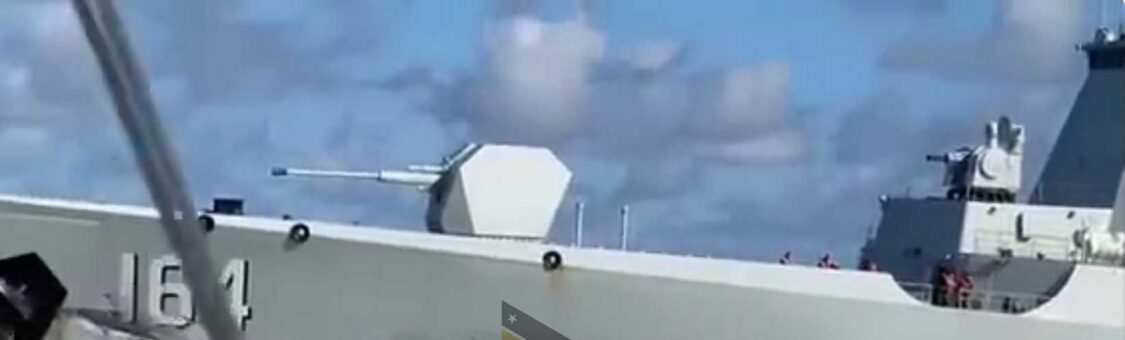
People's Liberation Army Navy Destroyer Guilin (164) 20250811.jpg Photo: Philippine Coast Guard

Satellite Imagery Shows Large Vessel Under Construction at Chinese Shipyard, Analysts Assess as Drone Submarine Mothership

New satellite imagery shows a large vessel with a boxy superstructure under construction at the Hudong-Zhonghua Shipyard on Changxing Island in Shanghai, which an independent naval analyst assesses is a mothership to support China’s growing fleets of large submersible drones, The War Zone reported Sept. 24.

The ship, under construction since at least April, is approximately 669 feet (204 meters) long and around 98 feet (30 meters) at its widest, according to satellite imagery obtained by The War Zone from Vantor, taken Sept. 10. The vessel has since received an overall coat of gray paint, pointing to future service with the People’s Liberation Army Navy (PLAN).

The Sept. 10 image confirms the design includes a well deck, sized around a roughly 164-foot (50-meter) long rectangular platform visible in the shot. The platform has an arch-shaped structure at one end and two teardrop-shaped ones at the other, as well as six pillars, three on each side, in between. The teardrop-shaped structures point to the platform being at least a semi-submersible, according to The War Zone.

The image also clearly shows six large struts extending from the top of the stern end of the superstructure, each paired with a shorter strut, for a total of 12. Earlier this month, independent naval analyst H.I. Sutton posited these struts could be used to lower a platform or similar structure below the hull of the ship, or as part of a larger system capable of moving payloads between decks internally. Sutton drew attention to a previously shown rendering of a proposed Chinese scientific research vessel with a roughly similar strut-based system at the stern for deploying submersibles and other large payloads.

Overall, signs point to the inside of the superstructure being largely hangars and other open work spaces, allowing for multiple large UUVs to be carried and supported, with individual UUVs launched and recovered one at a time via the cradle, The War Zone reported.

The vessel’s basic length and width are very roughly comparable to China’s Type 071 amphibious warfare ship, though it appears to be much taller overall, according to the report.

Other features now taking shape include a large opening on the starboard side, which could be for launching and/or recovering lifeboats or other watercraft, or moving payloads to and from the pier while docked, as well as a multi-pronged mast on top of the bridge. There is no attached helipad present now, but one could well be added later on somewhere on top of the superstructure, The War Zone reported.

A large specialized ship built for the purpose of launching and recovering very large underwater vehicles in an operational capacity is unique, according to the report, which noted the idea of deploying and retrieving large UUVs via well decks using cradle-like systems is being explored by other navies globally, including in the United States.

Sources: USNI News · Defence Blog

News

Danish intelligence warns of growing risk of limited Russian attack on NATO; US general says alliance ready
Task Force Marne troops train alongside NATO Allies during exercise Iron Spear (8122281).jpg Photo: U.S. Army photo by Capt. H Howey

Danish intelligence warns of growing risk of limited Russian attack on NATO; US general says alliance ready

Denmark’s defense intelligence service has assessed that Russia is likely to intensify hybrid attacks against NATO member states in the coming months, and that there is a low but growing risk Moscow could launch a limited military attack against one or several NATO countries bordering Russia, according to a nine-page threat report published Sept. 24.

The report from the Danish Defence Intelligence Service (DDIS) said Russia will carry out more frequent attacks against the West and NATO, with greater consequences for targeted countries than in the past. It said these could include cyber attacks that cripple societal functions as well as sabotage attacks that carry a high risk of casualties.

The assessment said a limited military attack could take the form of isolated strikes by long-range weapons on infrastructure vital to supporting Ukraine. The report noted Russia might claim such weapons only struck NATO territory because they were jammed by Ukraine.

DDIS found no indication the Kremlin is planning an outright invasion of a NATO state, and that such an operation would likely require a minimum of six months of planning to build up the required forces. The assessment also said there is no prospect of Russian forces accomplishing any significant breakthrough in Ukraine over the next six months.

In response to the assessment, U.S. Air Force Gen. Alexus Grynkewich, NATO’s Supreme Allied Commander Europe, said “we should be calm and confident” that the alliance can handle any threat posed by Moscow. Speaking in a phone interview with Reuters on Sept. 24 en route to a change-of-command ceremony in Norfolk, Virginia, Grynkewich called a limited Russian attack on NATO territory “unlikely but something that we can’t rule out.”

Asked about the possibility that Russian President Vladimir Putin might see an opportunity to strike NATO, Grynkewich said: “Absolutely not. He better not try it on my watch,” adding that NATO was well positioned to defend every inch of its territory.

Grynkewich said Washington would continue to provide “critical but more limited capabilities” to NATO as Europeans take on a greater role in defending the continent. He said there was no predetermined outcome regarding how many of the approximately 80,000 U.S. troops currently based in Europe would remain, or which capabilities might relocate.

Grynkewich said a string of recent incidents were concerning, including an attempted drone attack at Germany’s Leipzig/Halle Airport and a Russian ship firing flares toward a Danish military helicopter.

Separately, Spanish daily El Mundo reported Sept. 23 that the CIA had warned European countries of a suspected Russian plot to launch Gerbera-type drones from commercial vessels in the Mediterranean, potentially targeting Spain, France or Italy. The report, based on testimony from an anonymous Lithuanian intelligence source, said the drones have a wingspan of 2.5 meters, a maximum range of 600 kilometers, and could be concealed in containers and catapult-launched from international waters. The El Mundo report has not been independently corroborated.

Sources: Defense News · Military.com

News

8 service members in Lincoln strike group attempted suicide during Middle East deployment, Navy secretary says
USS George Washington Conducts Replenishment-At-Sea Photo: Navy

8 service members in Lincoln strike group attempted suicide during Middle East deployment, Navy secretary says

Eight service members across the Abraham Lincoln Carrier Strike Group attempted suicide during its current deployment, which included more than 200 days of combat operations in the Middle East, acting Navy Secretary Hung Cao said this week.

In a Tuesday letter to Sen. Kirsten Gillibrand, D-N.Y., Cao said there had been eight suicide attempts across the strike group since the deployment began. No suicides occurred during the deployment, he said. The carrier has been deployed more than 10 months as of Thursday.

In one instance, a sailor who went overboard from USS Abraham Lincoln in early August was rescued, and another service member who tried to jump off the carrier in March was stopped by shipmates, Cao said in the letter.

The strike group includes the carrier’s air wing and ships such as the destroyer USS Frank E. Petersen Jr. Aircraft carriers typically carry about 4,500 to 5,000 service members, while Arleigh Burke-class destroyers typically have crews of 300 to 330.

For context, 356 sailors across an active-duty force of more than 327,000 attempted suicide in 2024, according to the latest available Pentagon data. The figures cover different periods and populations.

“Eight attempted suicides is incredibly high,” one U.S. military official told CNN, saying recent carrier strike group deployments have typically had one or two per year. “The strain of combat ops is much higher than normal deployments. No port calls, constant alerts, etc.”

In August, Stars and Stripes reported family member concerns about the mental health of Abraham Lincoln sailors and Marines, including at least one suicide attempt. At the time, the carrier had logged more than 250 consecutive days at sea, including a record-breaking number of days without a port call.

Cao said in August that media reports about deteriorating mental health, food shortages, mail disruptions and other conditions on the ship were “dishonest.” CENTCOM commander Adm. Brad Cooper said Lincoln had among the lowest numbers of mental health-related cases among carriers. President Donald Trump dismissed reports about conditions aboard the Lincoln, saying family members were not worried about living conditions and mental health. When asked whether the carrier had been deployed too long, Trump responded, “No, no, no. Not nearly long enough.” Defense Secretary Pete Hegseth said reports about the Lincoln were “completely misrepresented.”

Gillibrand said in a statement to CNN that what the president and Hegseth called fake news “turned out to be serious and deteriorating conditions for our service members.”

The Navy sent USS George Washington to relieve Lincoln, which left the CENTCOM area of responsibility in late August, subsequently making a port call in Thailand and a logistics stop in Guam. As of Thursday, Lincoln is nearing a post-Vietnam War carrier deployment record set by USS Gerald R. Ford in May of 326 days.

Earlier this month, Navy leaders said the service was applying lessons from recent deployments as it prepares USS Theodore Roosevelt for the Middle East. The effort includes increasing storage aboard Roosevelt for food, hygiene products and other supplies, Chief of Naval Operations Adm. Daryl Caudle and Master Chief Petty Officer of the Navy John Perryman said. Roosevelt is expected to depart San Diego in the coming weeks to relieve Washington in the Arabian Sea during a deployment expected to last more than seven months.

Sources: DVIDS News · Stars and Stripes