News

News

Carney says he studied risk of U.S.-led military action in NYT interview
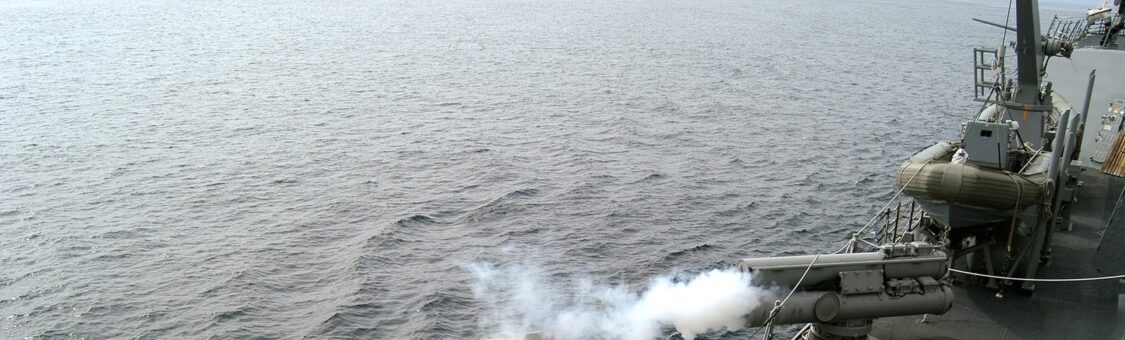
U.S., Royal Canadian Navy conduct BOARDEX during Combined Sail Photo: Joint

Carney says he studied risk of U.S.-led military action in NYT interview

Prime Minister Mark Carney said he has studied the risk of a U.S.-led military action against Canada, according to an interview published Tuesday by The New York Times.

In the interview, Carney said the possibility of a U.S. attack is a threat his government has examined, though he did not provide details of any specific planning or assessments. He said the risk is real, according to the Times.

Carney’s comments come amid heightened tensions between Ottawa and Washington over trade and sovereignty. The prime minister has previously accused the U.S. of seeking to weaken Canada economically, but his public acknowledgment of preparing for a potential military confrontation is a notable shift in tone.

Carney did not specify what measures, if any, Canada has taken in response to the perceived threat, nor did he offer a timeline for when such an attack might be possible.

In the interview, Carney also reiterated his view that the U.S. is not a reliable partner under its current leadership, and he said Canada must take steps to protect its own interests.

“We have to be prepared for the worst,” Carney said, according to the Times.

Sources: Global News Canada

News

Army Used 1,000 Disposable Drones in Germany Exercise, Treated Them Like Ammunition
CATC counter-drone capability training (9879147).jpg Photo: U.S. Army photo by Cpl. Thomas Dixon

Army Used 1,000 Disposable Drones in Germany Exercise, Treated Them Like Ammunition

During Exercise Saber Junction, the annual multinational training exercise led by U.S. Army Europe and Africa in Germany, Army soldiers launched more than 1,000 disposable drones, treating them like ammunition, according to a senior officer. Brig. Gen. Terry Tillis, head of the 7th Army Training Command, said in a roundtable discussion with overseas reporters last week that of the roughly 2,000 drones used during the exercise, 1,000 were consumable.

The exercise, held at the 7th Army Training Command in Germany, was used as a test site to replicate challenging environments, including counter-drone systems and electronic warfare, to give soldiers a more realistic experience. Tillis said soldiers used the one-way drones in different combat scenarios and treated them as immediately disposable.

Retired Marine intelligence officer Hal Kempfer, in an interview with Military.com, described expendable drones as one-way, kamikaze, or disposable drones that go in, do the mission, and don’t come back. He said this marks a shift for the U.S. military, which has historically invested billions of dollars in reusable, long-term equipment. Kempfer noted that the traditional aircraft procurement process is bureaucratically cumbersome and often results in expensive systems that may be outdated by the time they are fielded.

The Army’s shift toward low-cost, one-way drones has been driven by its Drone Dominance Program, which aims to equip soldiers with enough autonomous systems to make them expendable. Kempfer cited Ukraine as a laboratory for robotic and autonomous warfare, and noted that other countries, including the United Kingdom, Japan, and South Korea, are developing similar disposable drone programs.

Kempfer said the result can be calculated in dollars and the saving of human lives. He also referenced a recent Army airborne operation where larger drones carried smaller combat drones into conflict zones, describing them as one-way drones designed to go in, kill people, blow things up, and not survive.

Kempfer said it’s a lesson learned in real-time with the war in Ukraine and other recent conflicts in the Middle East. Since last fall, the Pentagon said the Iran-backed Houthi militia group has targeted commercial shipping vessels in the Red Sea, using aerial vehicles, uncrewed surface vessels and cruise missiles to attack U.S. ships as well as on the ground installations in the region.

“Those drone numbers continue to increase in every rotation, and we will continue to increase them in future rotations,” Norrie said. “These drones are now a part of our basics of being able to survive and integrate into protection plans, using them to sense further and strike faster.”

Sources: Defence Blog · Military.com

News

Navy Adds $876.4M to L3Harris Contract for Growler Jammer
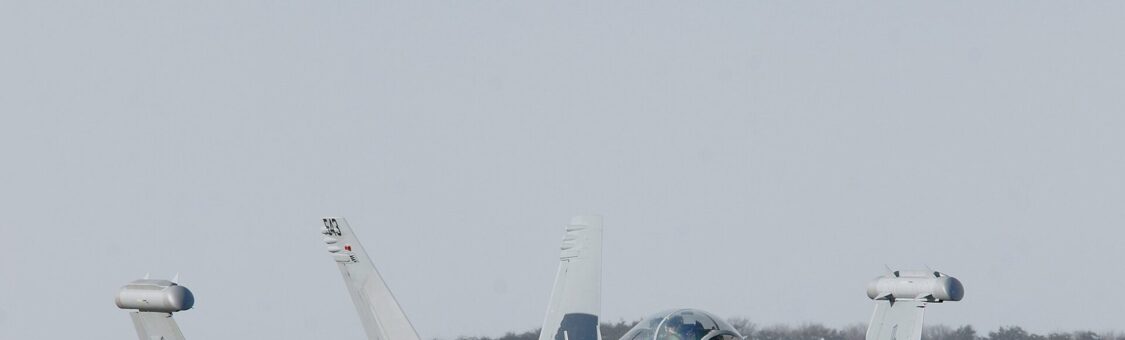
An EA-18G Growler in Misawa, Japan.jpg Photo: US Navy

Navy Adds $876.4M to L3Harris Contract for Growler Jammer

The U.S. Navy has added $876.4 million to L3Harris Technologies’ contract for the Next Generation Jammer Low Band, a radar-jamming pod for the EA-18G Growler electronic attack jet, the U.S. Department of War announced. The modification covers continued development, tooling, equipment, labor, test pods, cybersecurity, logistics, testing and software support for both the U.S. Navy and the Royal Australian Air Force. Work is scheduled to finish in fiscal 2031.

The award is a modification to the $587.4 million contract Naval Air Systems Command gave L3Harris in August 2024 to take the jammer through engineering and manufacturing development, the final stage before production. The new money is larger than that original award.

The modification is undefinitiated, meaning the Navy authorized the work before final terms and price were agreed. It is a cost-plus-incentive-fee deal, which reimburses L3Harris’s costs and pays a fee tied to performance targets. The Navy did not compete it.

At the time of award, the Navy obligated $3.65 million in fiscal 2026 research and development funds, while the Royal Australian Air Force contributed $23 million in cooperative funds. Most of the work, 43%, will take place at L3Harris’s facility in Salt Lake City. The rest is spread across sites in Alabama, Pennsylvania, New Jersey, Colorado, California, New York and Texas, with 3.4% performed in Australia.

The Growler is a modified F/A-18F Super Hornet built to jam and disrupt enemy radars and communications. Its main jamming system has long been the AN/ALQ-99 pod, first fielded in the 1970s. The Navy is replacing it with a family of Next Generation Jammer pods, each covering a different part of the radio spectrum. RTX’s Raytheon builds the mid-band pod, the AN/ALQ-249, which already flies with the fleet. L3Harris’s low-band pod targets lower-frequency search radars, which can spot aircraft at long range and cue long-range missiles toward them.

L3Harris says the pod will let Growler crews suppress enemy air defenses with high-power jamming from standoff ranges, keeping the aircraft farther from the threats they are attacking. Suppliers are already delivering hardware. In July, CPI Aerostructures of Edgewood, New York, received a $13.6 million contract from L3Harris to build pod structures for operational prototypes and extra test units. Honeywell Aerospace joined the program in June 2025, and Marotta Controls announced contracts to support it.

Sources: Military.com · DVIDS News

News

Stolen FBI data reveals employees’ roles in intelligence and surveillance
July 2018 FBI 90th Anniversary Memorabilia (43051992014).jpg Photo: Federal Bureau of Investigation (FBI)

Stolen FBI data reveals employees’ roles in intelligence and surveillance

Data stolen in a major hacking group’s alleged intrusion into FBI systems is believed to contain personal information on hundreds of FBI intelligence analysts and other employees involved in clandestine intelligence-gathering and surveillance, according to two people familiar with the matter.

The analysts focus on subject areas like Russia, China, Hezbollah, and cartel-related intelligence, said the people, who spoke on the condition of anonymity because the exposures are sensitive. The employees’ roles only offer a small picture of their duties, but may still help outsiders identify people working in sensitive parts of the bureau.

ShinyHunters claimed responsibility for the breach Monday, threatening to release what it described as two to three terabytes of FBI employee data unless the bureau retracted a public warning about its tactics within a week.

On Tuesday, the group sent news outlets an apparent sample of that data containing roughly 5,000 entries listing employees’ names, home addresses, phone numbers and information about their spouses and siblings.

Multiple individuals also work on human intelligence-gathering, as well as roles involving electronic surveillance activities that make use of telecom interception techniques and other covert access mechanisms. Some employees work in the FBI’s Remote Operations Unit, which builds specialized tools to target computers and networks.

One person works in the bureau’s FISA Management Unit, which handles the processing of applications and renewals under the Foreign Intelligence Surveillance Act that governs surveillance and search standards used to collect foreign intelligence.

The FBI said it was aware of “a cyber-criminal enterprise group claiming a compromise of the FBIJobs.gov portal and alleged impact to FBI employee personally identifiable information” and added that it is investigating the matter.

The agency said the cause of the breach was still undetermined. ShinyHunters previously said it exploited vulnerabilities in Amazon and Oracle services to access the bureau data. Neither company has returned a request for comment.

Reuters and 404 Media previously reported details regarding the intelligence roles and the ROU staff.

The language ShinyHunters wants removed appears in a May 15 FBI public service announcement that describes practices the hacking group contests. The group has built a global reputation for various hacking achievements. In May, it claimed responsibility for accessing Canvas, the popular education tech platform used by thousands of U.S. institutions.

The direct claim of an FBI breach is “an unusually provocative move” and should be taken seriously, said Etay Maor, the vice president of threat intelligence at Cato Networks.

Exposure of sensitive bureau staffing data could pose profound counterintelligence risks. For employees who do not publicly identify themselves as working for the FBI, the exposure could reveal both their jobs and how to reach them outside secure work environments. Linking that information to home addresses and relatives’ details could make it easier for nation-state groups and cyber criminals to target employees and their families with harassment, scams or threats.

The breach would be “troubling news” for both FBI employees and applicants, said Doc McConnell, a former cyber policy official at the White House and the Cybersecurity and Infrastructure Security Agency.

McConnell, who now heads policy and compliance at Finite State, compared the incident to the OPM hack a decade ago.

“The breach of OPM’s personnel records in 2015 resulted in a decade of credit monitoring for millions of affected individuals, and the full counterintelligence impact will likely never be known. This breach appears to contain similar data, creating potential security concerns for the victims if it is made publicly available,” he said.

The bureau will likely work more assertively to crack down on ShinyHunters. When any group directly targets the agency, “they should expect that the FBI is going to marshal additional resources to bring them more quickly to justice,” said Cynthia Kaiser, the SVP of Halcyon’s Ransomware Research Center and former deputy director of the FBI’s Cyber Division.

The incident follows other cyberattacks involving the bureau and its leadership this year. In March, pro-Iran hacking group Handala published material from FBI Director Kash Patel’s personal email account, which the bureau said contained historical information unrelated to government business. Separately, a suspected China-linked intrusion into an FBI system exposed surveillance targets’ phone numbers.

Sources: Breaking Defense · Defense One

News

US, UK Complete First-Ever Torpedo Launch From Undersea Drone
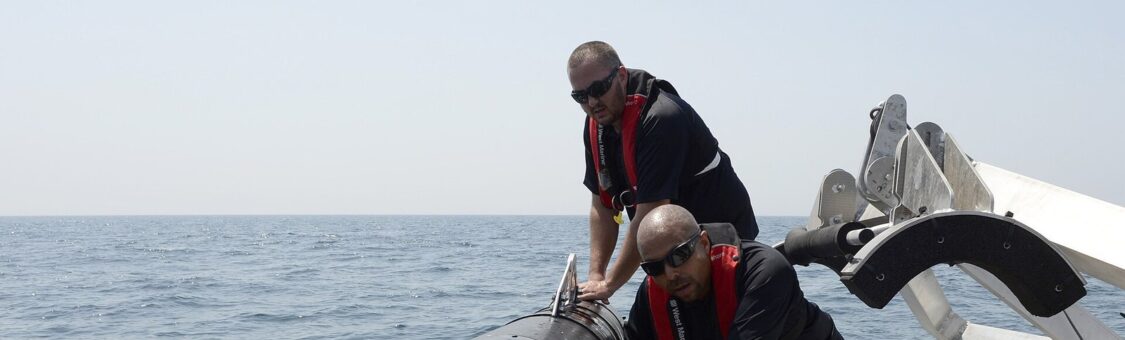
Flickr - Official U.S. Navy Imagery - Civilian contractors secure an M18 Mod 2 Kingfish unmanned underwater vehicle..jpg Photo: Official Navy Page from United States of America Mass Communication Specialist 2nd Class Blake Midnight/Mass Communication Specialist 2n/U.S. Navy

US, UK Complete First-Ever Torpedo Launch From Undersea Drone

The U.S. and U.K. navies successfully launched an American MK 48 torpedo from a British uncrewed underwater vehicle on Sept. 13, 2026, marking the first such launch from an unmanned platform for the two countries, according to a U.S. Navy statement.

The trial took place at the British Underwater Test and Evaluation Center in Scotland. During the test, a 19-foot-long, 3,744-pound MK 48 torpedo was strapped to the underside of the XV Excalibur undersea drone and released, according to video released by the Navy.

The project was implemented in less than seven months as part of the trilateral AUKUS security partnership between Australia, the U.K. and the U.S., the Navy said in a statement Tuesday.

“We are increasing the flexibility, scale and combat power of our combined forces and ensuring they are ready to meet the strategic demands of tomorrow,” Adm. Daryl Caudle, chief of naval operations, said in the statement.

The test confirmed that the torpedo and drone worked together mechanically and electronically, including their software, “proving that allied forces can rapidly achieve weapon interchangeability,” the Navy said.

The MK 48 is an acoustic-homing torpedo used by all classes of U.S. submarines. It carries a 650-pound warhead and has sophisticated sonar, digital guidance and control systems and digital fusing systems, according to the Navy.

Unveiled in May 2025, the 39-foot-long XV Excalibur displaces nearly 21 tons and is Britain’s largest uncrewed undersea vehicle, according to the U.K. navy.

The test also served as notice of NATO capabilities “in securing the north Atlantic, especially against those nations that wish to do us harm, like Russia,” Luke Pollard, U.K. minister for defense readiness and industry, told a British radio station.

Following the successful deployment, the Navy and its international partners will work on integrating other equipment, improving how the vehicles are controlled and developing ways to use them in operations, the service said.

“We are not waiting 10 years for a single bespoke platform,” Vice Adm. Seiko Okano, director of the Navy’s Rapid Capabilities Office, said in the statement. “We are pioneering a modular, software-defined, open-systems approach that integrates allied hardware with commercial innovation to rapidly scale distributed lethality.”

Sources: USNI News · Stars and Stripes

News

Lockheed Martin Wins $1.2B PrSM Increment 2 Contract After Maritime Test
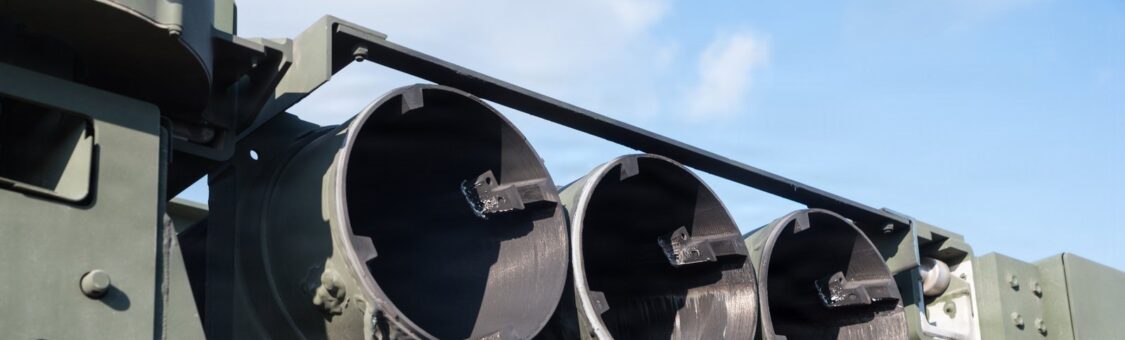
U.S. Army Conducts High Mobility Artillery Rocket Systems Live Fire Operations For Exercise Orient Shield Photo: MSG Raymond Boyington

Lockheed Martin Wins $1.2B PrSM Increment 2 Contract After Maritime Test

Lockheed Martin has received an indefinite-delivery, indefinite-quantity contract worth up to $1.2 billion to produce the U.S. Army’s Precision Strike Missile (PrSM) Increment 2, following a second flight test of the weapon’s maritime-strike capability. The award covers initial procurement, potential future orders, follow-on production and continued development of the new PrSM variant.

According to Lockheed Martin, the second Increment 2 flight test took place in August after an initial test in March. The missile was launched from an M142 High Mobility Artillery Rocket System (HIMARS), deployed protective covers during flight and engaged its target. Lockheed Martin said the test generated critical flight data, while additional Increment 2 tests are scheduled for 2027.

PrSM Increment 2 adds a multimode seeker intended to allow the missile to engage moving land and maritime targets. This separates the weapon from the baseline Increment 1 PrSM, which was developed principally as a long-range surface-to-surface missile. The Army and Lockheed Martin have previously indicated that the anti-ship mission will be a major focus of the expanding PrSM family.

“This award marks an important step in delivering PrSM Increment 2 to the warfighter,” said Dave Griser, Lockheed Martin vice president for Precision Fires Launchers and Missile. “We’re ready to move from flight testing into production and provide the Army with an expanded long-range precision fires capability.”

The program’s maritime role has been taking shape for several years. During Exercise Valiant Shield 2024, the U.S. Army’s 3rd Multi-Domain Task Force and the Tennessee National Guard fired two baseline PrSMs from a prototype Autonomous Multi-domain Launcher during a SINKEX against the decommissioned amphibious transport dock USS Cleveland (LPD-7). The event represented the first Army employment of an anti-ship ballistic missile outside the United States.

Lockheed Martin characterized Increment 2 as the PrSM variant that would add a seeker for maritime targets, while Increment 1 retained the baseline surface-to-surface mission. The company also said that later variants would further broaden the family’s capabilities: Increment 3 is intended to introduce a lethality enhancement, while Increment 4 is expected to combine extended range with an anti-ship seeker.

The new contract arrives as the Army is pursuing an increasingly layered approach to ground-based maritime strike. PrSM Increment 2 is designed to give HIMARS units an ability to threaten moving targets at distances beyond those available to traditional guided rockets, while retaining the launcher mobility that makes HIMARS attractive for dispersed operations. HIMARS can be transported by C-130 aircraft and deployed by maritime means to austere locations, allowing Army and Marine units to operate from islands and coastal areas near important maritime chokepoints.

Increment 2 will not be the longest-range maritime PrSM envisioned by the Army. The service is also accelerating its Increment 4 effort, which seeks a weapon capable of engaging moving maritime and land targets at ranges of 1,000 km or greater, including in GPS-contested environments. Program documents have identified the Indo-Pacific as a key operational environment for that future missile.

Lockheed Martin said it is expanding capacity to quadruple PrSM production while continuing work on future increments. The company will now begin producing the initial Increment 2 missiles in parallel with further flight testing and system maturation.

Sources: DVIDS News · DVIDS News

News

Navy Awards EMALS Contracts, Signaling It Is Sticking With Electromagnetic Catapults
George Washington Conducts Flight Operations Photo: NAVCENT Public Affairs

Navy Awards EMALS Contracts, Signaling It Is Sticking With Electromagnetic Catapults

The U.S. Navy appears to be sticking with electromagnetic catapults for its newest class of aircraft carriers, despite an August order from President Donald Trump to replace the system with steam catapults on the next Ford-class carrier, the USS Doris Miller (CVN-81).

The Navy recently awarded contracts for the Electromagnetic Aircraft Launch System (EMALS), which uses electrically generated magnetic fields to launch aircraft from Ford-class carriers. Kato Engineering announced a $49.3 million contract this week to support the energy storage subsystem of EMALS. The Navy also published a sources sought notice on Wednesday, seeking vendors to supply components such as EMALS recirculation pumps.

The Navy maintains that electromagnetic catapults provide smoother acceleration, can be adjusted to launch various types of aircraft such as drones, can be reset for faster launches and require less maintenance and personnel. China, meanwhile, is equipping its new Fujian-class carriers with electromagnetic catapults.

Trump resurrected the steam catapult versus EMALS conversation in August, when he ordered the Navy to replace EMALS with the older system on the USS Doris Miller, the next Ford-class carrier under construction. In an August memo, Trump pointed at a Navy that has suffered from “a series of shipbuilding setbacks stemming from overly complex designs and iterative design change procedures, which have resulted in cost growth, delays, and cancellations.” The president suggested mandating that the Navy submit “a plan on the required measures to replace the Electromagnetic Aircraft Launch System and Advanced Weapons Elevators with steam and hydraulic systems for the construction of CVN-81, including timelines and resourcing requirements.”

The White House’s order baffled naval experts. The Navy has not ordered a steam catapult in 20 years, with the last order placed for the USS George H. W. Bush, commissioned in 2009 as the final Nimitz-class carrier. Finding a manufacturer for steam catapults, and then redesigning Ford-class carriers to accept them, would likely require sweeping manufacturing overhauls at considerable expense, critics of the order said.

Despite their planned phasing out, steam catapults are a proven technology. They were developed by Britain in the 1950s to replace the hydraulic catapults of World War II-era carriers and were later copied by the U.S. “The decision was made in April 1952 that the steam catapult would probably be the most satisfactory type for a service catapult,” noted a 1954 article in the U.S. Naval Institute magazine Proceedings.

Manufactured for 21st century carriers, EMALS “is designed to expand the operational capability of Ford-class carriers, providing the Navy with capability for launching all current and future carrier air wing platforms – lightweight unmanned to heavy strike fighters.” The rapid evolution of unmanned aircraft, which may soon become the backbone of carrier air wings, will likely require a more sophisticated launch system. Recent contracts suggest the U.S. Navy is planning accordingly.

Sources: Defense News · Navy Times

News

US, UK Complete First-Ever Torpedo Launch From Undersea Drone
US Navy 030223-N-8029P-002 A MK-46 torpedo launch from USS Preble DDG 88.jpg Photo: U.S. Navy photo by Photographer’s Mate 3rd Class Ramon Preciado.

US, UK Complete First-Ever Torpedo Launch From Undersea Drone

The United States and United Kingdom successfully launched an American MK 48 torpedo from a British undersea drone on Sept. 13, 2026, in what the U.S. Navy called a “historic first.” The test took place at the British Underwater Test and Evaluation Center in Scotland and showed that a U.S. weapon could be fitted to and released from a British uncrewed vehicle.

The project was implemented in less than seven months as part of the trilateral security partnership AUKUS, which also includes Australia. The Navy announced the successful test in a statement on Tuesday, Sept. 22.

During the test, a 19-foot-long, 3,744-pound MK 48 torpedo was strapped to the underside of the XV Excalibur, a British uncrewed underwater vehicle, and released. The Navy said the test confirmed that the torpedo and drone worked together mechanically and electronically, including their software, “proving that allied forces can rapidly achieve weapon interchangeability.”

The MK 48 is an acoustic-homing torpedo used by all classes of U.S. submarines. It carries a 650-pound warhead and has sophisticated sonar, digital guidance and control systems, and digital fusing systems, according to the Navy.

The XV Excalibur, unveiled in May 2025, is 39 feet long, displaces nearly 21 tons, and is Britain’s largest uncrewed undersea vehicle, according to the U.K. navy.

Adm. Daryl Caudle, chief of naval operations, said in the statement: “We are increasing the flexibility, scale and combat power of our combined forces and ensuring they are ready to meet the strategic demands of tomorrow.”

Luke Pollard, U.K. minister for defense readiness and industry, told a British radio station that the test also served as notice of NATO capabilities “in securing the north Atlantic, especially against those nations that wish to do us harm, like Russia.” European leaders believe the Kremlin is targeting undersea infrastructure, such as communication lines and pipelines, and blame Russia for a series of recent cable cuttings and other gray-zone attacks.

The joint initiative directly supports an AUKUS mandate to quickly develop and field new asymmetric capabilities to bolster collective defense, the Navy statement said. AUKUS focuses on technology sharing in the Indo-Pacific to deter China. The agreement includes regular rotations of U.S. and U.K. nuclear-powered submarines to Australia and calls for the sale of at least three used U.S. Virginia-class submarines to Australia, followed by construction of a new class of nuclear-powered submarines for Australia and the U.K.

Following the successful deployment, the Navy and its international partners will work on integrating other equipment, improving how the vehicles are controlled, and developing ways to use them in operations, the service said.

“We are not waiting 10 years for a single bespoke platform,” Vice Adm. Seiko Okano, director of the Navy’s Rapid Capabilities Office, said in the statement. “We are pioneering a modular, software-defined, open-systems approach that integrates allied hardware with commercial innovation to rapidly scale distributed lethality.”

Sources: USNI News · Stars and Stripes

News

SpaceX granted unique access to classified DoD space tracking data, sources say
CMSSF Visits Vandenberg SFB Photo: Amn Enso Valle

SpaceX granted unique access to classified DoD space tracking data, sources say

The Defense Department has agreed to give SpaceX exclusive access to the government’s most classified space tracking data, according to a dozen government and industry sources. A Space Force official said a contractual agreement has been signed between SpaceX and the Space Force’s Joint Commercial Operations Cell (JCO), trading company access to US Space Command’s (SPACECOM) most detailed version of its High Accuracy Catalog (HAC) of on-orbit objects in exchange for SpaceX giving the JCO data from its Stargaze star-tracking cameras.

It’s unclear when the arrangement began, but in recent days it has sparked concern in the US space tracking industry, sources said. The Space Force official said the high-fidelity information has been provided to SpaceX only for “internal use,” but industry and government sources told Breaking Defense it is not clear whether that data is permitted to play a background role in honing the accuracy of products and analysis SpaceX provides to non-military space operators — potentially undercutting the market.

Barbara Golf, head of JCO, referred a question to Space Force Space Systems Command, which oversees JCO acquisition. Neither the Space Force nor SpaceX responded to multiple inquiries about the deal.

Jon Herman, SpaceX senior director for Starlink constellation engineering, was asked directly about the purported deal, the data’s value to the company, and its terms of use during a panel at the Advanced Maui Optical and Space Surveillance Technologies (AMOS) Conference in Hawaii last week. He did not address the deal specifically, but explained why the data is helpful. SpaceX’s Starlink satellites are “bad at seeing the small stuff,” he said, and therefore “radar data is an extremely valuable tool to supplement Stargaze.”

Stargaze currently uses about 30,000 star-tracking cameras mounted on Starlink satellites to keep tabs on the heavens in low Earth orbit (LEO), according to Herman. “We detect objects that are down to about a meter/half a meter in size, which means that we can see more than 80 percent of the Space Force catalog that is below 600 kilometers (about 373 miles),” he told the AMOS conference on Sept. 17.

Most current military and commercial radar and telescopes based on the ground can see and routinely track objects down to about 10 centimeters in LEO. Herman said the advantage of Stargaze is that the cameras can take “tens to hundreds” of pictures of an object in a given period of time, which allows better tracking over time of an object’s orbital path.

The star-tracker observations are entered into a database that catalogs objects seen, and then processed to create a picture of what is in space where and when. For SpaceX, this allows it to keep its roughly 11,000 Starlink and Starshield satellites safe from collisions. That Stargaze catalog is not shared publicly, or with other operators who agree to share the whereabouts of their own satellites in exchange for services, Herman said. Rather, participating operators receive products and services, such as information about potential collisions, derived from it. There are about 100 operators currently “onboarded” with Stargaze, he added.

SPACECOM generates three types of space object database reports, each with a varying level of accuracy. The public version, on Space-Track.org, includes two-line elements (TLEs) showing a snapshot of a space object’s position and velocity at a certain time. A second version, the Special Perturbations-High Accuracy Catalog (SP-HAC), uses a higher fidelity mathematical model and is not public; access is provided to those companies and foreign governments that sign a sharing agreement with SPACECOM. The third and most precise version is embodied in Vector Covariance Messages (VCMs), which include volumetric margin of error bubbles, called covariances, that allow more precise plotting of potential collisions. In the past, those error bubbles have been classified and largely kept for internal military use.

According to industry sources, while some commercial entities have been given limited access to VCM data in the past, no other firm besides SpaceX has been given routine access to VCM and the error bubbles for non-government uses.

Sources: The Aviationist · Defense News

News

Canada, U.K. in talks to merge defence financing initiatives
10th Mountain, 11th Airborne Division, Canadian Soldiers Train on Finnish Snow Machines (8882406).jpg Photo: U.S. Army photo by Sgt. Salvador Castro

Canada, U.K. in talks to merge defence financing initiatives

Canadian and British officials are considering merging two multinational defence initiatives to help a broader network of allies rearm against Russia and other growing international threats, a Canadian official said.

Prime Minister Mark Carney and British Prime Minister Andy Burnham discussed their financial initiatives and how they could strengthen defence co-operation in Liverpool last week during their first face-to-face meeting as leaders, according to Burnham’s office.

Canada wasn’t able to get the U.K. to become a founding member of its Defence, Security and Resilience Bank (DSRB) under the Starmer government, but revived the push when Burnham took office in July.

A second Canadian official, who was also not authorized to speak publicly, said progress has been made during talks with British officials, adding the Burnham government appears to be much more aligned with Canada and its worldview.

Carney has been personally trying to get countries to join the DSRB, which is expected to pool countries’ resources together to finance defence companies so they can scale up production.

But Canada needs a big player like the U.K. on board or else it will limit how much the bank can lend. Starmer had announced a £400-million contribution to his financing mechanism.

The discussions between the two governments now centre around combining the Defence, Security and Resilience Bank with the U.K.’s Multilateral Defence Mechanism. Both have 2027 launch dates.

The Canadian official said the two countries are looking at bringing the two proposals together to create one institution that best serves the needs of allies.

Carney has said the Canada-led bank would give out low-cost loans to make sure allies “have the capacity to meet the challenges of a more dangerous and divided world together.”

Starmer described his initiative in June as a way to “finance and procure defence equipment with our allies and support a path to achieving our NATO spending targets.”

NATO allies are trying to increase defence spending amid pressure from U.S. President Donald Trump, who says allies have been relying too much on the U.S.

The military alliance’s members have promised to increase core military spending to 3.5 per cent of GDP by 2035.

Canada has so far signed up Albania, Belgium, Greece, Latvia, Luxembourg, Romania, Turkey and Ukraine to the bank.

Meanwhile, the U.K. has signed up the Netherlands, Finland and Poland for its financing model.

Canada’s High Commissioner to the U.K. Bill Blair said in July it would benefit all members for the U.K. to join forces with Canada.

British Defence Secretary Wes Streeting told journalists on his first day of the job it was an “early priority” for the government to decide if it will take part in Canada’s initiative.

Sources: Global News Canada · CBC Politics