News

News

Finland’s First F-35A Jets Land at Lapland Air Wing
U S Air Force Fighter Jets Support Operation Epic Fury (9550638).jpg Photo: [null Courtesy]

Finland’s First F-35A Jets Land at Lapland Air Wing

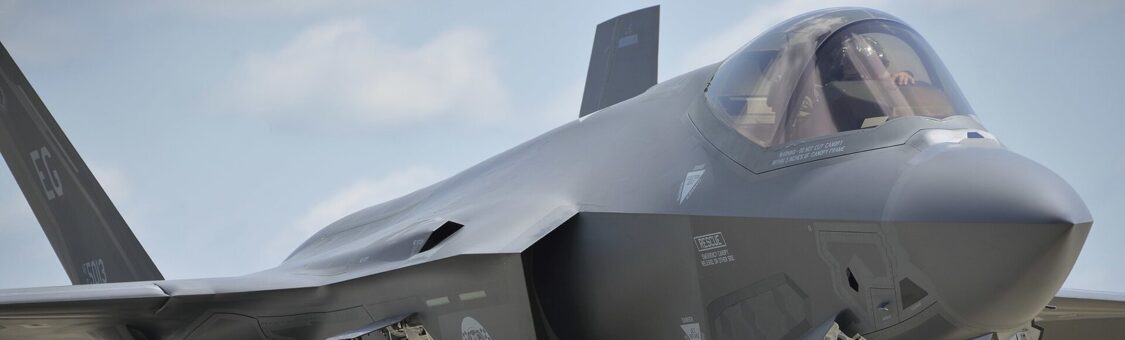
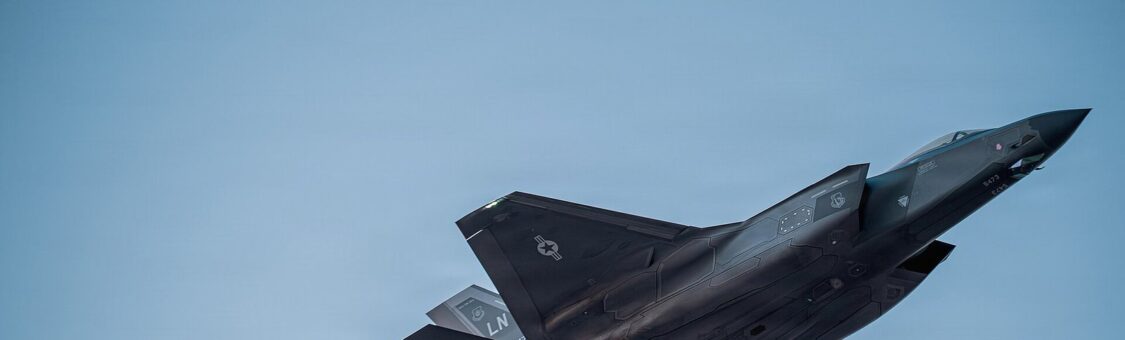
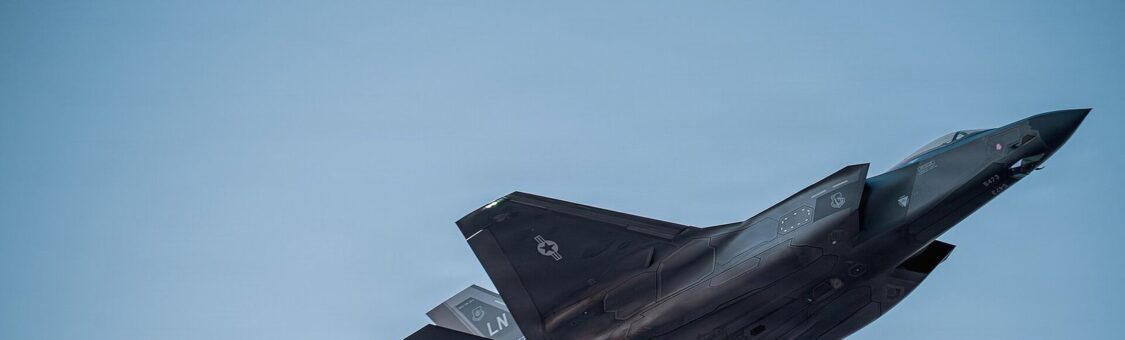
Finland’s first two F-35A Lightning II fighter jets landed at the Lapland Air Wing in Rovaniemi on Sept. 18, 2026, opening the operational phase of a 64-aircraft purchase intended to replace the Finnish Air Force’s aging F/A-18 Hornet fleet.

The aircraft, tail numbers JF-510 and JF-512, departed Lockheed Martin’s factory in Fort Worth, Texas, on Sept. 15 and made a refueling stop at Lajes Air Base in Portugal’s Azores islands before entering Finnish airspace at 5:21 p.m. local time. They landed at Rovaniemi 24 minutes later, escorted by Finnish F/A-18 Hornets. U.S. Air Force pilots flew the transatlantic ferry flight, a standard arrangement for international transfers, and Finland’s national roundels were temporarily covered during the trip while serial numbers and Finnish Air Force tail markings remained visible.

The delivery was originally meant to include a third Finnish jet, JF-511, which could not depart Lajes due to an unidentified technical issue, according to spotters and flight tracking reports. The two arriving jets were part of a group of six F-35As that crossed the Atlantic; three others were bound for the Belgian Air Force.

Finland selected the F-35A in December 2021 over Boeing’s Super Hornet, France’s Rafale, the Eurofighter Typhoon and Sweden’s Gripen, in a deal covering aircraft, weapons, training and sustainment through 2030 valued at roughly 8.4 billion euros, or about $9.5 billion. The purchase followed Finland’s accession to NATO in April 2023.

“The F-35 is one of the most significant capability projects in Finland’s defense, and its ambition level is high,” said Gen. Janne Jaakkola, Commander of the Finnish Defence Forces. “The arrival of the first aircraft in Rovaniemi is not an endpoint, but a beginning: we are building the capacity to use the full potential of the aircraft’s performance, as part of Finland’s defense system and as a seamless part of the alliance’s air defense and strike capability.”

The first eight Finnish-built aircraft, from Lockheed Martin’s 17th production lot, remain in the United States, where Finnish pilots and maintenance personnel are completing initial F-35 training at Eglin Air Force Base in Florida and Ebbing Air National Guard Base in Arkansas. Training in the U.S. is scheduled to continue until early 2028, after which nearly all instruction will shift to Finland. Aircraft mechanic training will begin at Rovaniemi later this year, with pilot training starting in January 2027.

Base construction is proceeding at four locations. Rovaniemi was ready to receive the first aircraft. Work at the Karelia Air Command’s Rissala base is targeted for substantial completion during 2027 so it can receive its first F-35s in 2028, while the Satakunta Air Command at Pirkkala and the Air Force Academy at Tikkakoski are also undergoing construction.

Finland expects to reach initial operational capability in early 2028, when the Lapland Air Wing will fly the F-35 exclusively, and full operational capability by the end of 2030, with deliveries continuing through that year. The Finnish Air Force will operate the F/A-18 Hornet and F-35A in parallel throughout the transition. A formal reception ceremony is planned for Oct. 1, with President Alexander Stubb in attendance.

Sources: Air & Space Forces Magazine · Defence Blog

News

Canadian general faces German rival in NATO Military Committee vote
Bilateral Meeting with NATO Assistant Secretary and NATO Chair of Military Committee (51691903992).jpg Photo: U.S. Embassy and Consulates in Canada

Canadian general faces German rival in NATO Military Committee vote

Top military commanders from 32 NATO nations will vote Saturday on whether Canada’s chief of the defence staff, Gen. Jennie Carignan, or Germany’s Gen. Carsten Breuer will chair the alliance’s Military Committee. The secret-ballot election takes place at a meeting of NATO chiefs of defence staff, according to CBC News.

A victory would make Carignan the first woman to lead the committee in the alliance’s 77-year history and would return Canada to the chair for the first time in almost two decades. The Liberal government of Prime Minister Mark Carney has endorsed her candidacy.

Carignan told CBC News it is “a privilege to be considered,” particularly as the alliance faces heightened tensions with Russia, hybrid attacks and the war in Ukraine. “Don’t get me wrong. I absolutely know what I’m getting myself into, but such an important time to work with NATO as partners,” she said. “And I think I can make a difference in that way.” She said some fellow defence chiefs encouraged her to run.

Defence Minister David McGuinty said Friday that Carignan deserves the job because she has “enormous credibility” and has reached out to her counterparts in all NATO member countries. He said it would be “historical and groundbreaking” for the first woman chief of defence to chair the committee.

The chair of the Military Committee is the alliance’s senior military officer and acts as the bridge between NATO’s political leadership and its military commanders. The committee assesses threats, capabilities and operational requirements and provides military advice to the North Atlantic Council. The current chair is Italian Admiral Giuseppe Cavo Dragone, who took office in January 2025.

The vote comes after Carney’s visit to Strasbourg, France, this week, where European Commission President Ursula von der Leyen proposed Canada becoming the EU’s first “associate member.” U.S. President Donald Trump called the proposal “laughable” and described it as potentially a “hostile act” that would prompt more tariffs.

Steve Saideman, a defence expert at Carleton University, said Carignan “absolutely has a shot” at the position, noting that Carney “probably did his homework and wouldn’t put the name forward if she didn’t have a chance.” He also said the Trump administration could attempt to block consensus. “Trump is not going to let a Canadian or a woman be the head of the military committee, if anybody around him has paid attention to it,” Saideman said. McGuinty said he has no sense of how the Americans will react.

Retired general Ray Henault was the last Canadian to hold the post, serving from 2005 to 2008. He said it took three rounds of balloting to secure his election. The vote will take place during a closed, private session of the committee.

Sources: Ottawa Citizen · Ottawa Citizen

News

Conservatives demand twin probes into GlobalEye surveillance plane purchase
Vigilant Shield 15 141022-F-CR311-784.jpg Photo: Senior Airman Justin Wright

Conservatives demand twin probes into GlobalEye surveillance plane purchase

Federal Conservatives are calling on both the auditor general and the Parliamentary Budget Office (PBO) to investigate whether proper procurement rules were followed in the Liberal government’s plan to acquire up to six Saab GlobalEye surveillance aircraft.

In a statement late Friday, Conservative defence critic James Bezan said Canadians need reassurances that the Defence Investment Agency (DIA) did its homework before embarking on the process.

“Canadians deserve to know if politicians, Liberal staffers and bureaucrats were putting political decisions ahead of national security, defence and operational readiness,” Bezan said. “The auditor general and PBO must determine whether due consideration was given and protocols were observed.”

The demand follows revelations that the GlobalEye, chosen as the air force’s preferred aircraft, meets only a handful of the military’s requirements and will need significant modifications. Sources told CBC News earlier this month that none of the three planes under consideration met the air force’s requirements, and that competitors had not been shown those requirements before Prime Minister Mark Carney announced the preferred aircraft at CANSEC, Canada’s largest arms expo, at the end of May.

The DIA, in a statement responding to the initial CBC News report, said it knew none of the three planes met the requirements and that the GlobalEye was the best choice.

Sources have told CBC News the military is concerned the plane, under its current design, lacks 360-degree radar coverage, and there are also concerns about the range and frequency of its radar. Saab has proposed modifications, including adding radar sets in the nose and tail. Additional concerns include the number of crew stations and connectivity equipment to plug the plane into the NORAD network, which would limit its “control” function during operations. The military is also seeking a radar plane that can be refuelled in flight to cover the Arctic, a feature not currently on the GlobalEye.

Sofiya Sapeha, spokesperson for the Secretary of State for Defence Procurement, said the GlobalEye meets the “government’s requirements” and that the government has been negotiating a term sheet — a non-binding preliminary document — over the past few months.

“There have been conversations about which additional capabilities beyond the Saab baseline could be added to the aircraft, the level of technical and financial risk, operational utility and whether to proceed now, later or not at all,” Sapeha said. “These are normal discussions, and do not indicate Saab’s aircraft had shortcomings or failed to meet the government’s requirements.”

Saab has said it is prepared to meet customer demands and is aware of the Canadian military’s expectations, and has been actively working through the engineering issues.

The request to examine the plan falls within the auditor general’s remit to investigate whether protocols were followed, while the PBO is better positioned to examine cost, financial assumptions and fiscal risks once an agreement with Saab is reached.

Sources: Ottawa Citizen · CBC Politics

News

Hormuz Transits Hit Three-Week High as VLCC Rates Surge
Flickr - Official U.S. Navy Imagery - U.S. Navy ships transit the Strait of Hormuz..jpg Photo: Official Navy Page from United States of America Alex R. Forster/U.S. Navy

Hormuz Transits Hit Three-Week High as VLCC Rates Surge

Transits through the Strait of Hormuz not linked to Iranian-flagged vessels reached a three-week high this week, while charter rates for Very Large Crude Carriers (VLCCs) surged, according to shipping data tracked by USNI News.

The increase in non-Iranian transits, reported as of Sept. 18, 2026, marks the highest level in three weeks. Concurrently, VLCC rates—the cost to charter the giant crude carriers that move most of the Gulf’s oil—exploded, though specific dollar figures were not provided in the source.

The data, compiled from maritime tracking services, reflects a notable shift in the pattern of shipping activity through the strait, a chokepoint for about 20% of global oil consumption. The rise in transits and rates comes amid ongoing regional tensions that have previously disrupted shipping.

The surge in VLCC rates and transit numbers suggests a tightening of available tonnage or increased demand for crude transport, though the source did not specify underlying causes. The trend could influence global oil shipping costs in the coming weeks.

In the same period, the U.S. Navy’s Abraham Lincoln Carrier Strike Group, after more than eight months in the Middle East, transited the Surigao Strait and entered the Philippine Sea on Sept. 15, 2026, according to a social media post. The strike group includes the carrier USS Abraham Lincoln (CVN-72), destroyer USS Frank E. Petersen Jr. (DDG-121), and cruiser USS Robert Smalls (CG-62).

Separately, the Indonesian Navy received the former Italian aircraft carrier ex-ITS Giuseppe Garibaldi (551), which arrived at Tanjung Priok port, Jakarta, on Sept. 18, 2026, to enter service as KRI Sriwijaya. The ship was met by frigates KRI Brawijaya (320) and KRI Prabu Siliwangi (321).

The Hormuz transit and rate data, while not detailed in dollar terms, points to a dynamic shift in the region’s shipping economics, according to the source’s framing.

Sources: USNI News · USNI News

News

US approves $24.3 billion F-35 sale to Saudi Arabia
33rd AMXS Airman performs hot pit refuel on F-35A at Eglin Air Force Base May 2016.jpg Photo: Airman 1st Class Andrea Posey

US approves $24.3 billion F-35 sale to Saudi Arabia

The U.S. State Department on Sept. 17, 2026, approved a possible $24.3 billion sale of 48 F-35 fighter jets to Saudi Arabia, a deal that would make the kingdom the second country in the Middle East, after Israel, cleared to operate the stealth aircraft.

The Defense Security Cooperation Agency notified Congress of the potential sale that day. The package includes 48 conventional-takeoff F-35A jets and 49 Pratt & Whitney F135 engines — one spare beyond the 48 needed to power the aircraft — along with secure communications and navigation equipment, electronic warfare support, training simulators, spare parts, and years of maintenance and logistics support. Lockheed Martin Aeronautics in Fort Worth, Texas, and Pratt & Whitney Military Engines in East Hartford, Connecticut, would be the main contractors.

A congressional notification is not a signed contract. It starts a review period during which lawmakers can object before formal negotiations between the U.S. and Saudi governments can begin. The State Department’s release included standard language saying the deal would not disrupt the regional military balance and would not require sending additional U.S. personnel to Saudi Arabia.

The move follows nearly a year of signals from the Trump administration. President Trump first said the U.S. would sell F-35s to Saudi Arabia in November 2025, ahead of a Washington visit by Crown Prince Mohammed bin Salman, when the two countries also signed an agreement designating Saudi Arabia a major non-NATO ally. Trump repeated the commitment in March 2026, calling the F-35 “perhaps the most capable fighter jet ever built.”

The sale had drawn scrutiny inside the administration over concerns about preserving Israel’s military edge in the region and the risk that F-35 technology could eventually reach China — concerns that also stalled a similar proposed sale to the United Arab Emirates.

Saudi Arabia’s current fighter fleet, built mainly around F-15 variants and Eurofighter Typhoons, has taken losses in the kingdom’s long war against Yemen’s Houthi movement. On Sept. 16, 2026, Houthi forces said they shot down a Royal Saudi Air Force F-15 over Marib governorate, the latest in a string of aircraft losses Riyadh has suffered during years of fighting.

The State Department’s notification says the sale would strengthen Saudi Arabia’s homeland defense and improve its ability to operate alongside U.S., regional and NATO forces, describing the kingdom as capable of absorbing the new aircraft into its military without difficulty. No offset agreement — where a seller commits to investment or work-share in the buyer’s economy — has been proposed yet; any such deal would be negotiated separately between Saudi Arabia and the contractors.

The Saudi embassy in Washington welcomed the proposed sale, describing it as a further step in defense cooperation between the two countries. “The proposed F-35 sale reflects the strength and enduring nature of the Saudi-U.S. strategic partnership and the continued advancement of our defense cooperation,” the embassy said on X.

The sale still needs congressional approval. Lawmakers previously questioned arms deals with Riyadh following the 2018 murder of Saudi journalist Jamal Khashoggi, and some members of Congress remain wary of deepening military cooperation with the kingdom.

Sources: Defence Blog · Defense News

News

Italian Eurofighter damaged in Houthi attack on Saudi air base
31st FW trains with Italian air force Eurofighters (8525939).jpg Photo: U.S. Air Force photo by Airman 1st Class Joseph Bartoszek

Italian Eurofighter damaged in Houthi attack on Saudi air base

An Italian Air Force Eurofighter Typhoon was damaged during a Houthi attack on King Fahd Air Base near Ta’if, Saudi Arabia, overnight between Sept. 17 and 18, 2026, Italian Defense Minister Guido Crosetto confirmed Friday. The aircraft, designated F-2000 by the Italian Air Force, was parked in a remote area of the base when it was struck. No Italian personnel were injured, and no other vehicles or infrastructure used by Italian forces sustained damage, Crosetto said.

Crosetto said he had personally followed the situation overnight in contact with Gen. Luciano Portolano, Italy’s chief of defense staff. He also asked Portolano, Lt. Gen. Giovanni Maria Iannucci, commander of the Joint Operational Command, and Gen. Antonio Conserva, chief of staff of the Air Force, to provide a further assessment of the situation, the conditions of Italian personnel, and possible operational options.

King Fahd Air Base has hosted Task Force Air-Arabia since late March 2026, an Italian Air Force deployment of roughly 300 personnel formed in response to the Gulf crisis and a request for support from partner nations. The task force includes Task Group Typhoon, with four Eurofighter F-2000A jets tasked with helping defend assigned airspace, and Task Group Argo, which operates an E-550A CAEW aircraft for airborne early warning, surveillance and command and control.

The base has come under repeated attack or alert in recent days. Saudi civil defense authorities issued a warning for the province on Sept. 11, later declaring the danger passed, and press reports at the time cited possible missiles directed at the King Fahd Air Base area, though Saudi officials never confirmed the target. On Sept. 14, the Saudi-led coalition confirmed Houthi forces had launched multiple ballistic missiles and drones at Ta’if, Abha and Khamis Mushait.

This is not the first time an Italian aircraft has been hit in the region. In March 2026, during the U.S. and Israeli military campaign against Iran, an Italian MQ-9A Reaper drone was destroyed on the ground at Ali Al Salem Air Base in Kuwait, where Italy also maintains a Eurofighter presence under a separate mission supporting operations against ISIS. Italian and international media reported at the time that two Italian Eurofighter Typhoons stationed there had also been damaged by shrapnel, though the Italian Ministry of Defense never officially confirmed that account.

The extent of the damage to the Eurofighter at King Fahd Air Base has not been disclosed. Crosetto said all security measures to safeguard personnel had already been in place for some time, and that he would receive a first update during a meeting at the Ministry of Defense.

Sources: Defence Blog · The Aviationist

News

US approves $24.3 billion F-35 sale to Saudi Arabia
U S Air Force Fighter Jets Support Operation Epic Fury (9550638).jpg Photo: [null Courtesy]

US approves $24.3 billion F-35 sale to Saudi Arabia

The U.S. State Department on Sept. 17, 2026, approved a possible Foreign Military Sale of 48 F-35A Lightning II fighter jets to Saudi Arabia, with an estimated cost of $24.3 billion. The Defense Security Cooperation Agency notified Congress of the potential sale the same day, starting a review period during which lawmakers can object before formal negotiations begin.

The package includes 48 conventional-takeoff F-35A aircraft and 49 Pratt & Whitney F135 engines, one spare beyond the 48 needed to power the jets. It also covers secure communications and navigation equipment, electronic warfare support, training simulators, spare parts, and years of maintenance and logistics support. Lockheed Martin Aeronautics in Fort Worth, Texas, and Pratt & Whitney Military Engines in East Hartford, Connecticut, would be the main contractors.

The State Department’s notification said the sale would support U.S. foreign policy and national security objectives by improving the security of a major non-NATO ally that is a force for political stability and economic progress in the Gulf region, strengthen Saudi Arabia’s homeland defense, and improve interoperability with U.S., regional, and NATO forces. It stated the kingdom would have no difficulty absorbing the equipment and that the sale would not alter the military balance in the region or require additional U.S. personnel in Saudi Arabia.

The approval follows nearly a year of signals from the Trump administration. President Donald Trump first said the U.S. would sell F-35s to Saudi Arabia in November 2025, ahead of a Washington visit by Crown Prince Mohammed bin Salman, when the two countries also signed a Strategic Defense Agreement that included authorization for the F-35 sale and the purchase of nearly 300 M1 Abrams tanks. Trump repeated the commitment in March 2026, calling the F-35 “perhaps the most capable fighter jet ever built.”

The sale had drawn scrutiny inside the administration over concerns about preserving Israel’s qualitative military edge, a requirement Congress added to the Arms Export Control Act in 2008, and the risk that F-35 technology could eventually reach China. Those concerns also stalled a similar proposed sale to the United Arab Emirates. The notification came a day after Houthi forces claimed they shot down a Royal Saudi Air Force F-15 over Marib governorate, the latest in a string of aircraft losses Riyadh has suffered during years of fighting in Yemen.

The Saudi embassy in Washington welcomed the proposed sale, describing it as a further step in defense cooperation. The notification is not a signed contract; it starts a review period during which Congress can object before formal negotiations between the U.S. and Saudi governments can begin. No offset agreement has been proposed yet; any such deal would be negotiated separately between Saudi Arabia and the contractors.

Sources: Defence Blog · The Aviationist

News

Air Force F-15Es in Middle East Get Drone-Busting Rockets in a Week
U S Air Force Fighter Jets Support Operation Epic Fury (9550633).jpg Photo: [null Courtesy]

Air Force F-15Es in Middle East Get Drone-Busting Rockets in a Week

The U.S. Air Force equipped F-15E Strike Eagles in the Middle East with laser-guided rockets to counter drones in roughly one week, the head of the Air Force Test Center said Sept. 16 at AFA’s Air, Space & Cyber Conference in National Harbor, Md.

Brig. Gen. Mark A. Massaro said that nine days after testing began in May 2025, the system—known as the Advanced Precision Kill Weapon System (APKWS)—was being installed on Strike Eagles in theater. “At the end of the first week, we had demonstrated, both in a developmental and an operational sense, that it was a usable capability, and we deployed that capability at the end of the first week,” Massaro said. Maintainers and testers deployed with the equipment to support the fielding.

The APKWS is a laser-guided kit added to Hydra-70 rockets, originally designed for air-to-ground use. The Air Force explored using the rockets in an air-to-air role in 2019, testing the system on the F-16, and for a few years the experiment was considered nothing more than a proof of concept. The system was rushed to F-16s in 2024 and prioritized for F-15Es in 2025, according to Air & Space Forces Magazine.

The urgency came from the high cost of shooting down cheap drones with existing missiles. AIM-120 AMRAAMs cost roughly $1 million each, and AIM-9 Sidewinders cost hundreds of thousands of dollars, with the AIM-9X around $500,000. APKWS rockets cost tens of thousands of dollars.

During Iran’s mass drone and missile attack on Israel on April 13, 2024, F-15Es from the 335th and 494th Fighter Squadrons and F-16s from the 121st Fighter Squadron intercepted drones over Iraq, but many fighters exhausted their air-to-air missiles. Three F-15E crews unsuccessfully attempted to drop laser-guided JDAM bombs on drones.

Integration work for the F-15E began in mid-2025 at Eglin Air Force Base, Fla., led by the 96th Test Wing’s Air Force Seek Eagle Office (AFSEO), which had earlier integrated the system on F-16s. Aircrew from the 40th Flight Test Squadron and the 85th and 422nd Test and Evaluation Squadrons flew test missions and conducted live-fire tests. The 53rd Wing and 96th Test Wing deployed to deliver equipment and training.

The Air Force has declined to identify the exact location where the system was first fielded, but officials confirmed it was in the Middle East, part of U.S. Central Command. In 2024, Air Forces Central began equipping F-16s with APKWS to shoot down drones, and a U.S. F-16 scored its first rocket kill of a drone that year.

Massaro called the initiative an example of the Air Force Test Center’s ability to “bridge between raw concept and decisive combat-credible power.”

Sources: Defence Blog · Defence Blog

News

Two Sailors Plead Guilty to Dealing Fentanyl-Laced Pills on USS Abraham Lincoln
US Navy 030323-N-1810F-011 Flight deck personnel launch from the flight deck of the aircraft carrier USS Kitty Hawk (CV 63).jpg Photo: U.S. Navy photo by Photographer's Mate 3rd Class Todd Frantom.

Two Sailors Plead Guilty to Dealing Fentanyl-Laced Pills on USS Abraham Lincoln

Two U.S. Navy sailors pleaded guilty to dealing fentanyl-laced pills aboard the aircraft carrier USS Abraham Lincoln, according to a report published Sept. 18.

The guilty pleas follow an investigation that began after one sailor died and another was hospitalized from suspected overdoses on the ship. The sailors now face prison sentences and major financial penalties, according to the report.

The report did not name the two sailors, specify their ranks, or detail the number of pills involved, the dates of the overdose incidents, or the specific terms of the plea agreements, including the length of any proposed sentences or the amounts of the fines.

Sources: DVIDS News · Naval News

News

Coast Guard, FBI board two US-bound vessels after suspected hacker intrusions
USCGC Bertholf conducts CIWS gunnery exercise in Timor Sea Photo: PO3 Trinity Whalen

Coast Guard, FBI board two US-bound vessels after suspected hacker intrusions

U.S. Coast Guard and FBI personnel boarded two commercial vessels bound for the United States in the Gulf of Mexico last month after indications that hackers had broken into their computer networks, the agencies said on Thursday.

The joint boardings took place on Aug. 21 and Aug. 24 aboard two foreign-flagged ships, according to the FBI, which said the teams acted after receiving “indications that the networks of both vessels were compromised.” The Coast Guard, which referred only to the Aug. 21 boarding, said that “foreign cyber actors” were involved but did not identify them.

Neither agency provided further details about the incidents or explained the discrepancies between their accounts. The U.S. Cybersecurity and Infrastructure Security Agency referred questions back to the Coast Guard.

Corey Ranslem, CEO of maritime security group Dryad Global, said that his firm had confirmed that one of the ships was the Liberian-flagged VL Prosperity. The vessel is currently anchored in waters off the U.S. Gulf Coast, he said.

The operation comes as U.S. authorities grapple with a series of cyber incidents that media reports have linked to Iran since the outbreak of conflict between Washington and Tehran, according to Reuters.

Sources: DVIDS News · USNI News