News

News

Canadian military to create new security force as F-35s arrive
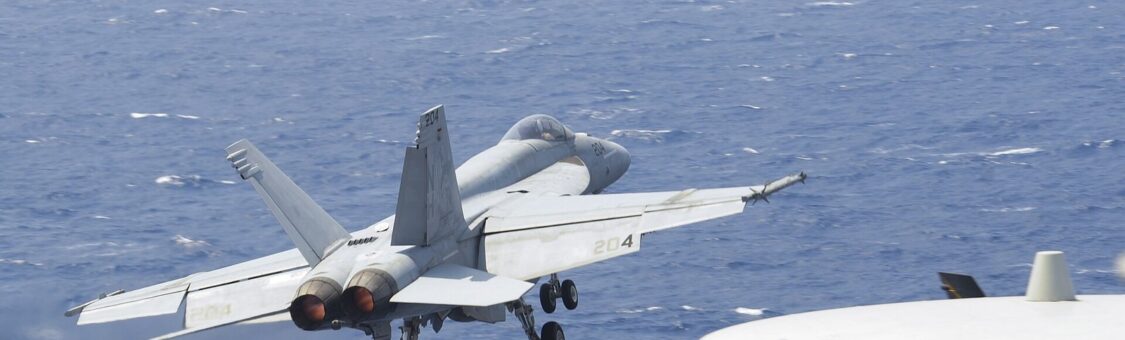
Royal Canadian Air Force, RIMPAC 2014 140721-N-FC670-008.jpg Photo: Petty Officer 1st Class Shannon Renfroe

Canadian military to create new security force as F-35s arrive

The Royal Canadian Air Force will create a new military security force to protect its incoming F-35 fighter jets, with personnel training scheduled to begin in 2026, according to the RCAF commander.

Lieutenant-General Eric Kenny, commander of the Royal Canadian Air Force, outlined the plan in a recent interview. The new unit will be responsible for providing security for the F-35 fleet, which Canada is acquiring under a contract for 88 aircraft.

Kenny said the force will be stood up as part of the air force’s broader preparations for the F-35’s arrival.

The commander said the security force will draw personnel from existing Canadian Armed Forces trades, with members receiving specialized training for the role. He said the training pipeline for the new force will begin in 2026.

Kenny said the force structure change is part of the RCAF’s transition as it moves from the CF-18 Hornet to the F-35. The new security unit will be tasked with protecting the aircraft both at their main operating base and during deployments.

The announcement comes as the air force prepares for the first F-35 deliveries.

The RCAF commander said the new security force represents a concrete step in the service’s restructuring around the fifth-generation fighter. He said the unit will be fully integrated into F-35 operations once the aircraft reach initial operational capability.

Sources: Ottawa Citizen · Ottawa Citizen
News

Denmark Deploys F-35s to Greenland for First Time Under NATO Arctic Sentry
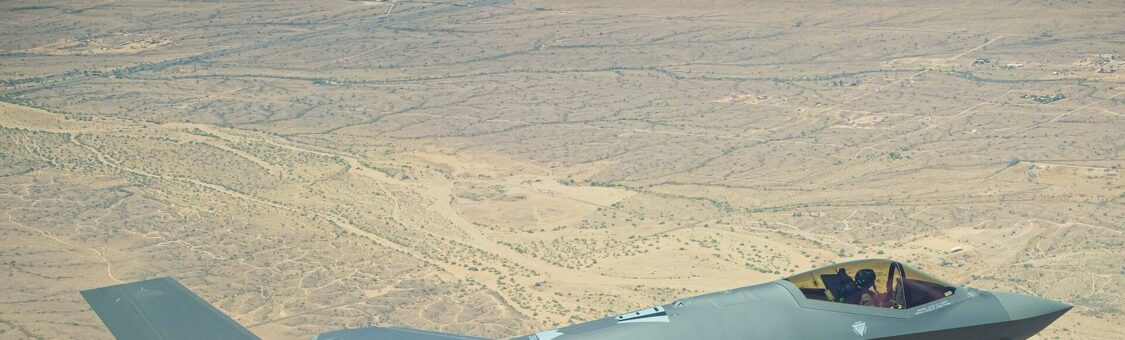
Denmark F-35A embarks on first training flight over Luke AFB.jpg Photo: Airman 1st Class Dominic Tyler

Denmark Deploys F-35s to Greenland for First Time Under NATO Arctic Sentry

Royal Danish Air Force (RDAF) F-35A Lightning IIs landed at Kangerlussuaq Airport in Greenland on Sept. 16, 2026, marking the first deployment of the fighter to the territory, alongside U.S. Air Force F-16s and Royal Canadian Air Force (RCAF) CF-18s as part of NATO’s Arctic Sentry initiative.

The Danish Defence Command said the deployment was part of Arctic Sentry, an initiative launched in February 2026. The Danish contribution included several F-35s deployed from Keflavik, supported by a KC-135 Stratotanker, according to the Forsvaret.

The U.S. and Canadian aircraft operated from Goose Bay in Canada before moving to Greenland under Operation Arctic Vanguard, a NORAD deployment. The Alaskan NORAD Region moved F-16s from Eielson Air Force Base to Goose Bay, in Canada’s Newfoundland and Labrador province, for Operation ARCTIC VANGUARD 26-4.2. Royal Canadian Air Force strategic airlift supported the move. NORAD said the deployment tests whether it can move multirole combat aircraft from Alaska to forward Arctic locations, stage them through northeastern Canada, and keep them flying in sub-zero weather with little support infrastructure. The command has not released results or said how many F-16s or personnel are involved, or where in Greenland they will operate.

Images released by the Danish Defence, DVIDS and NATO show two RDAF F-35As, four USAF F-16s and two RCAF CF-18s arrived at Kangerlussuaq airport. The Forsvaret emphasized the challenges associated with the multinational, long-range deployment in extreme Arctic conditions. The F-16s are not the only U.S. fighters working in Greenland under the same operation name; F-35A fighters from the Wisconsin Air National Guard’s 115th Fighter Wing had flown missions from Pituffik Space Base under Operation Arctic Vanguard. In October 2025, NORAD sent two F-35s, two F-16s and three KC-135s for an exercise meant to test how quickly it could deploy forces to the Arctic.

Separately, Denmark, Greenland and the United States are set to sign a deal on Greenland’s security on Tuesday, an agreement Denmark says will put Arctic security under NATO’s watch rather than leaving it solely to Washington and Copenhagen. The agreement, expected to be signed at the UN General Assembly in New York, has not been made public. Danish Foreign Minister Lars Lokke Rasmussen told national broadcaster TV2 that “it (the agreement) will be in a form where responsibility for security in the Arctic is not only Danish or American,” adding that to a large extent “it would be NATO that looks after the Arctic.” A NATO spokesperson said on Saturday the alliance welcomed the agreement, which would “help advance security, stability and cooperation in this vital region.”

President Donald Trump said in a post on Truth Social on Friday the agreement gives the United States “permanent control over security, and all other needs, in Greenland,” and that no U.S. adversary could have a base or military presence there without Washington’s written approval. Denmark has not responded to Trump’s claim, though Copenhagen has earlier acknowledged it underinvested in Greenland’s defense for decades and has pledged to expand its military presence on the island, including more NATO troops. Key details have not been made public, including whether the deal amends the 1951 defense agreement that is the legal basis for the U.S. presence.

NORAD has not said how long the F-16s will stay in Greenland or when they will return to Alaska.

Sources: US Army · Defense News

News

Navy Awards Boeing First MQ-25A Stingray Production Contract
USS Nimitz conducts flight operations. (9677566243).jpg Photo: Official U.S. Navy Page from United States of America MC3 Phil Ladouceur/U.S. Navy

Navy Awards Boeing First MQ-25A Stingray Production Contract

The U.S. Navy awarded Boeing a $562 million fixed-price incentive contract for Lot 1 Low-Rate Initial Production (LRIP) of the MQ-25A Stingray carrier-based unmanned aerial refueler, the service and company announced. The contract funds three Lot 1 aircraft and includes advanced procurement funding for long-lead components to support an additional three aircraft under Lot 2. Initial deliveries are slated to begin in 2029.

The production award follows the MQ-25A’s first flight from MidAmerica St. Louis Airport in Mascoutah, Illinois. During the roughly two-hour flight, the aircraft demonstrated autonomous taxi, takeoff, flight, and landing, while validating basic flight controls, engine performance, and handling characteristics under ground control station commands. That flight paved the way for Milestone C approval, formally transitioning the program out of the Engineering and Manufacturing Development phase and into production.

The MQ-25A features a wing-body-tail airframe spanning 51 feet in length with a 75-foot wingspan that folds down to 31.3 feet for carrier deck handling. It is powered by a single Rolls-Royce AE 3007N turbofan engine generating over 10,000 pounds of thrust. The Navy’s core requirement specifies that the Stingray can deliver between 14,000 and 16,000 pounds of fuel to tactical jets at a range of 500 nautical miles (approximately 926 kilometers) from the carrier.

With the production line active and initial builds underway at Boeing facilities, the Navy-Boeing team is focused on mitigating technical risks, preparing operator training programs, and executing subsequent full-rate production decisions.

Sources: DVIDS News · Defence Blog

News

Space Development Agency Issues RFP for Global Missile-Tracking Ground Station Network
Space Based Infrared System Mission Control Station Block 10 Ground System begins operational missions (2001552309).jpg Photo: Staff Sgt. Darren Scott

Space Development Agency Issues RFP for Global Missile-Tracking Ground Station Network

The U.S. Space Development Agency released a formal request for proposals on September 18 for ground stations that will support its next-generation missile-tracking satellites, with proposals due November 2.

The solicitation covers Ground Entry Points (GEPs) for the agency’s Resilient Missile Warning Tracking satellites in low Earth orbit. These ground stations will receive tracking data from the satellites and pass it into the U.S. military’s missile warning network.

The contract scope includes building and equipping communications shelters, installing antennas and antenna electronics, setting up optical terminals and associated electronics, and providing networking equipment and software. The stations will be built at multiple locations worldwide, though the agency has not disclosed specific sites.

The Space Development Agency plans to award an Indefinite Delivery Indefinite Quantity (IDIQ) contract, allowing it to order work over time. An initial task order will be issued alongside the base contract award. The base period of performance runs from March 31, 2027, through September 30, 2031, with an optional extension through September 30, 2035.

Contract line items cover labor for development, site and terminal maintenance, civil engineering for site construction, and hardware such as RF antennas, optical terminals, and networking gear. The agency expects to announce an award in the second quarter of fiscal year 2027.

Company questions on the solicitation are due October 2. Firms seeking access to a bidders’ library with technical specifications must hold an active Joint Certification Program certification and submit their CAGE code and SAM.gov registration. Some technical volumes are Controlled Unclassified Information or classified, and interested companies must contact the agency directly to request them.

The notice does not disclose a total contract value or ceiling for the IDIQ vehicle. The Space Development Agency cautioned that funding is not yet in place, and the government’s obligations depend on appropriated funds becoming available. The agency said it reserves the right to make no award at all depending on the quality of proposals and its continuing need for the capability.

Sources: Defence Blog · Defence Blog

News

US forces strike suspected drug vessel in Caribbean Sea, killing 4
Coast Guard Cutter Bear returns home following a counter-narcotic patrol in the Eastern Pacific Ocean Photo: Coast Guard

US forces strike suspected drug vessel in Caribbean Sea, killing 4

US forces struck a suspected drug-smuggling vessel in the Caribbean Sea, killing four people, according to a report published September 20, 2026, by Stars and Stripes.

The operation, described as a counter-narcotics strike, targeted a boat believed to be involved in drug trafficking.

No US military casualties were reported in the incident.

Sources: Stars and Stripes · Stars and Stripes

News

Air Force to Brief Industry on F-16 Mission Computer Upgrade
230320-F-LY743-2410 - Red Flag-Nells 23-2 Night Ops.jpg Photo: Senior Airman Zachary Rufus

Air Force to Brief Industry on F-16 Mission Computer Upgrade

The U.S. Air Force will hold a two-day industry day October 20-21 at Wright-Patterson Air Force Base, Ohio, to brief companies on a new mission computer upgrade for its F-16 fighter fleet, according to a notice posted September 18 by the Air Force Life Cycle Management Center.

The event covers the Next-Generation Mission Computer program, an effort to replace the onboard computer that runs combat systems on F-16 Block 40, 42, 50 and 52 aircraft. These are the Air Force’s more heavily upgraded F-16 variants, flown by both active-duty and Air National Guard units.

A fighter’s mission computer is the hub that ties together its radar, sensors, weapons and cockpit displays, translating data from each system into information the pilot can act on. Older F-16 computers were designed decades ago and have limited processing power and memory by modern standards, which constrains how much new equipment—such as updated radars, jamming pods or precision weapons—the jet can actually use at once. A newer computer with more processing headroom lets the Air Force add capability to the airframe without redesigning the whole aircraft, which is generally far cheaper than buying new jets outright.

The notice does not detail which specific systems or weapons the new computer needs to support, so the exact scope of the capability upgrade is not yet public.

The Air Force will hold the sessions at the Hope Hotel and Conference Center on base, with a welcome briefing, hardware and software overviews, and a large group question and answer period on the first day. Both days include 25-minute one-on-one meetings between company representatives and a government panel that includes the program manager, contracting officers and technical leads.

Attendance is capped at 80 people total, with each company limited to two representatives. Companies can register for up to 24 one-on-one meeting slots, booked separately through a scheduling link included in the notice. Registration, including company name, CAGE code and attendee information, is due October 14 at 5 p.m. Eastern time. The Air Force said it will not reimburse travel costs or expenses tied to preparing materials for the event.

Companies can also submit up to three questions in advance for the panel discussion using a template the Air Force attached to the notice.

The industry day follows a sources sought notice the Air Force issued earlier under a related solicitation number, which the agency is using to gauge which companies could handle the upgrade work before deciding how to structure a formal competition. No request for proposals has been issued, and the Air Force said in the notice that the event does not commit the government to awarding a contract.

The notice does not disclose a program budget, contract value or how many F-16 aircraft would ultimately receive the new mission computer. It also does not specify a timeline for a follow-on solicitation once the industry day concludes.

Sources: DVIDS News · DVIDS News

News

Space Force Seeks On-Demand Orbital Inspection Satellites
Falcon 9 Launches O3b mPOWER-F from Cape Canaveral Photo: SSgt Spencer Contreras

Space Force Seeks On-Demand Orbital Inspection Satellites

The U.S. Space Force is seeking industry proposals for satellites that can rendezvous with and inspect objects in orbit, according to a request for information (RFI) published September 18 by Space Systems Command.

The RFI asks companies to pitch designs for a spacecraft that can chase down another object in space, close in until it’s practically touching it, and inspect or interact with it. The program falls under the Space Force’s VICTUS line, which aims to get a satellite off the shelf and into orbit in days rather than years.

The baseline requirement is a satellite that can sit ready at a contractor’s facility for up to two years, then launch within 14 days of a call-up. The Space Force is also floating a faster tier where a satellite kept on a shorter alert cycle would need to fly within 36 hours, or even 12 hours under the most demanding scenario. Those tighter numbers are stretch goals for now, not hard requirements.

Once in orbit, the spacecraft needs to close the gap to zero meters from its target, whether that’s a piece of debris or a cooperating satellite, then move to a different orbit and do it again. The Space Force wants this to work in low orbit, medium orbit and the highly elliptical path satellites take on their way to geostationary orbit, with enough fuel on board to make more than a dozen major maneuvers.

The agency also wants a satellite bus that isn’t locked to one company’s hardware. Any qualified vendor’s sensor or payload should be able to bolt on, using an open standard the RFI calls Handle 2.0, so the government isn’t stuck with a single supplier for the life of the program.

Companies responding to the RFI don’t need a formal proposal. The Space Force wants straight answers: what security clearances the company holds, what facilities it has for building satellites, and proof of flight heritage since January 2021, with at least two satellites already flying in low orbit or one in geostationary orbit by January 2027.

Submissions are due October 19, capped at 15 pages as a white paper or 20 as a slide deck, plus a rough cost breakdown covering engineering, hardware, software, testing and support. Incomplete submissions won’t be reviewed.

The request lands three days after Air Force Secretary Troy Meink told a conference audience the United States already has weapons in orbit. “This is why the United States now has, on orbit, space-control weapons, capable of defending the joint force against hostile adversaries,” Meink said September 15. He gave no details on what the weapons are, how many exist, or when they went up, and nothing in this week’s RFI ties the rendezvous satellite program to that disclosure. Space policy researcher Victoria Samson said she couldn’t recall a U.S. official ever saying something like that before. Meink also mentioned a prototype satellite for tracking moving targets set to launch this month, and said space-based interceptors for the Golden Dome missile shield are ready to fly.

This is still market research, not a contract in the making. The Space Force hasn’t set a budget, hasn’t promised a follow-on solicitation, and is aiming for the first satellites to fly sometime in fiscal year 2029, a date that depends on how the rest of the acquisition plan comes together.

Sources: Air & Space Forces Magazine · Defence Blog

News

Pentagon names top performers in Gauntlet 2 drone competition, plans to buy 60,000 systems
U S Army Europe and Africa hosts Best Drone Warfighter Competition (9803617).jpg Photo: U.S. Army photo by Staff Sgt. Jamie Robinson

Pentagon names top performers in Gauntlet 2 drone competition, plans to buy 60,000 systems

The Defense Department this week announced the winners of the second “Gauntlet” competition under its Drone Dominance Program, the Pentagon’s signature effort to rapidly field low-cost drones, and said it plans to purchase about 60,000 systems from the top-performing vendors.

The program, which began last year, is jointly managed by the Defense Innovation Unit and the Test Resource Management Center, with Naval Surface Warfare Center, Crane Division serving as the contracting authority. The department aims to acquire more than 200,000 unmanned aerial systems across several phases of the initiative by 2027.

Gauntlet 2 took place in recent weeks and included two mission areas: deep strike and close quarters battle. According to the Defense Innovation Unit, operators flew 1,858 sorties across 23 platforms from 19 companies. Each of the 11 platforms evaluated at long distance made it to 15 km, compared with only 24% of drones managing to reach 10 km in Gauntlet 1.

The deep strike leaderboard was topped by Perennial Autonomy, followed by Hyperscale, Neros, Skycutter and Swarm Defense Technologies. In the close quarters battle category, Neros came in first with a score of 88.1, followed by ORQA US LLC at 82.8, XTEND Reality Inc. at 80.2, Vector at 78.2 and ModalAI Inc. at 74.3, according to the program’s published scoring.

XTEND said on September 16 that it delivered and demonstrated 120 of its STRIKER systems for the evaluation. Vector said in a LinkedIn post that its selection came with orders for up to 5,000 systems, part of a combined allocation across confined environments and deep strike mission areas that the program has set at 60,000 units total. Vector also said it received orders for its high-voltage electronic safe and arm device, and that it is the only American company to win awards for both unmanned systems and that arming hardware in the Gauntlet II flyoff.

Other performers in Gauntlet 2 that did not make the deep strike leaderboard included Ascent Aerosystems, Auterion Government Solutions, Griffon Aerospace, ORQA US, Stellarion and UDD Tech Corp. Close quarters participants that did not make the leaderboard included Griffon Aerospace, Grim Tech, a team of Mountain Horse and AG3 Labs, Renegade UxS, Skycutter, Teal Drones and Wilcox Cherry Defense.

Compared with Gauntlet 1, officials said the drones are “cheaper, more capable, and sourced from a supply chain more closely tied to the American industrial base.”

Officials are planning to kick off Gauntlet 2.5 next month, focused on so-called “bomber” drones. Gauntlet 3 is slated to start about six months after Gauntlet 2, and Gauntlet 4, billed as the final Gauntlet under the program, is expected to take place about six months after Gauntlet 3 wraps up.

Sources: Military.com · DefenseScoop

News

Fisherman Recovers Shahed-136 Clone Off Florida; Eglin AFB Confirms Lost Drone
4 RS beds down RQ-4 Global Hawk mission at Yokota Air Base Photo: SrA Jacob Wood

Fisherman Recovers Shahed-136 Clone Off Florida; Eglin AFB Confirms Lost Drone

A Florida fishing charter boat recovered a delta-wing drone from the water near Eglin Air Force Base on Saturday, and the installation confirmed it recently lost a drone during a test but would not confirm it was the same aircraft.

Capt. Daniel Arsenault, with Hot Spots Charters, spotted the object at a distance and pulled it aboard with help from his passengers, according to charter captain Charlie Green, who shared images of the recovery. The drone closely resembles a clone of the Iranian Shahed-136, specifically the U.S. military’s Low-Cost Uncrewed Combat Attack System (LUCAS) target version built by SpecktreWorks and designated FLM-136. The recovered drone was missing its engine, propeller, and nose cone, which is common after water impacts, Green said.

An Eglin AFB spokesperson told The War Zone: “I can confirm that we were doing a test and the test article went down,” but declined to provide details on the type of drone, when it was lost, or where it went down. The spokesperson referred questions to the Pentagon, which could not immediately provide additional details. Green said Arsenault notified local agencies, and the drone was eventually collected by one of them, though he did not know which.

Eglin AFB is home to the 96th Test Wing, which oversees the Eglin Gulf Test Range, providing approximately 120,000 square miles of overwater airspace from the Florida panhandle to the Florida Keys, plus 724 square miles of land range with 70 test and training areas. The Air Force operates a handful of 120-foot boats, operated by a contracted crew from Florida Offshore, that recover around 100 drones each year from these waters.

The FLM-136 was originally designed to mimic one-way attack munitions, specifically the Shahed-136, for testing and training before being weaponized into LUCAS. LUCAS was used in combat for the first time on Feb. 28 during Operation Epic Fury. Navy Capt. Tim Hawkins, a CENTCOM spokesperson, said in December that LUCAS costs approximately $35,000 per platform and provides “cutting-edge capabilities at a fraction of the cost of traditional long-range U.S. systems.”

This is not the first time a drone has washed ashore in Florida; in 2021, beachcombers in Palm Beach County found a U.S. Air Force BQM-167A target drone. The Eglin spokesperson did not say what happens next regarding the recovered drone or any investigation.

Sources: Defense One · Defence Blog

News

Navy seeks carrier-based combat drone proposals with $30 million per-unit target
011218-N-9769P-047 F-A-18 With Weapons Ready for Mission.jpg Photo: U.S. Navy photo by Photographer's Mate 3rd Class Jayme Pastoric.

Navy seeks carrier-based combat drone proposals with $30 million per-unit target

The U.S. Navy is asking defense companies to pitch designs for a carrier-launched combat drone that could fly, fight and land on aircraft carriers alongside manned fighters, according to a request for information released August 31 by Naval Air Systems Command (NAVAIR). The Navy set an affordability target of $30 million per unit.

The RFI covers the first increment of the Navy’s Collaborative Combat Aircraft program, run by the Future Advanced Capability Program Office, known as PMA-228. The Navy wants an autonomous, weaponized unmanned aircraft capable of taking off from and landing on Gerald R. Ford-class and Nimitz-class carriers using their catapults and arresting gear, then operating alongside 4th and 5th generation fighters in high-threat environments.

Companies that respond are expected to build two working prototype aircraft and get them through shore-based carrier certification testing within three years of any resulting agreement, according to the RFI. The Navy also said it wants the design’s size and deck footprint to stay within the limits of existing 4th generation fighters, so it does not disrupt how carriers already handle aircraft on deck.

The aircraft would need to carry up to four weapons weighing as much as 2,500 lbs (1,134 kg) each on external stations, fly at standard carrier air wing cruise speeds, and operate in sea states up to Sea State 5. The Navy also wants the design to work from austere locations with minimal support equipment, not just from a carrier deck.

Autonomy is central to the requirement. The Navy is asking for aircraft capable of both mission-level autonomy, covering tasks like flight planning and target work, and separate flight-safety autonomy that would need its own Navy airworthiness certification. Companies must show how they would divide those two systems while still letting the aircraft team with manned fighters, a concept the Navy calls Manned-Unmanned Teaming.

For command and control, the RFI asks bidders to show their aircraft can work with the Navy’s MD-5 Unmanned Carrier Aviation Mission Control System, the same ground control architecture used for the MQ-25 Stingray refueling drone. The Navy specifically said any integration approach needs to avoid requiring changes to the MQ-25 itself.

The Navy is treating this as a cost-sharing prototype effort rather than a traditional contract. Under the Other Transaction Authority framework cited in the RFI, companies would be expected to put up significant financial investment of their own alongside government support such as range access and test facilities, structured to meet the requirements of federal law governing this type of prototype agreement.

An Industry Day originally planned for September 22 at the University System of Maryland’s Southern Maryland campus was postponed, NAVAIR said in a September 18 update. The agency has not announced a new date and said it will post updated registration details on SAM.gov. The postponement does not change the RFI’s original response deadline, which had already passed by the time of the update.

The Navy’s program mirrors an existing U.S. Air Force effort of the same name. The Air Force selected Anduril’s Fury, designated YFQ-44A during prototyping, and General Atomics’ YFQ-42A in April 2024 for the first increment of its own Collaborative Combat Aircraft program, which pairs semi-autonomous fighter drones with crewed jets such as the F-22 and F-35. The Air Force moved Anduril’s aircraft into production in June 2026 and has said it could order between 100 and 150 aircraft under that program’s first phase, though it has not disclosed how the order will split between the two designs.

Sources: DVIDS News · Defence Blog