News

News

Air Force Secretary Confirms US Has Weapons in Orbit
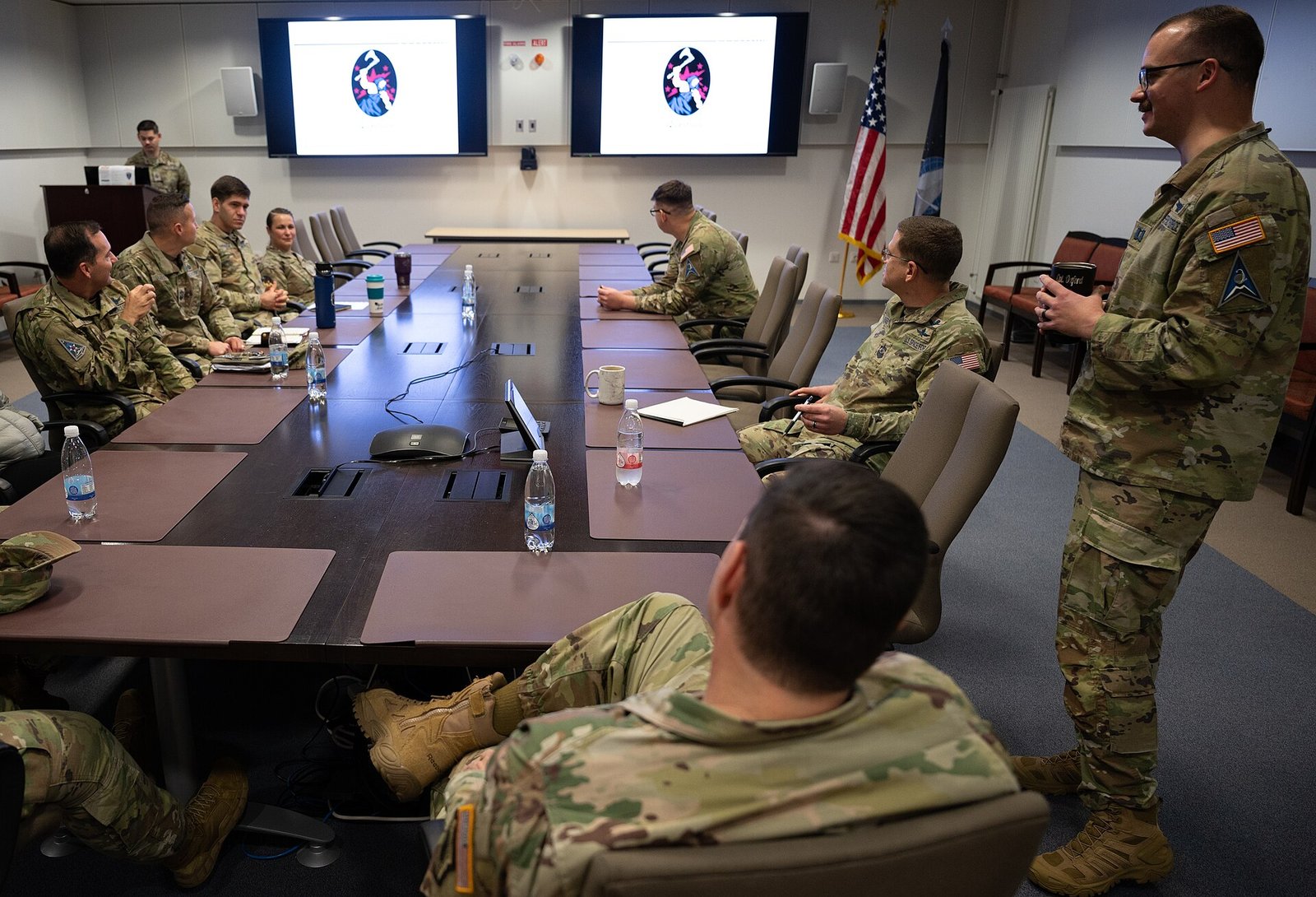
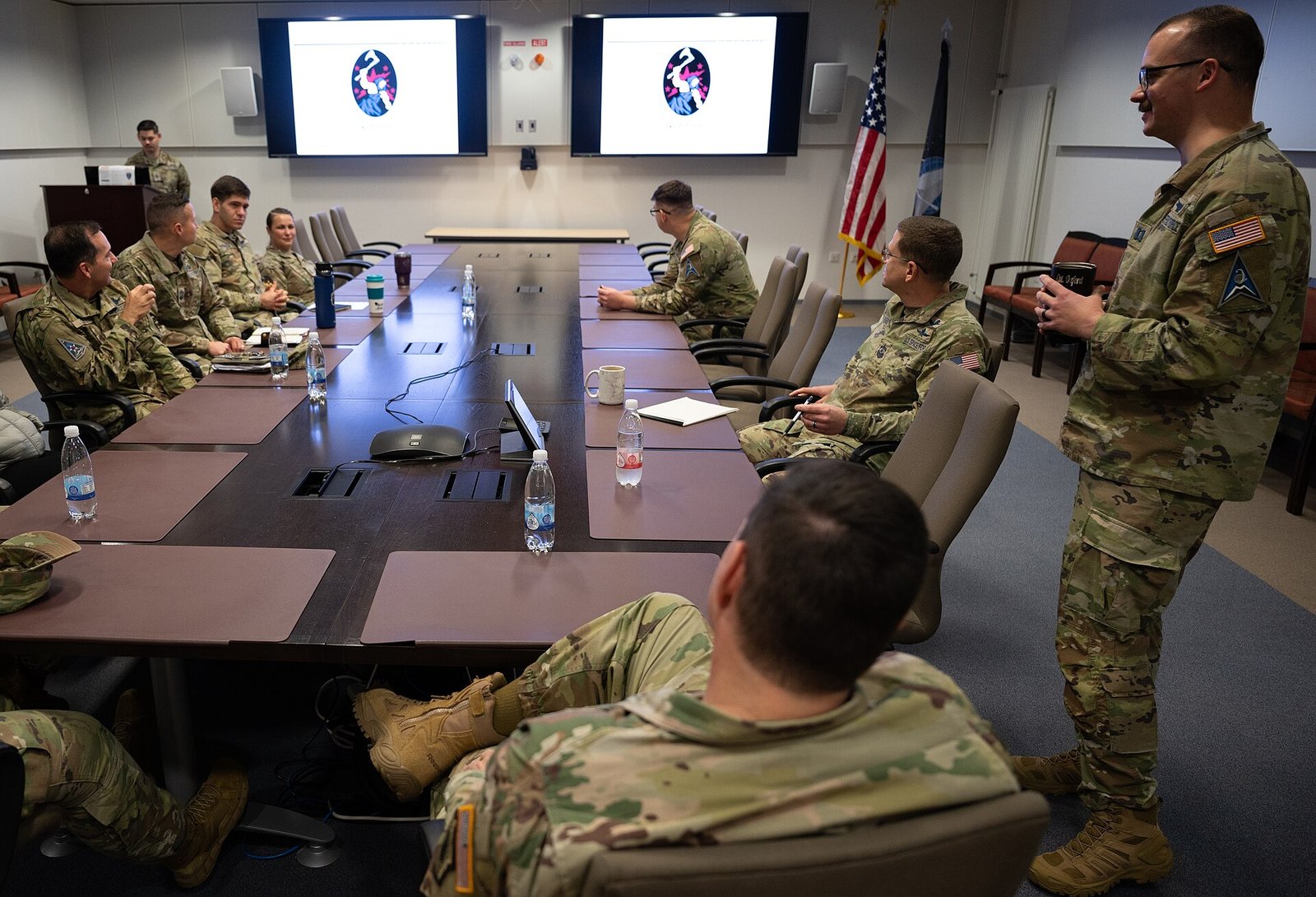
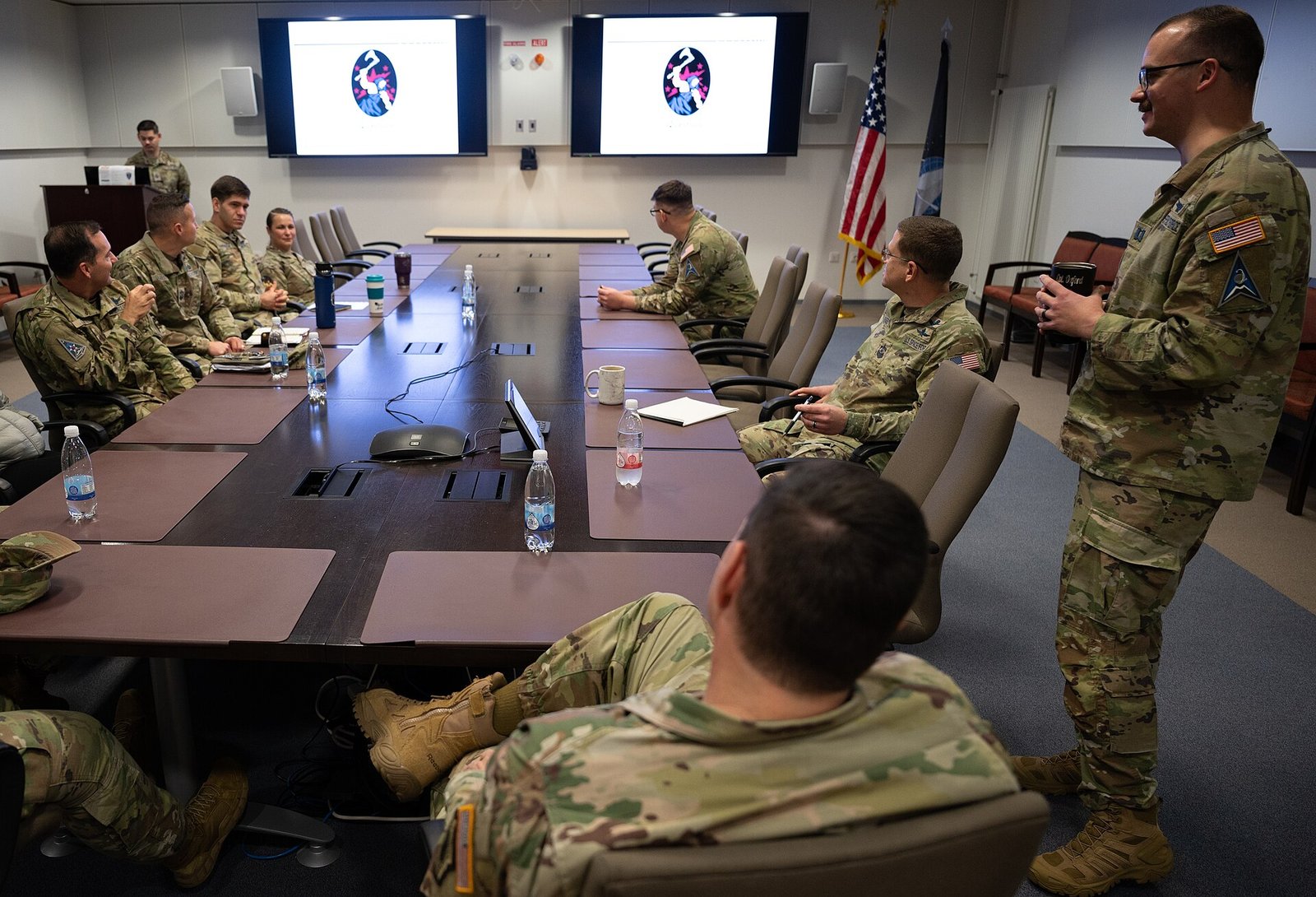
Chief of Space Operations visits U S Space Force locations around KMC (8165855).jpg Photo: U.S. Air Force photo by Senior Airman Edgar Grimaldo

Air Force Secretary Confirms US Has Weapons in Orbit

Air Force Secretary Troy Meink announced Monday that the United States has deployed on-orbit space control weapons capable of defending the joint force against hostile adversary action. Meink made the statement during a keynote address at the Air & Space Forces Association’s 2026 Air, Space & Cyber Conference, marking the most direct public acknowledgment by a U.S. official to date of such a capability.

Meink did not specify the type of weapons, how many are in orbit, when they were launched, or their capabilities. He declined to comment on those details during a media roundtable following his speech, saying only that his phrasing was “well thought out.”

“It is critically important that we maintain our dominance not only in the air but in space, and so that we’ve had to take steps to make sure that when we’re threatened, we can take care of that,” Meink said. He added that for more than a decade, the U.S. has been aware that adversaries such as China and Russia were developing their own capabilities to threaten U.S. systems.

“As everybody knows, there have been many who are developing capabilities to take those away from us, to threaten those things,” Meink said. “So, it is critically important that we maintain our dominance not only in the air but in space, and so that we’ve had to take steps to make sure that when we’re threatened, we can take care of that.”

Victoria Samson, chief director of space security and stability at the Secure World Foundation, told Defense One she could not recall a prior instance of a U.S. government official making a comparable statement. “Well, that’s huge, because I don’t think any US government official has ever said that before,” Samson said. She said the admission could prompt China and Russia to be more open about their own orbital weapons programs. “The US also now has to accept the Chinese and Russians doing/saying the same. I don’t think that this is going to be in the interest of US national security,” Samson said.

Samson also speculated that the weapons are likely not kinetic, citing repeated official cautions about orbital debris. “I’m going to guess what he’s talking about is not a kinetic space-control weapon due to multiple comments government officials have said about avoiding debris causing counter space,” she said. “So I’m going to go with my first guess: space-based jammers, electronic warfare.”

In the same speech, Meink disclosed progress on two other space programs. He said prototype satellites for the space-based Airborne Moving Target Indicator constellation, designed to track moving targets from orbit, will launch this month. He also said space-based interceptors, the technology at the center of President Donald Trump’s Golden Dome missile defense program, are now “flight ready.”

Space Force Gen. Michael Guetlein, Golden Dome’s direct-reporting program manager, warned last month that the project would be in dire straits if Congress does not commit additional money. Guetlein said initial development work on the interceptors was underway and that the Space Force had completed two “phenomenally successful” tests. “All of the providers that are part of the competition are progressing exceptionally well,” Guetlein told reporters at the Space and Missile Defense Symposium.

Meink did not disclose a timeline for revealing further details about the on-orbit weapons, and the Department of War has not issued a follow-up statement expanding on his remarks.

Sources: Defense News · Air Force Times · Air Force Times · Defence Blog
News

Navy Awards Boeing $562M Contract for First MQ-25A Stingray Production Lot
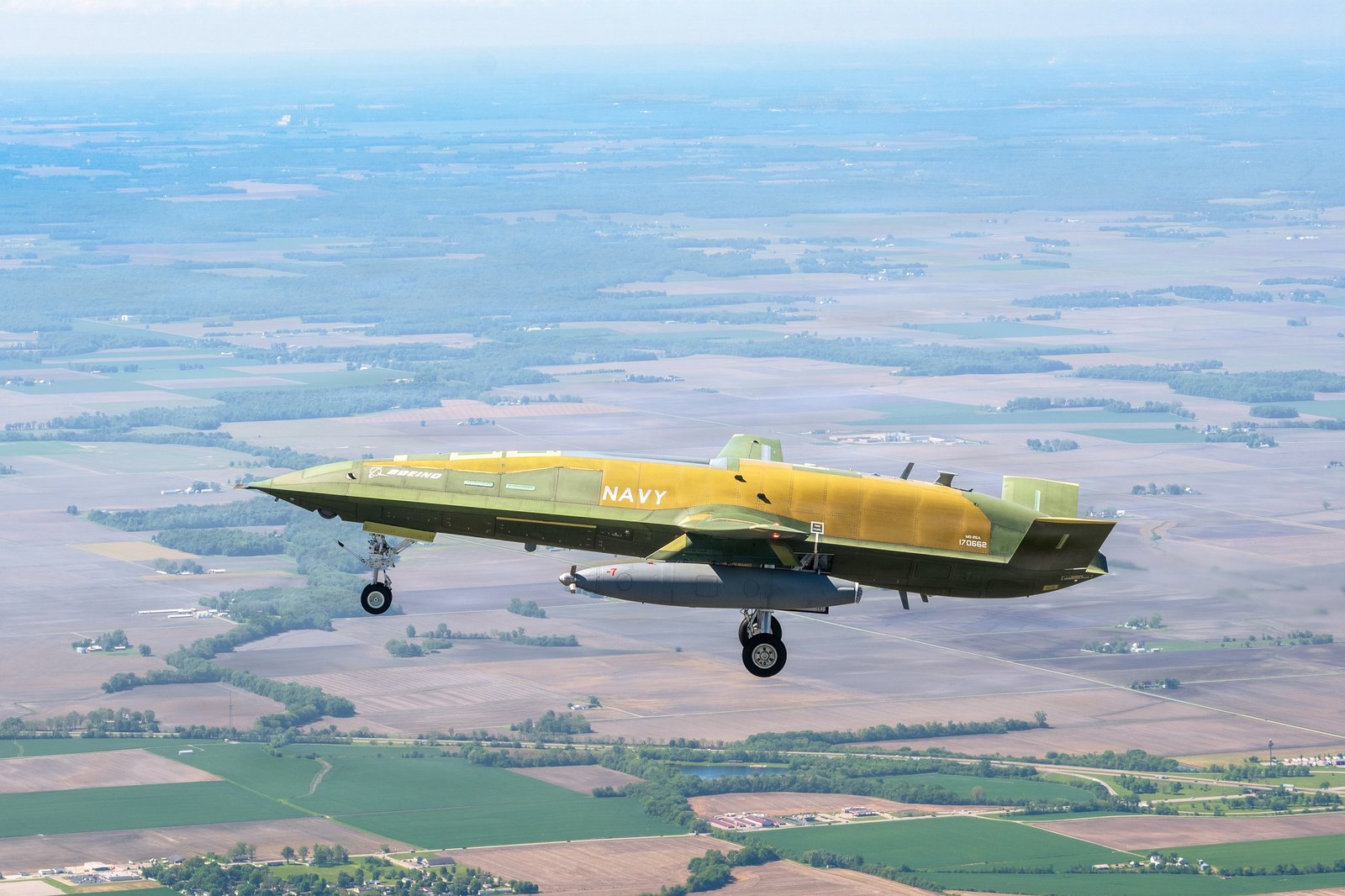
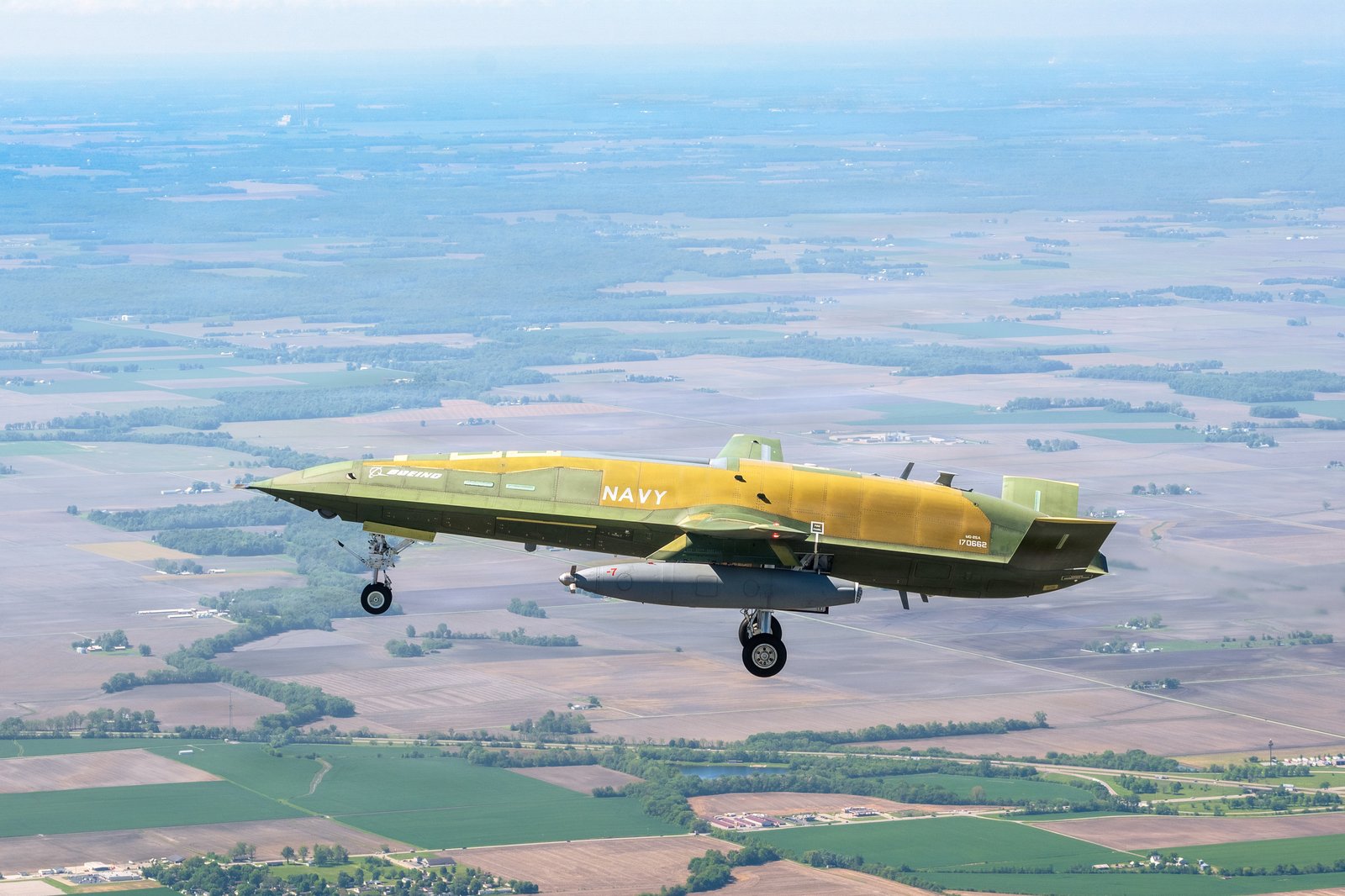
MQ-25 Conducts first flight Photo: Jamie Cosgrove

Navy Awards Boeing $562M Contract for First MQ-25A Stingray Production Lot

The U.S. Navy awarded Boeing a $562 million fixed-price incentive contract on Monday to begin Lot 1 Low Rate Initial Production of the MQ-25A Stingray unmanned tanker, the service announced. The contract covers three MQ-25A aircraft and includes additional funding for components to support three Lot 2 aircraft, with initial Lot 1 deliveries slated for 2029.

The award brings to 14 the number of MQ-25A aircraft under contract. Eleven aircraft were previously contracted under the Engineering and Manufacturing Development phase, including four Engineering Development Model aircraft, five System Demonstration Test Articles, and two ground test articles for static and fatigue testing.

The MQ-25A is designed to deliver at least 14,000 pounds of fuel over 500 nautical miles, roughly the same capacity as the F/A-18 Super Hornets it is intended to relieve of the aerial refueling role, according to an August Government Accountability Office report. The Navy’s program of record includes 67 operational aircraft and nine test aircraft.

Acting Secretary of the Navy Hung Cao announced the upcoming LRIP and deployment in May during a Senate Armed Services Committee hearing. The Navy completed its first successful test flight of a production representative MQ-25A on April 25, 2026, though that demonstration lagged a year behind the service’s initial plans. The Navy estimates it will continue flight tests through the end of this year.

The contract follows Milestone C approval in May 2026, which moved the MQ-25 program into the Production and Deployment phase. Boeing said the Lot 1 will validate the design, production processes, and supply-chain readiness. The Lot 2 contract is planned to be awarded in 2027.

Capt. Daniel Fucito, Unmanned Carrier Aviation program manager (PMA-268), said the award “marks a pivotal transition from development to operational reality” and that the MQ-25A will deliver “the advanced reach, lethality, and survivability our warfighters need to outpace evolving threats and dominate the future battlespace.”

Sources: DVIDS News · Defense News · Navy Times · The Aviationist

News

Air Force Plans 500 CCA and 500 MMA Drones by 2032
Testing defense effectiveness with drone maneuvers in the U S Central Command AOR (8989522).jpg Photo: U.S. Air Force photo by Master Sgt. Luke Olson

Air Force Plans 500 CCA and 500 MMA Drones by 2032

Secretary of the Air Force Troy Meink announced on Sept. 14, 2026, that the service intends to field at least 500 Collaborative Combat Aircraft (CCA) and 500 Massed Modular Aircraft (MMA) drones by 2032, with 100 MMAs to be deployed by 2029. The announcement came during Meink’s keynote address at the Air & Space Forces Association conference.

The CCA platforms are unmanned fighter jets designed to fly alongside manned fifth- and sixth-generation aircraft, providing additional reach, strike, and intelligence-gathering capabilities. The Air Force plans to field the drones in increments, with each iteration featuring the latest upgrades. The service previously aimed to procure over 150 combat-capable CCAs by the end of the decade, a goal now revised to 500 by 2032.

Meink also confirmed the official names of the two CCA designs: the FQ-42 Vengeance and FQ-44 Fury. The production contracts for these aircraft were awarded in June 2026, with the goal of procuring over 150 combat-capable CCAs by the end of the decade. The service intends to field approximately 1,000 combat-capable CCAs across multiple increments.

Regarding the MMA, Meink said the service is on track to deploy 100 platforms by 2029 and 500 by 2032, at a cost lower than CCAs and a fraction of the cost of manned aircraft. Air Force FY27 budget documents indicate plans to buy nearly 28,000 weapons over the next five years.

Meink noted that the service is using open systems architecture to accelerate procurement, which has increased competition from industry, resulting in better choices, better prices, and more combat power. He also said the service could build more than 500 CCAs by 2032, but may not be able to afford to buy them all.

The Experimental Operations Unit (EOU) is tasked with testing CCA platforms and integrating them into the fleet. The EOU recently led operational testing of YFQ-42 and YFQ-44 prototypes at Creech Air Force Base, Nevada.

Context

Meink said the CCA and MMA fleets are part of the Air Force’s modernization efforts for operations in the Indo-Pacific. He stated that special operators will have the ability to employ thousands of autonomous systems, and that autonomous fighters will perform many of the same missions as manned fighters today.

Sources: DefenseScoop · The War Zone · Air & Space Forces Magazine · The Aviationist · DVIDS News

News

Space Force Confirms It Has Deployed Weapons in Orbit
Chief of Space Operations visits U S Space Force locations around KMC (8165855).jpg Photo: U.S. Air Force photo by Senior Airman Edgar Grimaldo

Space Force Confirms It Has Deployed Weapons in Orbit

Secretary of the Air Force Troy Meink announced Monday that the U.S. Space Force has deployed on-orbit space control weapons, marking the first time a Pentagon official has publicly confirmed the existence of U.S. space-based weapons. Meink made the statement during his keynote address at the Air & Space Forces Association’s 2026 Air, Space & Cyber Conference in National Harbor, Maryland.

“Today, we continue to ensure we remain ready to meet the challenges of evolving threats, wherever they exist. This is why the United States now has on-orbit space control weapons capable of defending the joint force against hostile adversary action,” Meink said.

Meink did not specify the type of weapons, how many are in orbit, or when they were launched. Asked whether he could elaborate, he said, “That phrase was very well thought out. So whatever I said before is what I say again.” At a media roundtable following the keynote, he declined to comment on the type of weapons or why the announcement was made now.

“It is important from a deterrence perspective, but on the other hand, me talking about the details of what we’re doing would actually not benefit that deterrence,” Meink said. “So I’m not going to talk about the specifics of what we’re doing, whether we’ve tested or not tested, or anything else.”

A Space Force spokesperson confirmed the deployment in a statement to The War Zone, saying, “It is longstanding policy that the U.S. will protect and defend the Joint Force through all domains. We are increasing readiness against existing threats, and the U.S. has on-orbit space control weapons capable of defending the Joint Force against hostile adversary action.”

The spokesperson described space control as “the mission areas required to contest and control the space domain – employing kinetic and non-kinetic means to affect adversary capabilities through disruption, degradation and even destruction, if necessary.” The spokesperson added that these capabilities “can be employed for offensive and defensive purposes at the direction of combatant commands” and that U.S. military operations are conducted in compliance with international law, including the Outer Space Treaty and the Law of Armed Conflict.

The Outer Space Treaty, which came into force in 1967, prohibits the United States and other signatories from placing nuclear weapons and other weapons of mass destruction in orbit, but does not limit conventional weaponry. The spokesperson declined to discuss “specific operational methods, payloads, technical characteristics, or employment concepts.”

Meink said the U.S. has been aware for more than a decade that adversaries such as China and Russia were developing capabilities to threaten U.S. systems. “We need to maintain dominance in space as it becomes more and more important to how we function, how we operate militarily and economically, civilian-wise,” he said.

The Space Force’s warfighting framework, published in 2025, outlines interest in both kinetic and non-kinetic offensive weapons, including orbital strike and space link interdiction operations. Orbital strike includes actions that “destroy, disrupt or degrade adversary space platforms in the space domain” through kinetic or non-kinetic effects, according to the framework.

Sources: Air & Space Forces Magazine · DefenseScoop · Defense News · The War Zone

News

Air Force secretary publicly confirms deployed on-orbit space control weapons
Chief of Space Operations visits U S Space Force locations around KMC (8165855).jpg Photo: U.S. Air Force photo by Senior Airman Edgar Grimaldo

Air Force secretary publicly confirms deployed on-orbit space control weapons

Air Force Secretary Troy Meink announced Monday that the Department of the Air Force has deployed on-orbit space control weapons capable of defending the joint force against “hostile adversary action.”

Meink made the disclosure during a keynote address at the Air & Space Forces Association’s 2026 Air, Space & Cyber Conference. He offered no additional details about the weapons, saying only that the phrasing was “well thought out.”

“It is critically important that we maintain our dominance not only in the air but in space, and so that we’ve had to take steps to make sure that when we’re threatened, we can take care of that,” Meink said during his speech.

During a media roundtable after the keynote, Meink declined to comment on the type of weapons or why the announcement was made now. He also did not say when the weapons were launched or how many are in orbit.

Meink said the U.S. has been aware for more than a decade that adversaries such as China and Russia were developing capabilities to threaten U.S. systems.

“We need to maintain dominance in space as it becomes more and more important to how we function, how we operate militarily and economically, civilian-wise,” he told reporters.

Meink’s statement is the most direct public acknowledgment by a U.S. official to date regarding space control weapons, according to Defense News.

Sources: Defense News · Air Force Times · Air & Space Forces Magazine · Air Force Times

News

Navy awards Boeing $562M for first MQ-25A Stingray production contract
MQ-25 Conducts first flight Photo: Jamie Cosgrove

Navy awards Boeing $562M for first MQ-25A Stingray production contract

The U.S. Navy awarded Boeing a $562 million fixed-price incentive contract on Monday to begin Lot 1 Low Rate Initial Production of the MQ-25A Stingray unmanned tanker, the service announced. The contract covers three Lot 1 MQ-25A aircraft and includes additional funding for components to support three Lot 2 MQ-25As. Initial Lot 1 deliveries are slated for 2029.

The MQ-25A will become the Defense Department’s first unmanned tanker and the Navy’s first operational carrier-based unmanned aircraft, according to the Navy. The aircraft is designed to extend the life of the Navy’s F/A-18 Super Hornets and relieve the fighter jets of their aerial refueling role so they can focus on strike missions.

The Stingray is expected to deliver at least 14,000 pounds of fuel over 500 nautical miles, roughly the same capacity as the Super Hornets, according to an August report from the Government Accountability Office. The MQ-25 program of record includes 67 operational aircraft and nine test aircraft.

Acting Secretary of the Navy Hung Cao previewed the low-rate production and deployment announcement in May during a Senate Armed Services Committee hearing.

The Navy completed its first successful Stingray test flight on April 25, though that demonstration lagged a year behind the service’s initial plans. The Navy estimates it will continue flight tests through the end of this year.

Boeing is moving forward with production after several setbacks in the MQ-25 program, according to the Navy’s announcement.

Sources: DVIDS News · DVIDS News · Defense News · Navy Times

News

L3Harris lands $4.7 billion PAC-3 propulsion contract to boost interceptor production
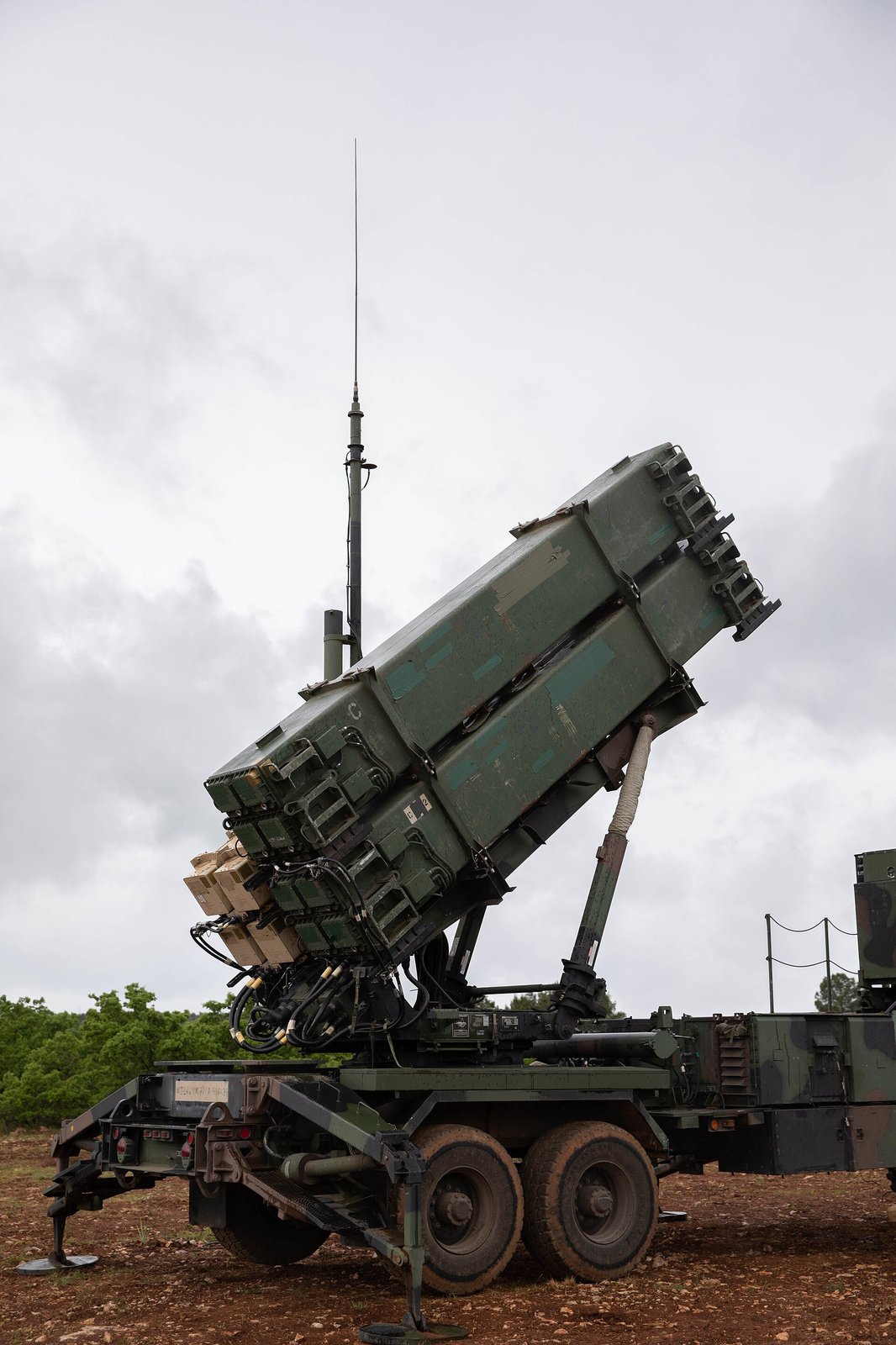
210519-A-SO154-636 - Patriot Missile System operates in Croatia.jpg Photo: Sgt. Alexandra Shea

L3Harris lands $4.7 billion PAC-3 propulsion contract to boost interceptor production

Lockheed Martin has awarded L3Harris Technologies a $4.7 billion undefinitized contract award to produce propulsion systems for the PAC-3 Missile Segment Enhancement (MSE) interceptor, the companies announced in September 2026.

The contract spans seven years and is L3Harris’ largest PAC-3 propulsion award to date, according to a Sept. 8 statement from L3Harris. Work will support large-scale production of the interceptor’s advanced two-pulse solid rocket motor, attitude-control motors, and a fragment explosive device called a “lethality enhancer.”

The award follows Lockheed’s January announcement of a seven-year framework agreement increasing yearly PAC-3 interceptor production from 600 to 2,000 units. In June, L3Harris broke ground on two new facilities in Arkansas to support increased production capacity for the Army’s PAC-3 propulsion systems; both plants are expected to be operational by 2027.

Demand for the interceptor has grown amid ongoing conflicts. The Army and Navy’s requests for PAC-3 MSE have risen 839%, from 341 in fiscal year 2026 to 3,203 in fiscal year 2027, according to an August report from the Center for Strategic and International Studies examining the Defense Department’s fiscal year 2027 budget requests.

The Army already uses the interceptor in its Patriot air defense system. Earlier this spring, the Navy announced its intent to integrate PAC-3 MSE into its Aegis Combat System for the first time.

Experts cited by Defense News warn that even planned production increases cannot match the U.S. military’s current demand for PAC-3 MSE. The U.S. also faces an unfavorable cost ratio: the PAC-3 MSE is valued around $4 million, while Iran’s Shahed drones cost $35,000 each.

Sources: Defense News · DVIDS News · DVIDS News · DVIDS News

News

Air Force Secretary Reveals Space Force Has Deployed On-Orbit Space Control Weapons
5th Space Control Squadron emblem.png Photo: U.S. Space Force

Air Force Secretary Reveals Space Force Has Deployed On-Orbit Space Control Weapons

Secretary of the Air Force Troy Meink publicly confirmed for the first time that the U.S. Space Force has deployed space control weapons to orbit, during a keynote address at the Air & Space Forces Association’s 2026 Air, Space & Cyber Conference on Sept. 14, 2026.

“This is why the United States now has on-orbit space control weapons capable of defending the joint force against hostile adversary action,” Meink said in his speech, according to multiple outlets. He did not specify what types of weapons are on orbit, how many are deployed, or when they were launched, and the Department of the Air Force declined to provide further detail.

Meink said the phrasing was “well thought out” and that maintaining U.S. space capabilities is necessary as adversaries develop their own threats. “It is critically important that we maintain our dominance not only in the air but in space, and so that we’ve had to take steps to make sure that when we’re threatened, we can take care of that,” he said.

He also said it’s important to discuss the existence of such weapons to establish deterrence, but that specific details like test events and capabilities “would actually not benefit that deterrence.” During a media roundtable after the speech, Meink declined to comment on the type of weapons or why the announcement was made now.

Space control, as defined by the Space Force’s warfighting framework, includes both offensive and defensive actions, electromagnetic warfare, and other counterspace operations. Potential on-orbit operations include orbital strike—actions that “destroy, disrupt or degrade adversary space platforms in the space domain” through kinetic or non-kinetic effects—and space link interdiction, which uses non-kinetic means like electromagnetic or cyber attacks to prevent adversaries from using their space-based systems.

Meink also revealed new details about other programs. He said the first of many air-moving target indication satellites will be launched this month. On the Collaborative Combat Aircraft (CCA) drone wingman program, he said the Air Force has officially named its first drones: Anduril’s FQ-44A will keep the industry name “Fury,” while General Atomics’ FQ-42A, internally called “Dark Merlin,” will be called “Vengeance” by the Air Force. He did not say how many drones will come from the program’s first increment or from successive development rounds.

Meink’s statement is the most direct public acknowledgment by a U.S. official to date regarding space control weapons, but he did not say when the weapons were launched or how many are in orbit.

Sources: Breaking Defense · Defense One · Air & Space Forces Magazine · DefenseScoop · Breaking Defense · Defense News

News

Canada’s top general in running for senior NATO command post
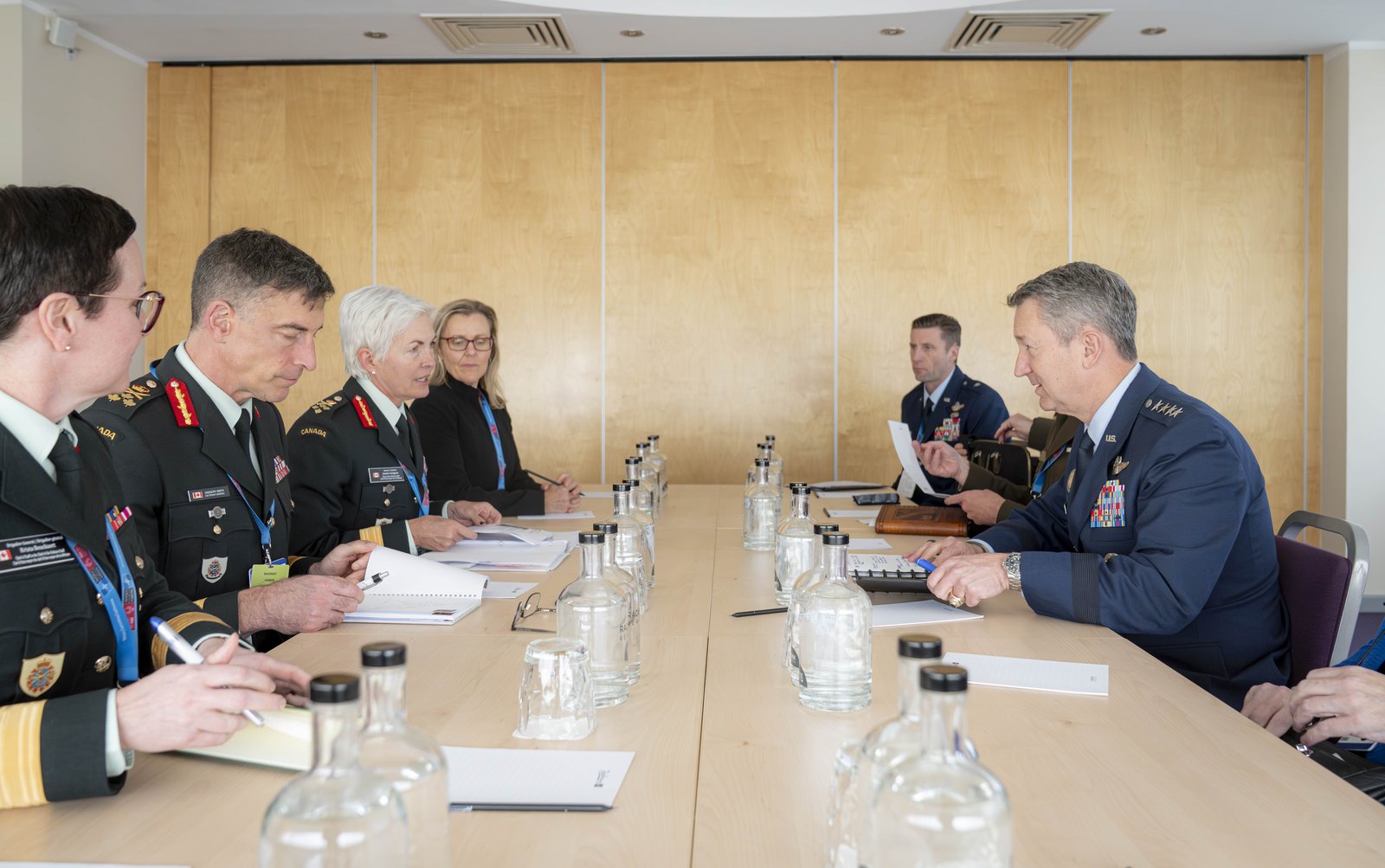
Bilat with Canadian CHOD Photo: Benjamin D Applebaum

Canada’s top general in running for senior NATO command post

Canada’s Chief of the Defence Staff, Gen. Jennie Carignan, is a candidate for a senior NATO command position, according to a report from the Ottawa Citizen. The report, published without a specific date, says Carignan is in the running for the role of NATO’s Supreme Allied Commander Transformation (SACT), a post based in Norfolk, Virginia.

The selection process involves a vote by NATO’s Military Committee, which is composed of the chiefs of defence of member nations. The committee’s recommendation would then go to NATO’s North Atlantic Council for final approval. The Ottawa Citizen did not specify when the vote would take place or when a decision might be announced.

Carignan became Canada’s first female chief of defence staff in July 2024. If selected, she would be the first Canadian to hold a top NATO military command since Gen. Ray Henault served as chairman of the NATO Military Committee from 2005 to 2008.

The report notes that Canada has been pushing for greater representation in senior NATO leadership positions. The Canadian government has not officially confirmed Carignan’s candidacy, and no other candidates have been publicly named.

The NATO command position would be a major milestone for Canadian military leadership and alliance influence, according to the Ottawa Citizen.

Sources: Ottawa Citizen · Canadian Army Today · Canadian Army Today

News

Georgia Guard Helicopters Fly Broad Marijuana Searches, Raising Posse Comitatus Concerns
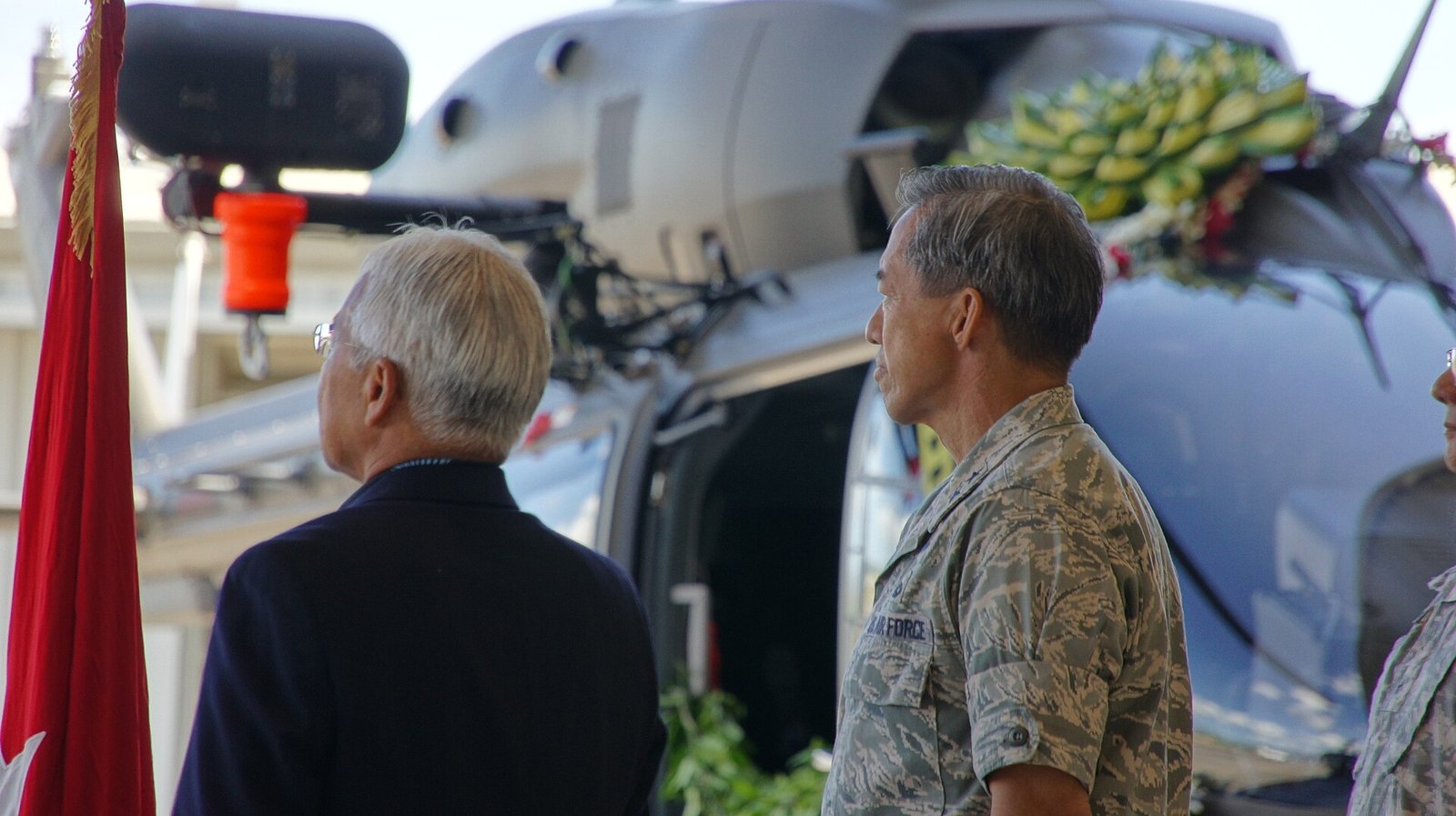
Hawaii Army National Guard dedicates new helicopters 120506-F-DL065-202.jpg Photo: Tech. Sgt. Andrew Jackson

Georgia Guard Helicopters Fly Broad Marijuana Searches, Raising Posse Comitatus Concerns

Georgia Army National Guard helicopters flew over every county in the state this summer carrying civilian police officers who scanned private property for illegal marijuana grows, a mission the Guard calls “probable cause generation” that is raising questions about the boundaries between military support and domestic policing.

The flights, conducted under the Guard’s Title 32 federal counterdrug authority, used UH-72 Lakota or UH-60 Black Hawk helicopters with three-person military aircrews. A civilian law enforcement officer rode aboard each flight, searching for marijuana from the air across all 159 Georgia counties. When a grow was spotted, the observation was used to establish probable cause for a search warrant, Guard officials told Task & Purpose.

The approach marks a departure from past practice. In 2013, Georgia Guard crews flew similar missions but only after receiving suspected locations from local sheriff’s departments. This year, officials said they deliberately searched broad areas rather than limiting flights to previously identified properties. The Guard said the new method saves police fuel, manpower and time by allowing ground teams to deploy only after a grow is positively identified from the air.

In one operation this summer, a civilian officer aboard a UH-72 spotted marijuana behind a private residence in Dalton. That observation led to a search warrant and the seizure of 17 plants and two pounds of processed marijuana, valued at more than $40,000. Across the entire summer, Guard crews helped state and local agencies seize 343 marijuana plants, 326 of them from a single operation in Polk County.

Seizure numbers are sharply lower than a decade ago. In 2012, the same task force seized more than 71,000 plants across Georgia, including large grows on public land in the Chattahoochee National Forest. The Guard described this year’s wider search area as a success nonetheless. “The success of this ERAD season highlights that the Georgia National Guard is not an afterthought or secondary request, but an indispensable partner,” Capt. Jimmy Williams, deputy director of the Georgia National Guard Counterdrug Task Force, said in a release.

Beyond the helicopter flights, Georgia Guard personnel also provide criminal case analysis to law enforcement, including information on drug trafficking organizations and illicit financial networks. The operations are part of the larger National Guard Counterdrug Program, which operates in every state and several U.S. territories. Congress appropriated approximately $1.33 billion for the program between fiscal years 2019 and 2024, according to the Government Accountability Office.

The Georgia missions highlight a long-running tension over the Posse Comitatus Act and related statutes that generally prohibit the military from participating in civilian law enforcement. While the Guard operates under state authority or specific federal counterdrug statutes that permit certain support, the use of military aircraft and crews to generate probable cause for search warrants on private property pushes against traditional limits, civil liberties advocates argue. The shift from targeted searches based on prior intelligence to broad, county-by-county aerial surveillance adds a new dimension to that debate.

Sources: DVIDS News · DVIDS News · Task & Purpose · DVIDS News