News

News

Pentagon seeks AI tools to identify space and missile threats
Missile Warning Center (9810145).jpg Photo: U.S. Space Force S4S by David Dozoretz

Pentagon seeks AI tools to identify space and missile threats

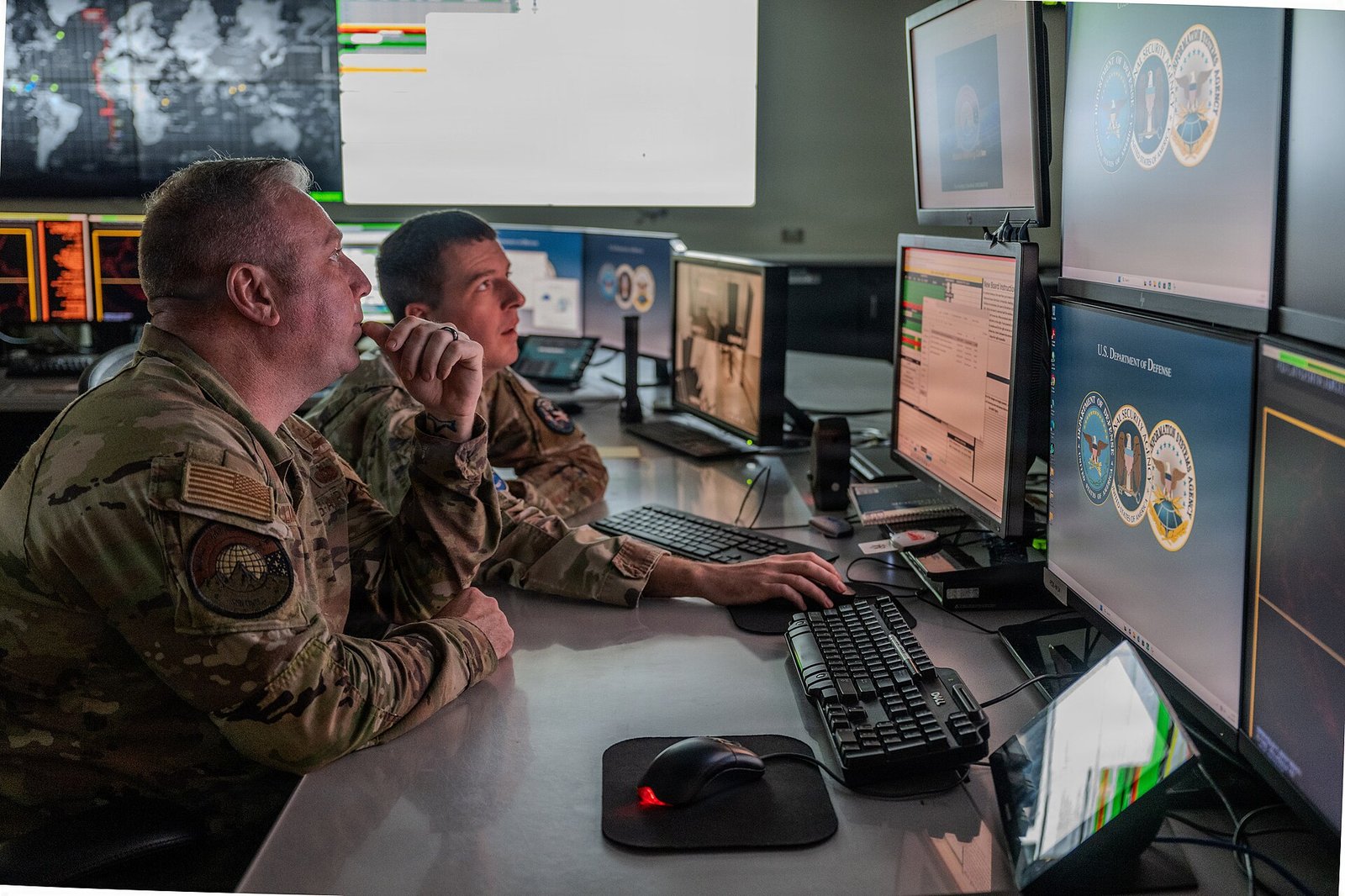
The Pentagon is seeking artificial intelligence software that can fuse fragmented sensor data into a continuously updated picture of space and missile threats fast enough to drive operational decisions, according to a Defense Innovation Unit solicitation published Sept. 11 and due Sept. 24.

The project, called the “Space Threat Intelligence Synthesis Engine,” would combine live video, satellite imagery, radar and sensor feeds, geospatial data, and classified intelligence reports. DIU said existing tools struggle to distinguish closely spaced objects, track emerging threats, and keep threat models current.

Performance targets

The solicitation sets specific technical requirements. DIU wants an open-source system with a latency delay of no more than five seconds between data arrival and results being displayed, and preferably no more than two seconds. Throughput should be 20 to 30 megabytes per minute, with bursts of up to five gigabytes.

The system should generate actionable, confidence-scored alerts supporting analyst-in-the-loop, human-on-the-loop, or automated workflows. It would also provide human-readable visualizations for frontline operators and low-latency machine-to-machine APIs to drive automated command-and-control workflows.

Contractors must demonstrate significant speed and accuracy improvements in event detection, characterization, and attribution compared with existing baseline systems.

Industry momentum

The effort reflects broader industry movement toward AI-enabled missile defense. Northrop Grumman announced in July that it was partnering with AI firm Camgian to incorporate artificial intelligence into integrated air and missile defense systems. BAE and Scale AI have also teamed up for AI-enhanced missile defense.

DIU said the architecture aims to uncover hidden patterns, complex operational relationships, and predictive threat behaviors beyond the capabilities of human analysis alone.

The push comes as conflicts involving missiles and drones, including those in Ukraine and against Iran, place growing demands on human operators. With a persistent shortage of expensive interceptors such as the Patriot air-defense system, operators must decide quickly when and where to allocate them, making AI an increasingly important decision-support tool.

Sources: Defense News · Army Times · Navy Times · Air Force Times

News

NATO allies foil Russian subsea cable sabotage plot in Arctic
Polar bears near north pole.jpg Photo: Chief Yeoman Alphonso Braggs, US-Navy

NATO allies foil Russian subsea cable sabotage plot in Arctic

Deep in Arctic waters near Norway’s Svalbard archipelago this spring, NATO allies caught Russian submarines training to deploy a secret weapon designed to disable critical undersea cables without leaving fingerprints, according to two Western officials who spoke to Reuters on condition of anonymity.

The operation was carried out by Moscow’s GUGI undersea warfare directorate, which used deep-sea submersibles to simulate deployment of the technology. A joint operation involving Britain, Norway and the United States tracked and confronted the Russian vessels at sea, the officials said. The vessels were prevented from completing their exercise and eventually left the area.

Britain and Norway disclosed in April that they had uncovered a covert Russian operation in Arctic waters, but the discovery of the new weapon, the location of the operation and the U.S. involvement had not previously been reported.

Strategic cables under threat

Two 1,400 km subsea fiber-optic cables linking Svalbard to mainland Norway lie as deep as 2,700 meters below the surface. They carry satellite data downloaded at the SvalSat ground station, the world’s largest and part of NASA’s Near Space Network.

Russia did not damage any cables. The exercise focused on simulating deployment of the technology in the event of a conflict with NATO, the officials said. They declined to detail how the technology works.

“Through our joint operation, we sent a clear message to Russia that they cannot operate covertly,” Norway’s Defence Minister Tore Sandvik said in a statement. “We have made it unequivocally clear to Russian authorities that any attempt to target our critical infrastructure will be detected and met with consequences.”

Broader sabotage concerns

Some U.S. intelligence analysts are increasingly concerned Russia may test NATO’s mutual defense pact, known as Article 5, three U.S. officials said. Destroying subsea cables could be a critical part of that effort, the Western officials said.

In August, CIA Director John Ratcliffe visited intelligence counterparts in Moscow, in part to warn Russia against escalating sabotage operations in Europe, according to two people familiar with the matter. Reuters could not determine if Ratcliffe raised the covert subsea operations.

NATO allies have focused on subsea infrastructure security since the 2022 destruction of three of the four Nord Stream pipelines. Since 2023, more ships have sailed slowly over or near sensitive subsea infrastructure to map locations, an activity known as drifting. Last year, drifting in the North Sea rose 52% to 13,079 vessels from the previous year, according to maritime risk analytics firm Windward, while activity in the South China Sea region jumped 88% to 18,401 vessels.

The confrontation underscores the strategic importance of the Bear Gap, a stretch of water between Svalbard and mainland Norway that Russian nuclear submarines based in the Kola Peninsula would cross to reach the Atlantic. Britain said this week it deployed forces to Jan Mayen in August alongside Norwegian and U.S. allies for an exercise to demonstrate NATO’s ability to operate jointly in the High North.

Sources: Defense News · Stars and Stripes · Defence Blog · Defence Blog

News

Lockheed Martin to Build Five Vectis Prototypes, First Flight Targeted for 2027
SR71 factoryfloor SkunkWorks.jpg Photo: CIA

Lockheed Martin to Build Five Vectis Prototypes, First Flight Targeted for 2027

Lockheed Martin announced on Sept. 14, 2026, that it will build four additional Vectis collaborative combat aircraft prototypes in addition to the one already in production, bringing the total to five internally funded aircraft, with the first flight targeted for the end of 2027.

Ron Fehlen, Lockheed Martin Vice President and General Manager of Skunk Works, said the additional aircraft will be used to accelerate testing and validate production processes. “Development work on those additional aircraft is already underway, and we’ll have more specifics to share soon,” Fehlen said. He added the company will “build and we will fly these four vehicles even more quickly” than the first prototype.

Vectis was first publicly revealed on Sept. 21, 2025, as a Group 5 survivable and lethal collaborative combat aircraft developed by Skunk Works as a clean-sheet, internally funded effort. At the time, Lockheed Martin said development was already underway, with parts ordered and a first flight targeted within two years. The company is showcasing a full-scale model of the drone on the show floor at this week’s conference.

Fehlen disclosed new dimensions for the aircraft: Vectis is approximately 34 feet long with a wingspan of around 38 feet. By comparison, the Navy’s T-45 Goshawk trainer is roughly 39 feet long by 30 feet wide. O.J. Sanchez, previously Lockheed Martin Vice President and General Manager of Skunk Works, has said Vectis is smaller than an F-16 Fighting Falcon.

The aircraft is powered by a Williams International FJ44-4 turbofan producing more than 3,600 pounds of thrust. Peter McArdle, Integrated Systems program director at Lockheed Martin Skunk Works, said in December 2025 that “by leveraging a mature, rugged turbofan, we can accelerate our timeline and demonstrate a game-changing capability quickly.” Lockheed Martin has not stated publicly whether the same engine would power a future production version.

Fehlen also confirmed that Vectis features a deeply recessed, top-mounted “submerged” air intake that was part of the design from the beginning but not reflected in previously released renderings and scale models. He said the configuration reduces frontal drag and offers an advantage in austere environments under the Air Force’s Agile Combat Employment concept by reducing foreign object debris pickup from runways. Fehlen also confirmed the inlet design relates to survivability but did not elaborate.

Lockheed Martin has positioned Vectis as a relatively affordable but highly survivable autonomous aircraft designed to operate alongside fifth- and next-generation crewed aircraft, supporting missions ranging from precision strike to electronic warfare, intelligence, surveillance and reconnaissance, and offensive and defensive counter-air. The company has not published maximum takeoff weight, range, combat radius, endurance, maximum speed, payload capacity, or detailed sensor and weapons configuration. Group 5 classification places it in the largest U.S. military UAS category, with a maximum takeoff weight over 1,320 pounds and a nominal operating altitude over 18,000 feet.

Sources: The Aviationist · Breaking Defense · The War Zone · Air & Space Forces Magazine

News

Two Veterans Compete in Wahl Beard Contest; Winner to Direct $20,000 to Charity
Competitors attend events at Vancouver Convention Center for start of 2025 Invictus Games Photo: Michel Sauret

Two Veterans Compete in Wahl Beard Contest; Winner to Direct $20,000 to Charity

Two veterans are among five finalists in a Wahl-sponsored beard contest in which the winner receives $5,000 for themselves and $20,000 for a charity of their choice, according to Military.com.

BJ Ganem, a Marine Corps veteran from Wisconsin who served in Iraq, and Damon Friedman, a retired special warfare officer who served 20 years in the U.S. Marine Corps and U.S. Air Force, are competing in the contest. Wahl provided the details of the prize structure and the finalist roster.

The contest, reported by Military.com on Sep. 13, 2026, includes the two veterans among five finalists competing to win $5,000 for themselves and $20,000 for their charities.

Ganem and Friedman’s military backgrounds differ: Ganem is a Marine Corps veteran of the Iraq War, while Friedman retired after two decades split between the Marine Corps and the Air Force as a special warfare officer.

Voting details and the contest’s closing date were not specified in the source material. The finalists were announced as part of Wahl’s promotional competition, with the winner to be determined through the contest’s voting process.

Sources: Military.com · Military.com · Defence Blog · The Aviationist

News

Former AFCENT Commander: Operation Epic Fury Exposed Logistics, Base-Defense Gaps
Defense.gov News Photo 101206-F-2039L-001 - U.S. Air Force F-15E Strike Eagle aircraft assigned to the 391st and 389th Fighter Squadrons sit on the flight line at Mountain Home Air Force.jpg Photo: Senior Airman Debbie Lockhart, U.S. Air Force

Former AFCENT Commander: Operation Epic Fury Exposed Logistics, Base-Defense Gaps

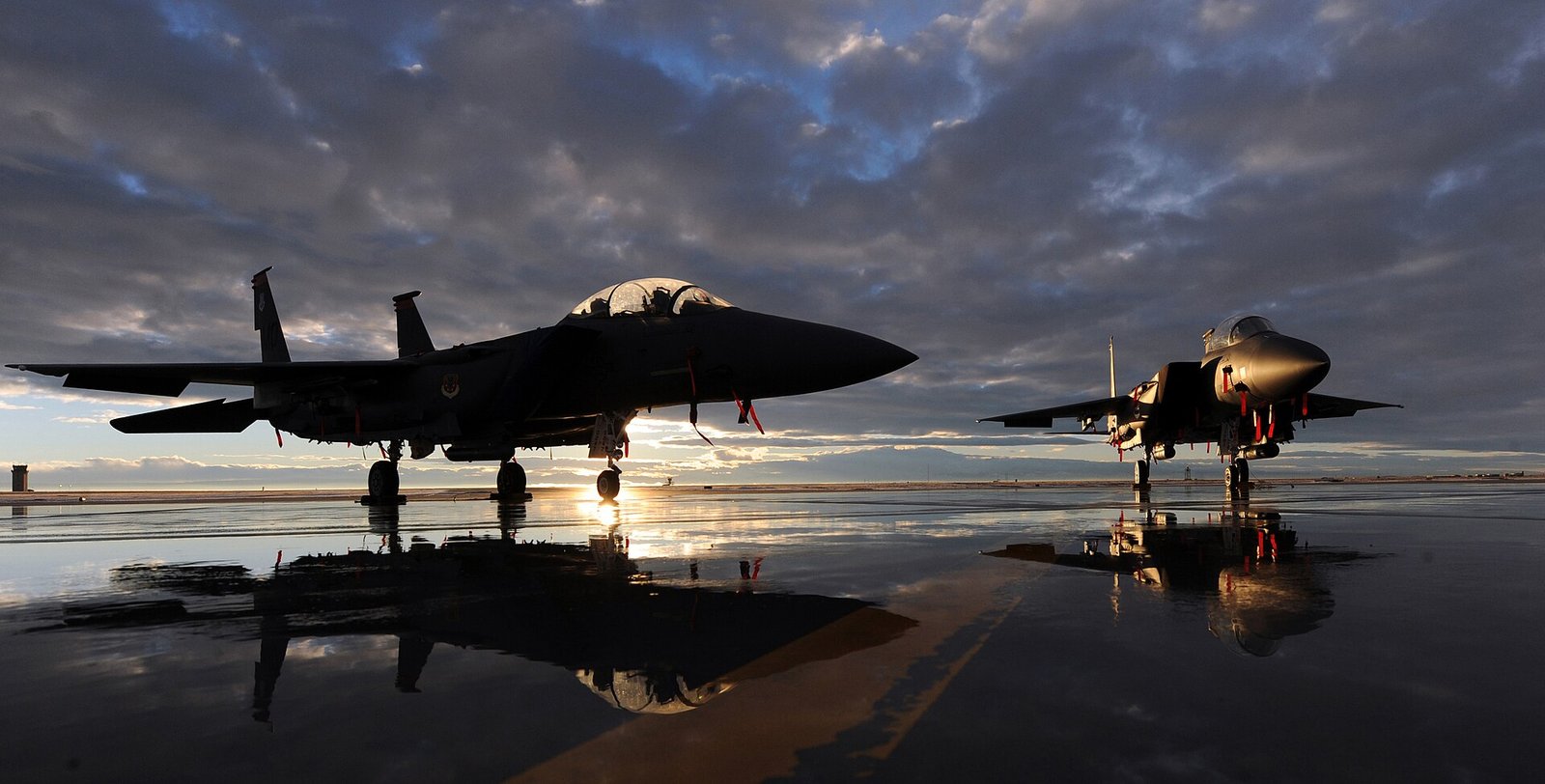
The U.S. military’s largest air campaign in a generation struck more than 13,000 targets in Iran between Feb. 28 and an initial ceasefire in early April, and the former commander of Air Forces Central says the operation exposed serious gaps in munitions logistics and base self-defense.

Lt. Gen. Derek C. France, who completed his tour as AFCENT commander and Combined Forces Air Component Commander for U.S. Central Command on Aug. 4, described the campaign in an interview with Air & Space Forces Magazine. Operation Epic Fury began Feb. 28 and became the biggest U.S. air offensive in 35 years. Iran has fired more than 1,500 ballistic missiles and 6,000 drones during the conflict, with numbers growing as Tehran continues to attack ships in the Strait of Hormuz, U.S. officials said.

France said the joint partnership between Airmen and Soldiers operating Patriot anti-missile defenses was a bright spot, and he was impressed by wings’ ability to quickly resume flight operations after Iranian missile and drone attacks on air bases across the Middle East.

“We had bases generating sorties,” France said. “Occasionally, we’d have to make some adjustments on tankers to make an effective sortie. But I never had a base that said, ‘We are not effective and we can’t meet the next three or four [windows] of ATO tasking.'”

But the logistical system for supplying munitions was insufficient in the early days of the war, forcing France to “meter the use of weapons over time.”

“Our logistics system needs some serious revamping as far as its flexibility,” France said. “You would have cases where bases say, ‘Hey, I’ve got all these bomb bodies, but I can’t use them because I don’t have the tail kits yet.'”

France also identified gaps in base defense. U.S. Patriot missiles and THAAD interceptors successfully defeated most threats, but some weapons got through. CENTCOM had not faced such threats since the 1991 Desert Shield/Desert Storm campaign, when Saddam Hussein launched Scud missiles against allied forces.

“From a base defense standpoint, we’ve still got some gaps as far as long-range air domain awareness, so you’re not surprised by things once they’re in your base defense zone,” France said.

France said building command centers underground deserves consideration, arguing that critical command-and-control nodes need inherent self-protection.

“You have to have some C2 element that’s survivable underground, and if you’re going to generate airpower, you need something where your aircrew can actually get some sleep and extract themselves from that potential,” France said. “You can’t harden everything. But I do think your critical C2 nodes and your prioritized way of being able to get underground is huge.”

As CFACC, France and the Combined Air Operations Center directed strikes into Iran from Navy aircraft, submarine-launched Tomahawk land-attack cruise missiles, and Army ATACMS and PrSM surface-to-surface missiles. The scope of the operation forced a single integrator of fires, a role France said the CAOC improved at over time.

France took command of AFCENT on April 18, 2024. His tenure also included Operation Rough Rider against the Houthis in spring 2025 and Operation Midnight Hammer in June 2025, when U.S. B-2 bombers attacked Iran’s nuclear sites. He contrasted the counterterrorism campaigns in Iraq, Afghanistan, Syria, and Yemen with the scale of fighting Iran.

“I use the analogy with the other component commanders of the difference between using a sniper rifle and a belt-fed machine gun,” France said.

France said the punishing waves of airstrikes have now been largely supplanted by an American economic pressure campaign as Iran tries to assert control over the Strait of Hormuz. The conflict is now in its seventh month.

Sources: Air & Space Forces Magazine

News

Oregon Guard Battalion Reconnects With 140-Year Infantry Lineage in Redesignation Ceremony
Landstuhl Regional Medical Center Change of Command (7901795).jpg Photo: U.S. Army TSAE by Elisabeth Paque

Oregon Guard Battalion Reconnects With 140-Year Infantry Lineage in Redesignation Ceremony

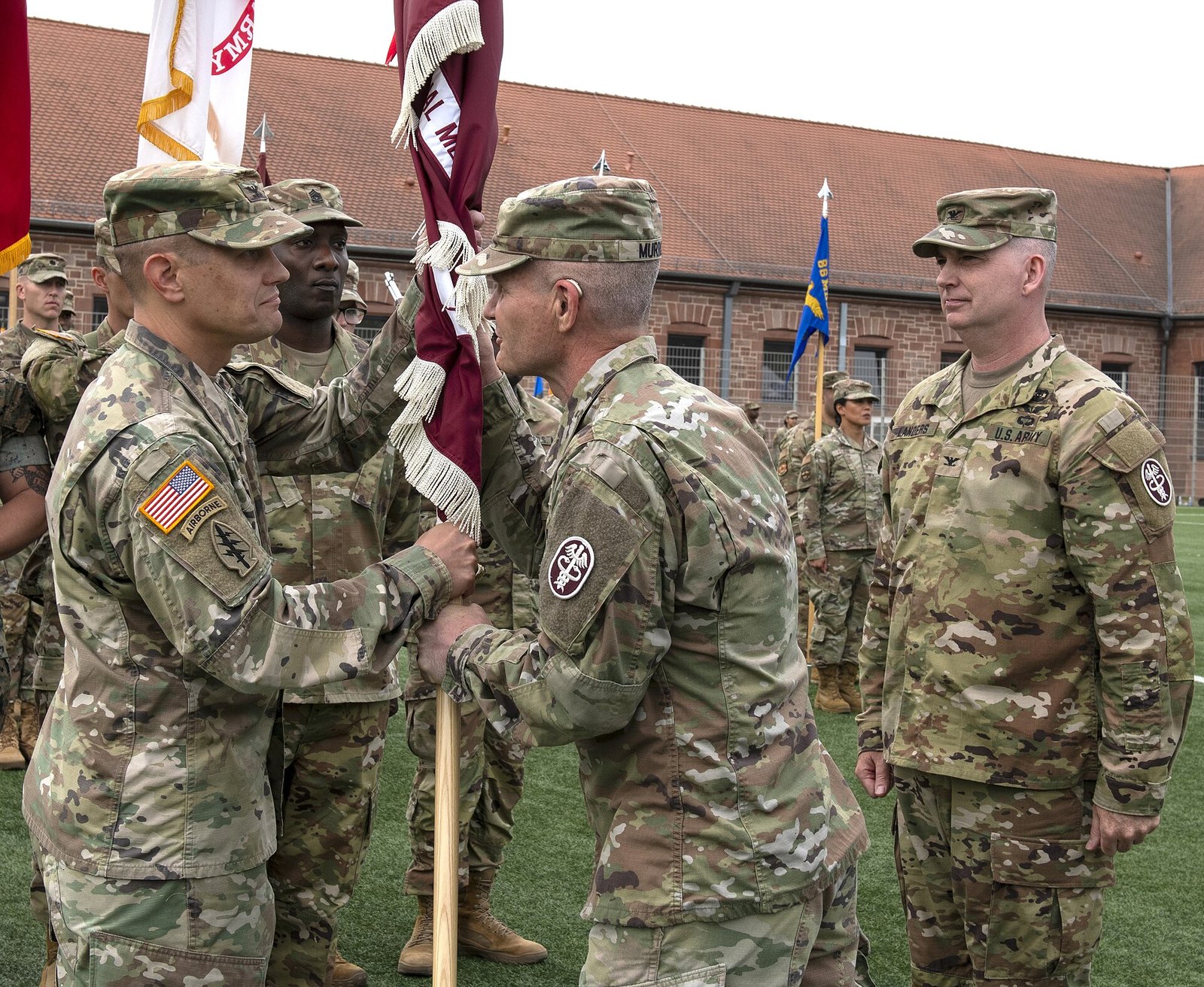
The Oregon Army National Guard’s 3rd Battalion, 116th Cavalry Regiment cased its colors for the final time and uncased new ones Sept. 12, formally redesignating as the 2nd Battalion, 186th Infantry Regiment during a ceremony at Eastern Oregon University’s football field in La Grande, Oregon.

The redesignation reconnects the battalion with an infantry lineage that traces back nearly 140 years to 1888, when citizen-Soldiers in Eastern Oregon first organized to serve their communities and state. Col. Andrew William Vidourek hosted the ceremony, with Lt. Col. Jorge L. De Anda and Command Sgt. Maj. Gabriel G. Sapp representing the battalion’s official party. Second Lt. Kumsa A. Lemessa served as master of ceremonies.

The event included a lineage reading, casing of the 3rd Battalion, 116th Cavalry colors, uncasing of the 2nd Battalion, 186th Infantry colors, and a rebadging ceremony in which Soldiers replaced their unit patches.

The battalion’s roots stretch back to the Spanish-American War, when Soldiers serving as the 2nd Oregon Volunteer Infantry crossed the Pacific, took part in the capture of Guam and became the first American troops to land in the Philippines in 1898. During World War I, Oregon Soldiers were reorganized into the 41st Infantry Division, known as the “Sunset Division,” and deployed to France with the American Expeditionary Forces.

The unit’s infantry legacy continued into World War II as part of the 41st Infantry Division’s “Jungleers,” fighting through the Pacific island-hopping campaign. One of the regiment’s defining moments came June 16, 1944, when the 2nd Battalion, 186th Infantry led an assault against entrenched Japanese defenders on the island of Biak.

Following the war, the organization reorganized several times before becoming the 3rd Battalion, 116th Cavalry Regiment, transitioning to heavy armor and earning the nickname “Eastern Oregon’s Own.” The battalion deployed to Iraq in support of Operation Iraqi Freedom in 2004 and Operation New Dawn in 2010, and Soldiers of Adder Company deployed in support of Operation Spartan Shield from 2023 to 2024. In 2011, the battalion became the first National Guard unit to field the M1A2 SEPv2 Abrams tank.

“Closing these colors is bittersweet,” De Anda said. “We all spilled sweat, spent long weeks away from home and mastered the skills of heavy armor and mechanized warfare. Be proud of what we’ve built and what we’ve accomplished under that crest. However, as we stand on this parade field today, we must remember a fundamental truth: the power of this unit has never resided in our equipment or the designation on our guidons. It has always resided in the character of the Soldiers who have answered the call.”

De Anda pointed to the battalion’s community roots as evidence of that continuity, noting that 100 years ago, Soldiers of Company Echo mustered on a drill floor above a drugstore in downtown La Grande with little equipment but full commitment.

“We are and have always been Eastern Oregon’s own,” De Anda said. “Our strength comes from the communities that have answered the call for over a century, from Pendleton to Ontario, Hermiston and La Grande, Baker City, Burns. We are the citizen-Soldiers who leave our families, our farms, our classrooms and our jobs to serve. No change in nomenclature or equipment will ever alter that identity.”

As the newly designated 2nd Battalion, 186th Infantry Regiment, the unit will become Oregon’s first mobile infantry battalion, built as a lighter, faster and highly mobile formation. The battalion conducted annual training at Camp Rilea this summer and plans to deploy a task force to Honduras next year to train alongside partner nations. The unit is also integrating infantry squad vehicles and expanding its use of unmanned aerial systems.

“You are now responsible for a remarkable piece of Oregon military history,” De Anda told the formation. “You inherit much from those that came before you. Your responsibility is not to admire that history, but to build upon it.”

In an interview before the ceremony, Vidourek reflected on the significance of reconnecting the battalion with its infantry roots.

“I know their hearts are with 3-116 Cav, but the reality is this organization has redesignated many times over the last 140 years,” Vidourek said. “To go back and touch that lineage that started 140 years ago, Soldiers that fought in Guam, World War I, World War II, the historic Battle of Biak, and now we’re redesignated as that infantry regiment, it’s pretty cool. It’s a cool thing to be a part of. It doesn’t happen very often. A lot of times a Soldier will go through a whole military career and not be a part of something like this.”

Both commanders closed their remarks by thanking the Soldiers’ families for their support and calling on the battalion to carry the legacy forward.

“Every generation is asked the same question: will you be ready when your nation calls?” Vidourek said. “For nearly 140 years, Oregon Soldiers have answered that question with their actions. The Soldiers standing in formation today are the next chapter of that story. Eastern Oregon’s own.”

Sources: Stars and Stripes · DVIDS News · DVIDS News · DVIDS News
News

Indian National on Student Visa Sentenced to 30 Months for Defrauding Vietnam Veteran of $99K
Air Force gavel.JPG Photo: U.S. Air Force photo/Airman 1st Class Grace Lee

Indian National on Student Visa Sentenced to 30 Months for Defrauding Vietnam Veteran of $99K

A 37-year-old Indian national living in San Antonio, Texas, on a student visa was sentenced to 30 months in federal prison and ordered to pay $99,000 in restitution for defrauding a Vietnam veteran, according to Military.com.

Venkateswara Chagamreddy was sentenced on the fraud conviction, the outlet reported Sept. 13, 2026. The sentence includes the prison term and the restitution order tied to the money taken from the veteran.

What the sources report

Military.com identified Chagamreddy as a San Antonio resident in the United States on a student visa. The report states he was sentenced to 30 months in prison and ordered to pay $99,000 in restitution.

The victim in the case is described as a Vietnam veteran. The article’s stock image is credited to the Naval Criminal Investigative Service and illustrates the issue of fraud.

The report was published by Katherine Plummer on Sept. 13, 2026, at 5:00 a.m. EDT.

Chagamreddy is 37 years old, according to the source.

Sources: Military.com

News

Polaris Arctic mobility snowmobile secures orders from US Army, Air Force and Marine Corps
10th SFG(A) arctic vehicle training (SGT David Cordova)

Polaris Arctic mobility snowmobile secures orders from US Army, Air Force and Marine Corps

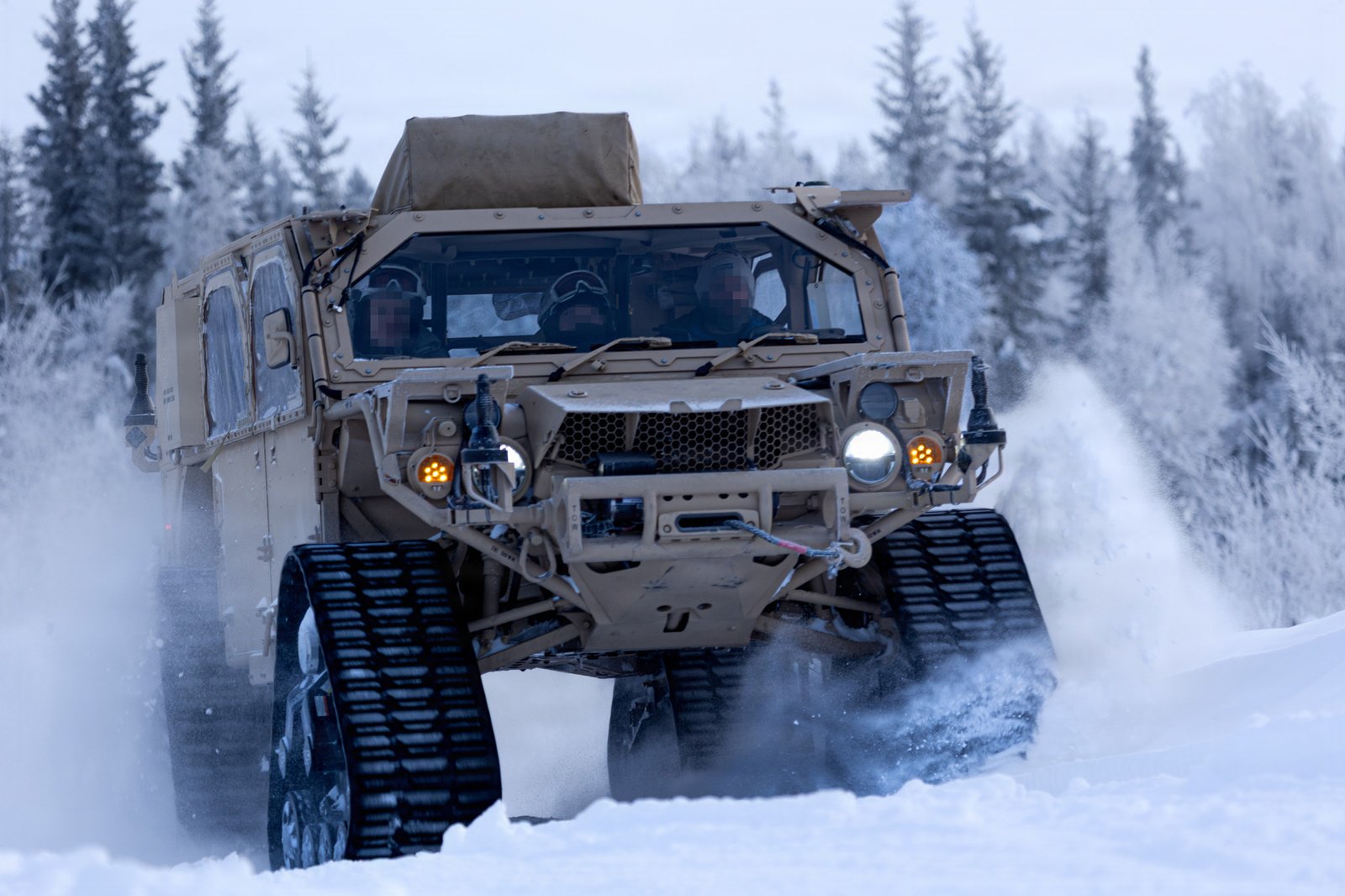
Polaris Government and Defense has secured orders from the US Army, Air Force and Marine Corps for its new Military 850 Voyageur 155 Crossover snowmobile, a platform the company developed in under a year to meet growing demand for agile Arctic mobility, Shephard Media reported on September 10, 2026.

The vehicle is designed to combine passenger, cargo and towing capacity in a single cold-weather platform, according to Polaris. Shephard Media, citing the company, reported that the Military 850 Voyageur 155 Crossover addresses a gap in military snowmobile capability, though the report did not disclose the number of vehicles ordered or the dollar value of the contracts.

Three-service demand

The orders span three branches of the US military, underscoring what Shephard Media described as growing demand for Arctic mobility as the Pentagon places greater emphasis on operations in cold-weather environments. The Army, Air Force and Marine Corps each operate in regions where snowmobiles provide a lightweight alternative to larger ground vehicles for patrol, resupply and personnel movement.

Polaris developed the Military 850 Voyageur 155 Crossover in less than a year, according to Shephard Media, a timeline the outlet attributed to the company’s existing commercial snowmobile production base and its established Government and Defense division.

Broader cold-weather vehicle market

The Polaris orders arrive as the US military continues to invest in specialized ground vehicle capabilities. In a separate but related development, the US Army awarded Rolls-Royce Solutions America a $39.1 million contract modification in September 2026 for additional Eitan armored vehicle power packs destined for Israel, bringing that contract’s total value to approximately $158.9 million, according to Defence Blog. That work, funded through fiscal 2010 Foreign Military Sales funds, is expected to run through September 11, 2027.

While the Eitan engine order reflects demand for heavily armored wheeled vehicles, the Polaris snowmobile orders point to the opposite end of the mobility spectrum: lightweight, fast platforms for extreme cold. Shephard Media did not report a contract value or delivery timeline for the Military 850 Voyageur 155 Crossover orders.

The three-service interest in a purpose-built military snowmobile signals that Arctic and high-latitude operations are becoming a more formalized requirement across the US military, rather than a niche capability limited to a single service or special operations community.

Sources: Defence Blog · Shephard Media · DoD Contracts · US Army

News

Netherlands Selects Saab GlobalEye for First National AEW&C Capability
NATO AWACS takes part in AE 25 (A1C Zachary Jakel)

Netherlands Selects Saab GlobalEye for First National AEW&C Capability

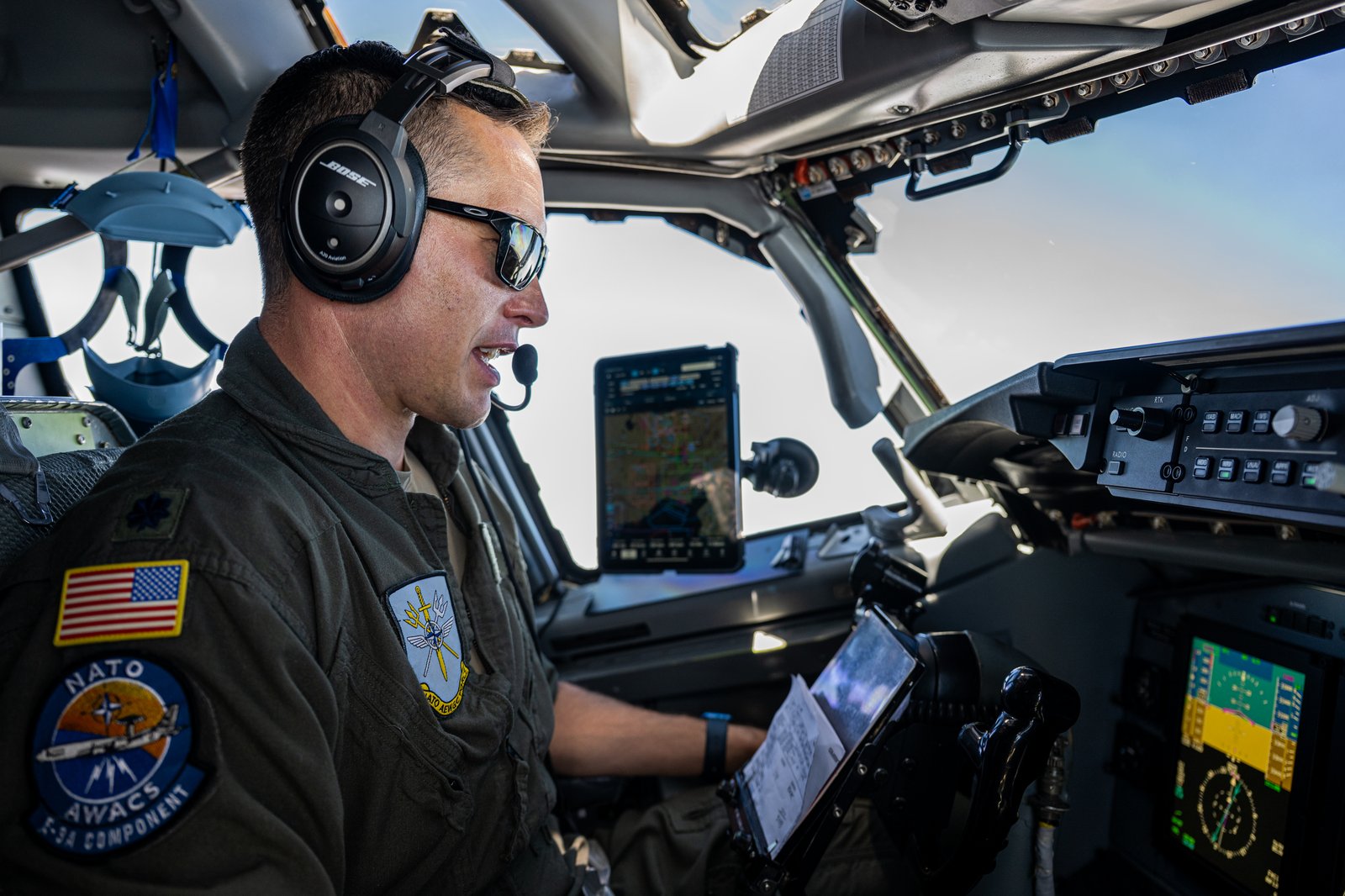
The Netherlands will acquire a Saab GlobalEye airborne early warning and control (AEW&C) aircraft, giving the country its first national airborne surveillance and command capability. Dutch Deputy Prime Minister and Minister of Defense Dilan Yeşilgöz-Zegerius and Swedish Defense Minister Pål Jonson signed a Letter of Intent on Sep. 10, 2026, though a formal contract has yet to be signed.

Under the arrangement, the Royal Netherlands Air Force will join a joint pool with three Swedish Air Force GlobalEyes, allowing both countries to operate the aircraft through shared logistics, maintenance, and possibly mixed-crew missions. The Dutch Ministry of Defense said Dutch personnel access is expected to begin by 2028, with the aircraft delivered by 2031.

Saab said it “stands prepared and awaits the next steps of the procurement process.” Company President and CEO Micael Johansson said the system “will provide enhanced situational awareness and early warning capabilities across multiple domains, while also strengthening NATO’s ability to operate in an increasingly complex security environment.”

Jonson said the GlobalEye “provides an advanced situational picture and the capability to detect and track, among other things, drones, robots, and other threats in the air, at sea, and on land.”

The Dutch Ministry of Defense noted that the Netherlands currently relies on NATO’s ageing E-3 AWACS fleet, which counts 14 aircraft, and that the new platform will not replace those aircraft on a one-to-one basis. The Netherlands is among 11 NATO allies participating in a joint procurement of up to ten GlobalEye aircraft announced in July 2026, alongside Belgium, Canada, Denmark, Germany, Latvia, Lithuania, Luxembourg, Norway, Romania, and Sweden.

The GlobalEye is based on the Bombardier Global 6000/6500 business jet and carries the Erieye ER radar, an active electronically scanned array system with GaN technology. According to Jane’s, the radar enables a detection range of up to 450 km for fighter-sized aircraft, depending on altitude and radar cross section. The platform also includes a Leonardo SeaSpray 7500E maritime surveillance radar and a FLIR Systems Star Safire 380-HD electro-optical/infrared turret.

The Dutch selection follows France’s June 2025 choice of two GlobalEye systems with an option for two more, and Canada’s May 2026 decision to begin negotiations with Saab, beating proposals from Boeing and L3Harris.

Why it matters

The Dutch decision extends GlobalEye’s momentum among NATO members seeking to reduce reliance on the alliance’s overburdened E-3 AWACS fleet. By pooling aircraft with Sweden, the Netherlands gains an organic surveillance and command capability sooner than a standalone purchase would allow, while both countries take on a larger share of European collective defense.

Sources: The Aviationist

News

Air Force Global Strike Command reports early wins in bomber readiness campaign
2nd Bomb Wing conducts Bomber Task Force 26-3 (TSgt Victoria Boyton)

Air Force Global Strike Command reports early wins in bomber readiness campaign

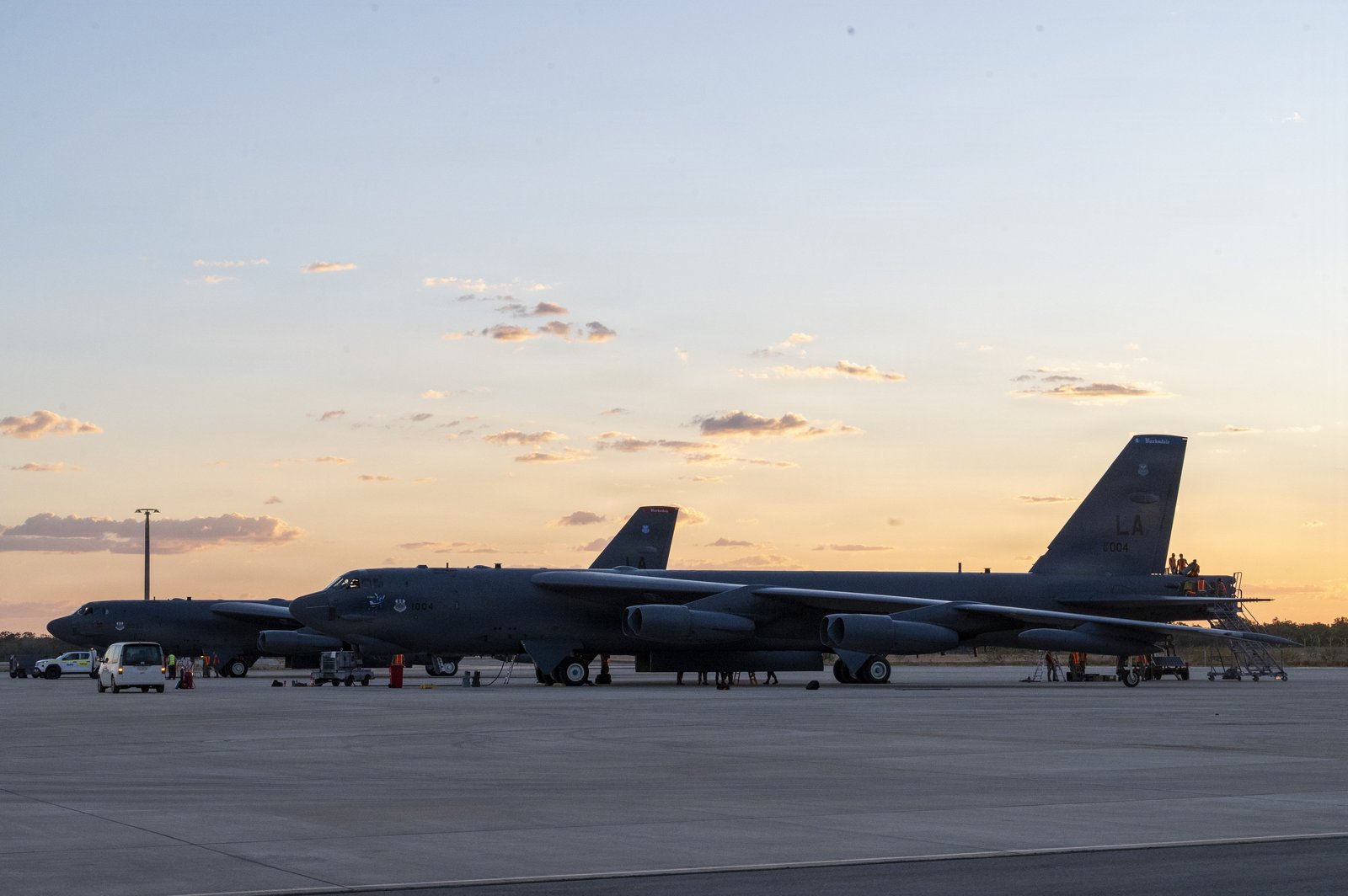
Air Force Global Strike Command’s year-long North Star Readiness Campaign to speed up B-1 Lancer and B-52 Stratofortress maintenance, parts delivery and depot work is reporting early wins that directly improve bomber mission-capable rates, according to command officials.

The campaign, launched in September 2025 alongside Air Force Materiel Command and the Defense Logistics Agency, brings together operators, acquisition and sustainment experts, and logistics partners to accelerate parts delivery, engineering support and depot maintenance for the two bomber fleets.

“The North Star Readiness Campaign is our commitment to ensuring the warfighter has the nation’s bomber force ready to go at a moment’s notice,” Gen. S.L. Davis, commander of Air Force Global Strike Command, said in a release. “By modernizing these incredible platforms and ensuring our maintainers have the parts and support they need, we are sending a clear message.”

The campaign responds to pressure to maintain readiness and availability of the U.S. bomber force for global operations, according to the command. Officials said the effort has already produced measurable improvements in parts availability and maintenance turnaround times, though specific readiness-rate figures were not disclosed.

The initiative focuses on the B-1 Lancer and B-52 Stratofortress fleets, both of which have faced sustainment challenges as the airframes age. A B-52H undergoing programmed depot maintenance was towed into a hangar at Tinker Air Force Base, Oklahoma, on July 28, 2025, according to Air Force imagery released with the announcement.

The campaign is part of a broader push by Air Force Global Strike Command to keep the bomber force mission-capable while modernization programs, including B-52 engine replacement and B-1 structural upgrades, move forward. Command officials said the early results validate the integrated approach of pairing operators with sustainment and logistics experts to solve readiness bottlenecks.

Sources: Air & Space Forces Magazine · Naval News · Stars and Stripes (US) · Air Force Times